
The Stanley Hotel's Ghosts vs. Colorado's New UFO Files
As Congress pushes UFO disclosure, we ask what the Stanley Hotel's century of ghost sightings can teach us about believing the unbelievable.
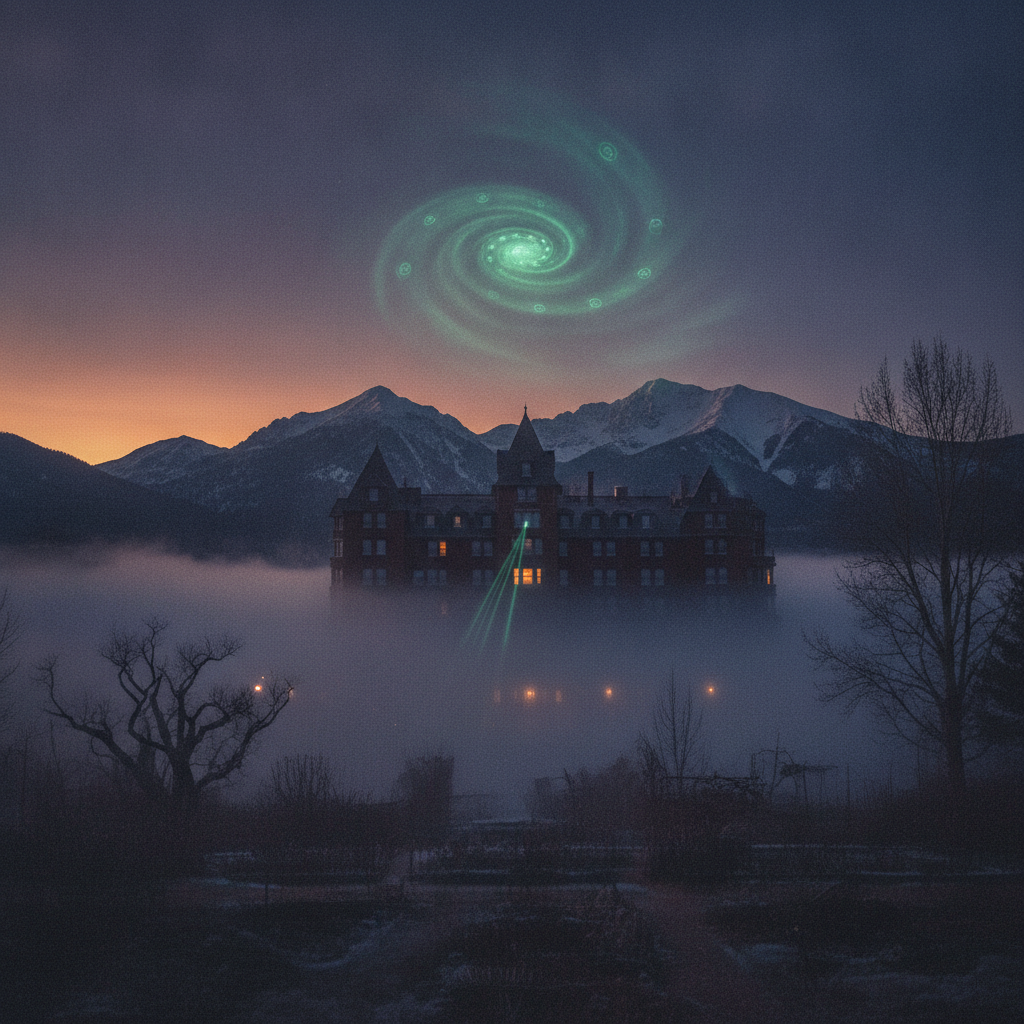
A Nation Waiting for Someone to Say “Believe Us”
There’s a particular kind of tension in the air this week, and it has nothing to do with the wind coming down off the Continental Divide. Washington is once again talking about UFOs — not with the wink-and-nod dismissiveness of decades past, but with the language of disclosure, deadlines, and declassification. According to reporting from Sentinel Colorado, the push follows an order from President Trump to release UFO-related government data, reigniting the old question that never really goes away: if something is out there, what would it make of us?
Meanwhile, a sitting congressman has been making the rounds telling outlets like LADbible and International Business Times UK that he’s seen reports so unsettling they could leave the country “unglued,” and that Americans would be “up at night” if they knew what he knows. Another IBT UK story this week connects a lawmaker’s demand for 40 secret UFO videos to the long-simmering mystery of the 1953 Lake Huron “shootdown” incident. Yet another ties a congressman’s claims about confirmed alien life to the death of longtime UFO researcher Nick Pope. It’s a lot of smoke, and as always, very little confirmed fire.
But here in Colorado, we’ve been living with our own version of this exact tension for over a century — just with ghosts instead of extraterrestrials. And there’s no better place to think through it than the Stanley Hotel in Estes Park.
America’s Most Famous Haunted Hotel
The Stanley Hotel didn’t set out to become a paranormal landmark. It was built by Freelan Oscar Stanley — inventor, industrialist, and co-creator of the Stanley Steamer automobile — who came to Estes Park in 1903 seeking relief from tuberculosis. He recovered enough to build a grand Colonial Revival resort that opened in 1909, and by most accounts, he never really left.
Staff and guests have reported F.O. Stanley’s presence in the hotel for decades, particularly in the billiard room and the lobby area, described in longstanding hotel lore as a dapper, watchful figure who seems as invested in the place in death as he was in life. His wife, Flora, is said to linger as well, with guests and staff over the years reporting piano music from the Music Room when no one is at the keys — a detail that has become part of the hotel’s own well-established internal lore and its public ghost tour narration.
Then there’s Room 217, the hotel’s most infamous address. The room’s reputation traces back to a 1911 incident in which a housekeeper named Elizabeth Wilson was injured during an explosion caused by a gas leak when the hotel’s acetylene-powered lighting system malfunctioned. Wilson survived, and stories of her lingering, tidying presence in Room 217 have circulated among staff and guests for generations.
The King Connection
The Stanley’s leap from regional curiosity to global horror icon came in 1974, when Stephen King and his wife Tabitha checked in near the end of the tourist season, reportedly finding themselves nearly the only guests in the cavernous hotel. King has spoken in interviews over the years about the impression the empty, echoing hallways made on him — the sense of a grand structure holding onto something long after the crowds had gone. That stay became the seed for The Shining, and King reportedly wrote much of the novel’s outline during his time there, staying in Room 217 itself.
The hotel leaned into the connection rather than away from it, and today runs organized ghost tours, references its King history openly in its marketing, and has become a pilgrimage site for horror fans and paranormal investigators alike. Television crews, paranormal investigation shows, and independent researchers have documented staff and guest accounts for years — accounts that range from unexplained cold spots and footsteps in empty hallways to the sound of a party in the ballroom when the room sits dark and empty.
Two Kinds of Hunger for Proof
Here’s where the Stanley Hotel and the current UFO disclosure headlines start to rhyme, even though they’re separated by subject matter and about a hundred years of history.
Both phenomena — hauntings and unidentified aerial phenomena — occupy the same uncomfortable cultural space: widely reported, persistently believed by ordinary people with no obvious motive to lie, and stubbornly resistant to the kind of hard evidence that would settle the matter once and for all. And in both cases, there’s a recurring hunger for someone with institutional authority to finally say, officially, that the public’s experiences were real all along.
That’s essentially what the current congressional UFO push is promising, or at least gesturing toward. Lawmakers are talking about classified videos, secret reports, and briefings too disturbing for public consumption. It’s the language of vindication — the idea that somewhere in a government vault sits the paperwork that proves what people have quietly believed for decades.
Ghost hunters have been chasing a version of that same vindication for far longer, minus the congressional subpoenas. There’s no Church committee for hauntings, no Fravor-style whistleblower pilot for the paranormal. What the Stanley Hotel offers instead is something arguably more durable: a hundred-plus years of continuous, consistent testimony from staff, guests, and visitors, layered on top of a real, documented historical event — the 1911 boiler explosion — that gives the haunting a factual skeleton to hang its ghost stories on.
It’s worth being honest about what we don’t know. No government agency has ever “confirmed” the Stanley’s ghosts the way UFO advocates hope Congress might soon confirm something about unidentified craft. The evidence for F.O. Stanley wandering his old lobby, or Elizabeth Wilson tending Room 217, remains anecdotal — powerful, consistent, atmospheric, but anecdotal all the same. That’s not a knock against the stories; it’s simply the nature of paranormal evidence, which tends to live in personal experience rather than filed reports.
What the Comparison Actually Teaches Us
Maybe the real lesson from Estes Park isn’t that ghosts and UFOs are the same phenomenon wearing different masks. It’s that the human need to have the unexplained validated by some higher authority — a government committee, a congressman, a hotel’s own marketing department — often says as much about us as it does about whatever’s actually out there in the dark.
The Stanley Hotel didn’t need Congress to declassify anything. It built an entire identity, and a thriving tourism business, on letting people sit with the mystery instead of resolving it. As Washington debates what to release next about unidentified aerial phenomena, Colorado’s own haunted landmark offers a quieter reminder: sometimes the story people have been telling each other for a hundred years is the only disclosure you’re going to get. Whether that’s enough has always been up to the person standing in the hallway, listening for footsteps that shouldn’t be there.