
Colorado's Strange Mining Legends: Tommyknockers and Underground Spirits
Explore the eerie folklore of Colorado's mining era - from protective Tommyknockers to ghostly encounters in abandoned shafts across the Rockies.
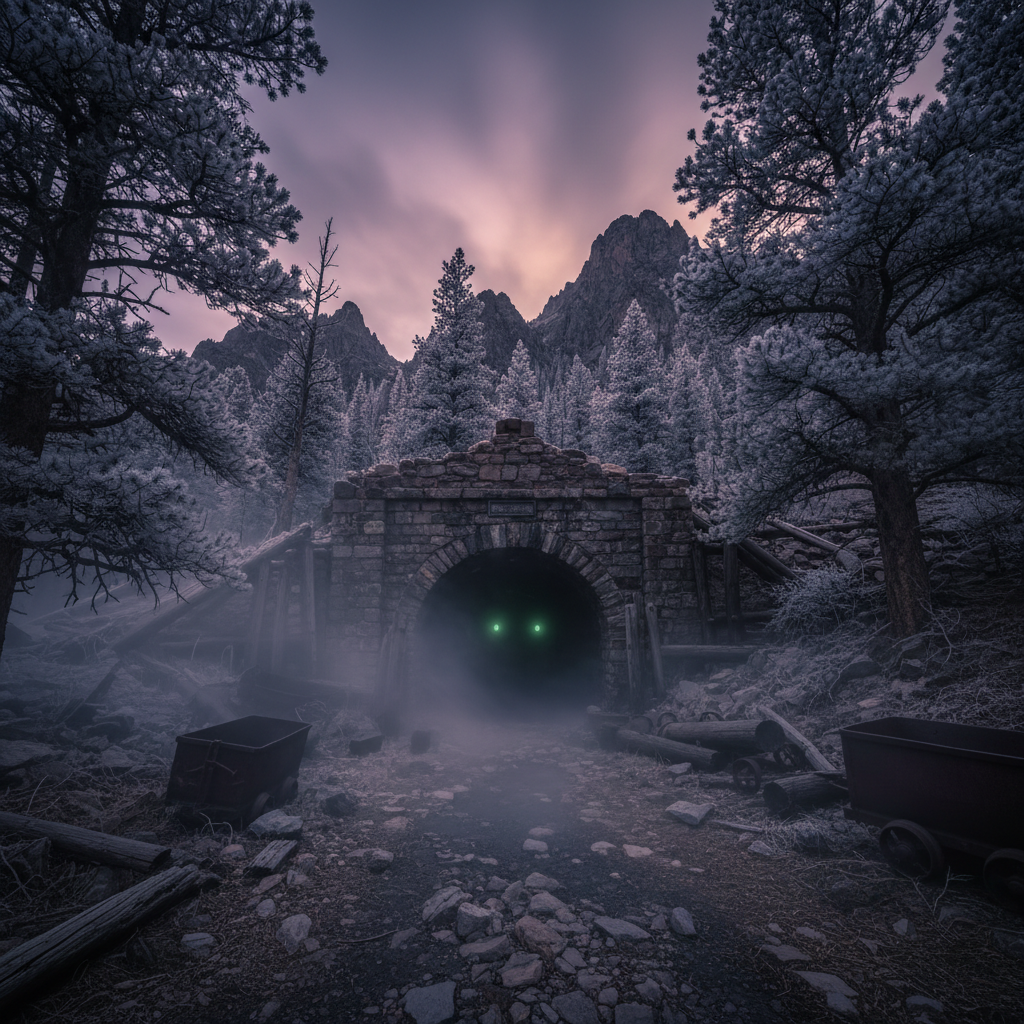
Deep beneath the Colorado Rockies, where gold and silver once called to fortune seekers from around the world, miners whispered stories that had nothing to do with precious metals. In the flickering candlelight of narrow shafts and the echoing chambers of hard rock mines, they spoke of something else entirely—the Tommyknockers, mysterious underground spirits whose knocking sounds could mean the difference between life and death.
These weren’t just idle tales spun around campfires. The Tommyknocker legends became so deeply embedded in Colorado’s mining culture that experienced miners made decisions based on the supernatural sounds they claimed to hear echoing through the tunnels. Understanding this folklore requires digging into the documented history of Colorado’s mining boom and the very real dangers that gave birth to these protective spirits.
The Origins of Underground Guardians
The Tommyknocker tradition didn’t originate in Colorado’s mountains. According to documented mining folklore, these legends traveled with Cornish miners who immigrated to Colorado during the 1860s gold and silver rushes. In Cornwall, the “knockers” were understood to be the spirits of miners who had died in cave-ins, forever trapped underground but willing to help their living brothers avoid similar fates.
Historical records from Colorado mining camps show that by the 1870s, Tommyknocker stories had spread beyond the Cornish community to miners of all backgrounds. The multicultural mining camps of places like Leadville, Cripple Creek, and Georgetown became melting pots where Irish, German, Italian, and Mexican miners all contributed their own supernatural beliefs to the growing Tommyknocker mythology.
What made these stories particularly compelling was their practical application. According to mining folklore preserved in historical archives, the knockers would tap on mine walls to warn of impending cave-ins, guide miners toward rich ore deposits, or alert them to dangerous gas accumulations. The sounds were described as distinct from the normal settling and creaking of mine timbers—rhythmic, purposeful knocks that seemed to communicate specific warnings.
Documented Encounters in Colorado Mines
Mining newspapers and personal accounts from the late 1800s contain numerous references to unexplained knocking sounds in Colorado’s underground workings. The Rocky Mountain News and other period publications occasionally reported on miners who attributed their survival to heeding mysterious warning sounds.
One of the most well-documented aspects of Tommyknocker folklore involves the practical mining wisdom embedded in these supernatural beliefs. Experienced miners knew that unusual sounds often preceded structural failures or gas accumulations. The knocking sounds attributed to Tommyknockers may have been legitimate acoustic warnings—the settling of unstable rock, the movement of support timbers under stress, or the escape of gases that could signal dangerous conditions.
In Georgetown’s silver mines, historical mining reports indicate that crews would sometimes halt work entirely when they heard unexplained knocking sounds, especially the rhythmic patterns that folklore associated with Tommyknocker warnings. Whether supernatural or simply good safety instincts, this practice likely saved lives in an industry where cave-ins, explosions, and toxic gas exposure claimed thousands of Colorado miners.
The mining camps around Central City, according to preserved letters and diaries from the era, developed elaborate rituals around Tommyknocker beliefs. Miners would leave small offerings of food or tobacco in mine shafts, believing this would keep the spirits friendly. Some crews refused to work certain shifts if the knocking sounds seemed particularly agitated or urgent.
The Science Behind the Supernatural
Modern understanding of mining geology and acoustics offers explanations for many phenomena that 19th-century miners attributed to Tommyknockers. Underground spaces create unique acoustic environments where sounds can travel great distances, echo unpredictably, and seem to originate from impossible locations. The expansion and contraction of rock due to temperature changes, the settling of mine structures, and the movement of groundwater through fractured stone all create knocking, tapping, and creaking sounds.
Additionally, the dangerous gases common in Colorado’s mines—including methane, hydrogen sulfide, and carbon dioxide—can affect human perception and create auditory hallucinations. Miners working in poorly ventilated areas with inadequate lighting may have been more susceptible to interpreting natural sounds as supernatural communications.
However, dismissing Tommyknocker folklore as mere superstition overlooks its practical value as a safety system. The beliefs encouraged miners to pay close attention to acoustic warnings that might indicate structural problems or environmental hazards. In mines where formal safety protocols were minimal or nonexistent, supernatural folklore served as an informal but effective safety culture.
Tommyknockers in Colorado’s Specific Mines
Different Colorado mining districts developed their own variations of Tommyknocker legends. In the Cripple Creek area, historical accounts describe knockers who were particularly associated with warning about unstable ground conditions—a critical concern in an area where mining operations extended deep into volcanic rock formations.
The silver mines around Leadville, operating at extreme altitude in challenging geological conditions, produced stories of Tommyknockers who seemed especially active during winter months when mine conditions were most dangerous. Period accounts describe how crews would interpret the intensity and frequency of knocking sounds as indicators of how dangerous conditions might be on any given day.
In the coal mines of Colorado’s western slope, Tommyknocker folklore focused heavily on gas-related warnings. These spirits were said to become particularly active before methane explosions or carbon monoxide accumulations—phenomena that killed numerous Colorado miners during the late 1800s and early 1900s.
The Cultural Legacy
Tommyknocker folklore became so embedded in Colorado mining culture that references appear in official mining company records, union documents, and even legal proceedings from the era. When mines experienced fatal accidents, survivor accounts sometimes included references to ignored Tommyknocker warnings, suggesting that these supernatural beliefs were taken seriously even in formal contexts.
The stories also served important psychological functions in extremely dangerous working conditions. Believing that deceased fellow miners continued to watch over the living provided comfort in an industry where death was a constant companion. The folklore created a sense of continuity between past and present, honoring the memory of those lost while providing hope that their sacrifice offered protection to those who remained.
As Colorado’s mining industry declined in the mid-20th century, many of these oral traditions began to fade. However, the legend of the Tommyknockers has persisted in popular culture, appearing in literature, films, and modern ghost stories associated with Colorado’s numerous abandoned mines.
Echoes in Abandoned Shafts
Today, visitors to Colorado’s preserved mining sites occasionally report hearing unexplained knocking sounds in abandoned shafts and tunnels. While modern explanations involving settling structures, wildlife, and natural acoustic phenomena are more readily accepted, the Tommyknocker folklore remains an important part of Colorado’s cultural heritage.
The stories represent more than simple superstition—they reflect the ingenuity of working people who developed supernatural frameworks to cope with extreme danger while embedding practical safety wisdom in cultural traditions. Whether the knocking sounds were supernatural communications or natural acoustic warnings, the folklore that grew around them created a safety culture that likely saved lives during one of the most dangerous periods in Colorado’s industrial history.
In the end, the Tommyknockers of Colorado’s mines represent something quintessentially human—the need to find meaning, protection, and community even in the darkest and most dangerous places. Deep beneath the mountains, where the boundary between life and death was always thin, these underground spirits offered both warning and comfort to those who ventured into the earth in search of fortune.