
The Children of Thunder Mountain: Colorado's Forgotten Cult Mystery
Deep in Colorado's mountains, a religious cult vanished without a trace in 1995, leaving behind only cryptic symbols and unanswered questions.
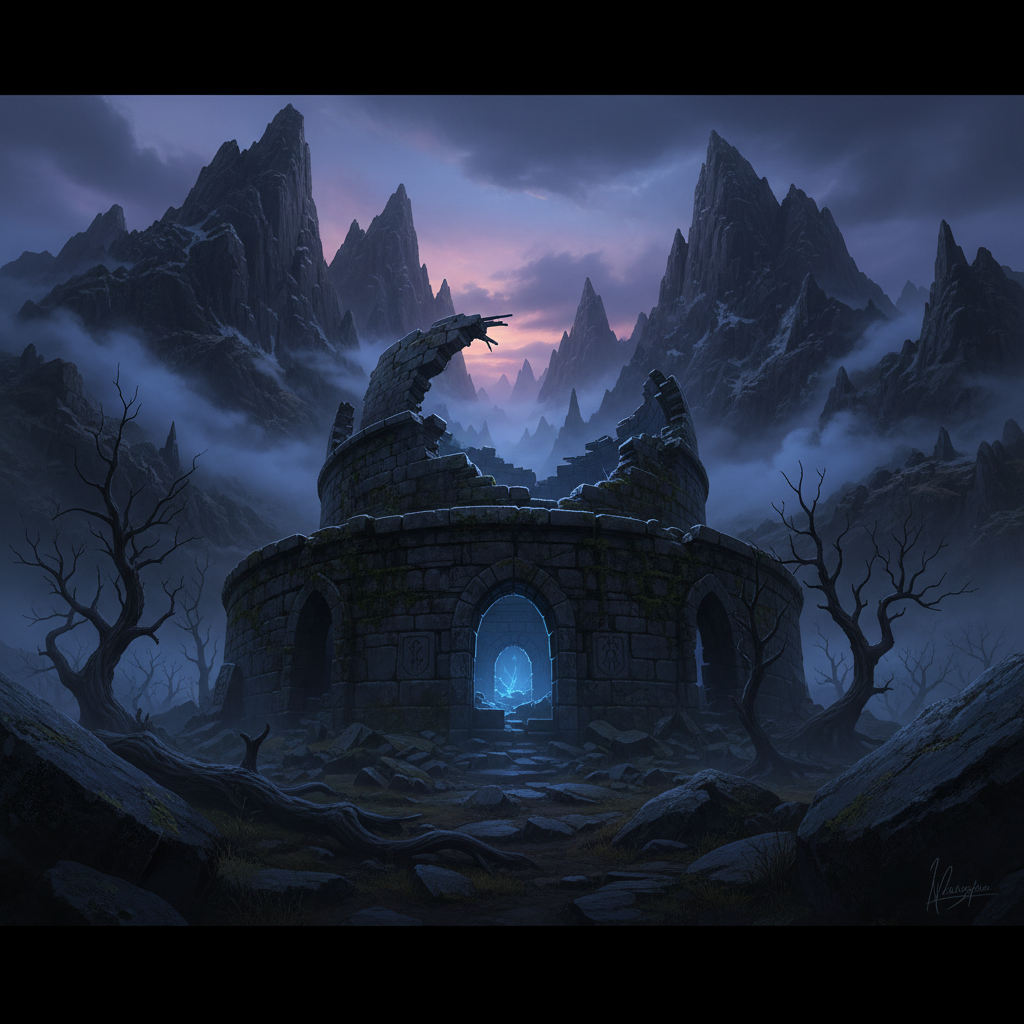
High in Colorado’s San Juan Mountains, where pine forests stretch endlessly toward jagged peaks and the air grows thin enough to make lowlanders dizzy, there are places where civilization simply stops. Remote valleys where the only roads are unmarked dirt tracks, where cell towers can’t reach, and where the isolation runs so deep it seems to swallow sound itself.
It’s in places like these that groups seeking to escape the world have traditionally found refuge. And sometimes, they’ve found something else entirely.
The Pattern in the Peaks
Colorado’s mountainous terrain has long attracted religious movements, survivalist groups, and intentional communities seeking separation from mainstream society. The state’s documented history includes numerous instances of such groups establishing remote settlements, from 19th-century utopian communities to modern-day religious sects.
According to historical records maintained by the Colorado State Archives, dozens of intentional communities have been established in the state’s mountainous regions over the past century and a half. Most operated openly, maintaining some contact with nearby towns for supplies and communication. But others chose complete isolation, and it’s among these groups that some of Colorado’s most puzzling disappearances have occurred.
The terrain itself seems to collaborate in these vanishings. Colorado contains over 54 peaks exceeding 14,000 feet, countless unnamed valleys, and millions of acres of wilderness where a small community could exist for years without detection. Search and rescue operations in these areas face challenges that can render even modern technology useless—GPS signals blocked by canyon walls, weather that changes without warning, and terrain so rugged that helicopter access becomes impossible.
Documented Disappearances
Law enforcement records from various Colorado counties contain references to missing persons cases involving entire families or small groups who were last known to be living in remote mountain areas. These cases often share similar characteristics: the missing individuals were part of insular religious or spiritual communities, they had minimal contact with outside authorities, and they vanished during winter months when mountain access becomes particularly treacherous.
One case that has drawn attention from researchers involves a group that was reportedly living in the Sangre de Cristo Mountains in the 1990s. According to missing persons reports filed with multiple county sheriff’s departments, family members became concerned when they lost all contact with relatives who had joined what was described as a “spiritual retreat” in the mountains. When authorities investigated the last known location, they found abandoned structures and evidence of recent habitation, but no signs of the occupants.
The investigation was complicated by the remote location and harsh weather conditions. By the time search teams could access the site properly, snow had covered much of the evidence. The case remains officially unsolved.
The San Luis Valley Connection
Colorado’s San Luis Valley, a high-altitude basin surrounded by the Sangre de Cristo and San Juan mountain ranges, has developed a reputation for unusual phenomena that extends beyond just UFO sightings. According to reports compiled by local law enforcement over the decades, the valley has been home to numerous unconventional religious groups and has seen its share of unexplained disappearances.
The valley’s unique geography—a flat expanse at 7,500 feet elevation, surrounded by peaks reaching over 14,000 feet—creates an isolated environment that can feel cut off from the outside world. Local residents have reported encounters with groups living off-grid in the surrounding mountains, some of whom displayed unusual beliefs or practices.
These accounts, while often dismissed as local folklore, have gained new attention in recent years as researchers have begun documenting patterns in the reports. The consistency of certain details across multiple witness accounts, separated by years and sometimes decades, suggests there may be more substance to these stories than initially believed.
Physical Evidence
What makes some of these cases particularly intriguing is the physical evidence that has occasionally been discovered. Abandoned campsites found by hikers and hunters sometimes contain items that seem inconsistent with typical camping or survival scenarios—religious artifacts, unusual symbols carved into trees or rocks, and structures that appear to have been built for long-term habitation rather than temporary shelter.
One such discovery was made in 2018 by Colorado Parks and Wildlife officers conducting a routine survey in the Mount Zirkel Wilderness Area. They found the remains of what appeared to be a small settlement, including stone foundations and carved symbols on nearby aspen trees. The carvings appeared weathered, suggesting they had been there for many years, but their meaning remained unclear.
The officers photographed the site and filed a report, but follow-up investigations have been limited by the remote location and the fact that no crimes had been reported in the area. The site remains undisturbed, accessible only to those willing to undertake a challenging multi-day hike.
Modern Mysteries
Even in our connected age, Colorado’s mountains continue to harbor secrets. The state’s vast wilderness areas and the tendency of some groups to reject modern technology create conditions where disappearances can still occur without immediate detection.
Recent missing persons cases in Colorado have included individuals who were known to be seeking spiritual experiences in remote mountain areas. While many of these cases are eventually resolved—often with the missing persons found safe but having lost track of time or become temporarily lost—others remain open investigations.
The challenge for law enforcement is that Colorado’s mountains are vast enough to hide entire communities if they choose to remain hidden. With hundreds of abandoned mining claims, countless unmarked valleys, and terrain that can be impassable for months at a time, the landscape itself becomes an accomplice to those who wish to vanish.
The Questions That Remain
What happened to the groups that disappeared into Colorado’s mountains? Were they victims of the harsh conditions and isolation that can quickly turn deadly in high-altitude wilderness? Did they choose to sever all ties with the outside world so completely that they became ghosts of their former lives?
Or is there something about Colorado’s remote peaks that attracts not just those seeking to disappear, but something that wants them to disappear?
The mountains keep their secrets well. In a state where modern paranormal investigators are actively exploring haunted locations and UFO researchers document ongoing sightings, perhaps the most enduring mysteries are the human ones—the stories of people who walked into the wilderness and became part of the landscape itself, leaving behind only questions and the occasional carved symbol on a weathered aspen tree.
For those drawn to explore these mysteries, Colorado’s mountains offer endless possibilities. But they also offer a reminder that some disappearances are so complete, so absolute, that they become indistinguishable from legend. In the end, the difference may not matter—the mountains remember what they choose to remember, and forget what they choose to forget.
And somewhere in those peaks, the children of Thunder Mountain—whatever their true story may be—have become part of Colorado’s enduring mystery.