
Cripple Creek's Haunted Mile: Inside This Weekend's Paracon
Cripple Creek's historic district hosts a paranormal convention this weekend—here's the real haunted history behind the ghosts, legends, and lore drawing investigators.
A Boomtown Built on Gold and Ghosts
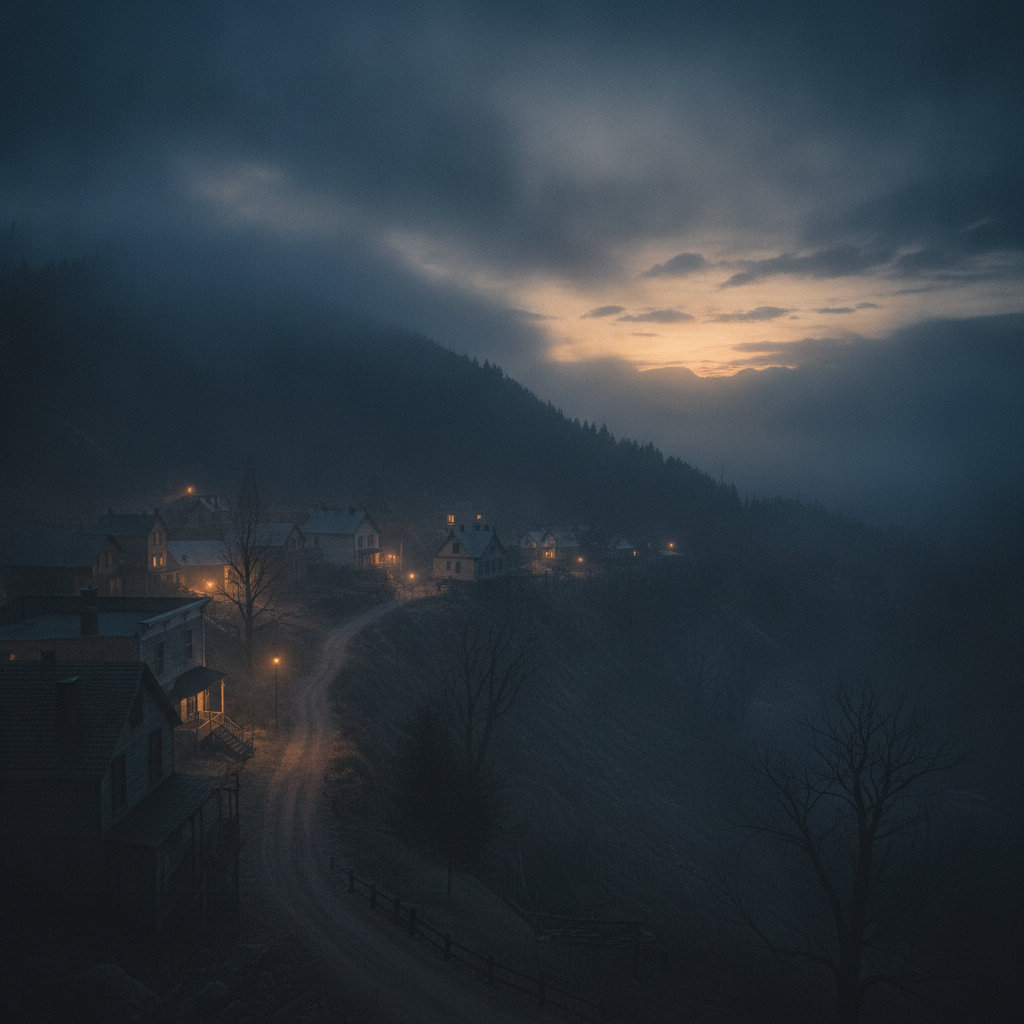
There’s a particular kind of quiet that settles over Cripple Creek after the tour buses leave and the casino lights start to hum against the dark. It’s the kind of quiet that makes the Victorian storefronts along Bennett Avenue look less like a tourist district and more like a town waiting for something. This weekend, according to a report from KOAA News 5, that waiting turns into a gathering, as the Cripple Creek Paracon brings ghost hunters, cryptid researchers, and UFO enthusiasts into the historic district to talk shop about the unexplained — everything from residual hauntings to Bigfoot sightings to unidentified lights in the sky.
It’s easy to treat a paranormal convention as novelty programming, a weekend of vendor tables and EMF meters. But in Cripple Creek, the pairing of gold-rush history and ghost story makes a strange kind of sense. This is a town that was built fast, burned twice, fought over labor and blood, and buried a good portion of its dead before it turned thirty years old. If any place in Colorado has earned its reputation as haunted, the argument could be made that Cripple Creek did it the hard way.
The Boom, the Fires, and the Blood
Cripple Creek’s origin story is Colorado gold rush mythology in its purest form. Gold was discovered in the area in 1890-91, and within a few years the district had transformed from ranchland into one of the richest gold camps in American history, eventually producing hundreds of millions of dollars in ore. Population estimates for the district at its peak run into the tens of thousands, packed into a boomtown of saloons, brothels, banks, and hastily built wooden structures.
That rapid, chaotic growth came with a price. In 1896, Cripple Creek suffered two devastating fires within days of each other — one in April, another that same month — that leveled much of the downtown business district. The town rebuilt in brick and stone almost immediately, which is part of why so many of the sturdy Victorian-era buildings still standing today, the ones now housing casinos, museums, and gift shops, date to that furious reconstruction.
The district’s history isn’t only about fire and gold, either. The Cripple Creek mining district was also the site of significant labor unrest, including violent clashes during the Colorado Labor Wars in the early 1900s, part of a broader and often brutal conflict between miners’ unions and mine owners that played out across the state. Between the fires, the mining accidents, the labor violence, and the ordinary hard mortality of a 19th-century frontier town, Cripple Creek accumulated a lot of dead in a short amount of time — which is, as any paranormal investigator will tell you, exactly the kind of history that tends to leave a residue.
The Landmarks Ghost Hunters Already Know
Long before this weekend’s Paracon, Cripple Creek had built a reputation as one of Colorado’s most reliably “haunted” tourist destinations, and a handful of specific buildings show up again and again in local lore and paranormal tourism circuits.
The Old Homestead House, a former parlour house (a euphemism for a high-end brothel) that operated during the district’s boom years, is now run as a museum and has long been associated with reported apparitions and unexplained sounds by staff and visitors — the kind of secondhand accounts that accumulate around any well-preserved building with a colorful past. The Hotel St. Nicholas, a Cripple Creek landmark with its own long history in the district, carries similar reputation among local ghost tour operators.
The Butte Theatre, a historic performance venue in the heart of downtown, is another frequently cited location, with staff and performers over the years reportedly describing odd occurrences backstage and in the auditorium — cold spots, footsteps, the sense of being watched from the wings. Theaters in general tend to accumulate these stories, something paranormal researchers often attribute to the emotional intensity that plays out on a stage night after night, decade after decade, though that’s interpretation rather than established fact.
And then there’s the Mollie Kathleen Gold Mine, which still operates as a tourist attraction offering underground tours into an actual working shaft of the district’s mining history. Mines carry their own particular weight in ghost lore — enclosed, dark, historically dangerous spaces where miners really did die in cave-ins, explosions, and accidents. Whether or not you believe anything lingers underground, it’s not hard to understand why mine tours are a staple of paranormal tourism nationwide, and Cripple Creek’s version is one of the most visited in the state.
None of this is new information manufactured for a convention crowd — these are places locals have talked about for decades, folded into walking tours, local newspaper features, and word-of-mouth long before “paracon” was a word anybody used.
Why the Convention Fits
According to KOAA News 5’s coverage, this weekend’s Paracon in Cripple Creek is drawing attendees interested in ghosts, cryptid encounters like Bigfoot, and UFO phenomena — a broad tent that reflects where paranormal culture has landed nationally. It’s worth noting that Colorado already has a well-established relationship with UFO culture specifically; the San Luis Valley’s UFO Watchtower, recently the subject of features by both a Denver-market outlet and the Washington Post, has spent over two decades as a fixture for sky-watchers and researchers in the southern part of the state. Cripple Creek’s convention taps into that same appetite, just with a mining-town backdrop instead of a high desert one.
What makes the Cripple Creek setting work isn’t manufactured atmosphere — it’s that the town’s brick storefronts, narrow gulch geography, and preserved Victorian core were already doing the atmospheric work decades before anyone organized a formal event around it. A convention centered on the unexplained fits naturally into a district that was rebuilt from ash, fought over, mined out, and repopulated by casinos and museums occupying the same buildings where the original boomtown lived and died.
What to Make of It
None of this is proof of anything. The accounts tied to the Old Homestead, the Butte Theatre, or any other Cripple Creek landmark are, by nature, personal testimony and local legend rather than verified phenomena — and that distinction matters. What is verifiable is the history itself: the fires, the labor violence, the mining deaths, the sheer density of human hardship packed into a few square miles of mountain gulch in a remarkably short span of time.
Whether that history manifests as anything more than atmosphere is, as always, left to the individual investigator, the visitor standing alone in an old parlour house at closing time, or the person walking underground at Mollie Kathleen with a flashlight and an open mind. This weekend, Cripple Creek simply gives that ongoing conversation a name, a schedule, and a gathering place — a modern convention built on top of a town that never really stopped telling its ghost stories in the first place.