
The Ludlow Massacre: Colorado's Bloodiest Day and Its Ghosts
The 1914 Ludlow Massacre killed strikers' families in cold blood. Explore the real history and the haunting stories that linger at the site today.
The Ludlow Massacre: Colorado’s Bloodiest Day and Its Ghosts
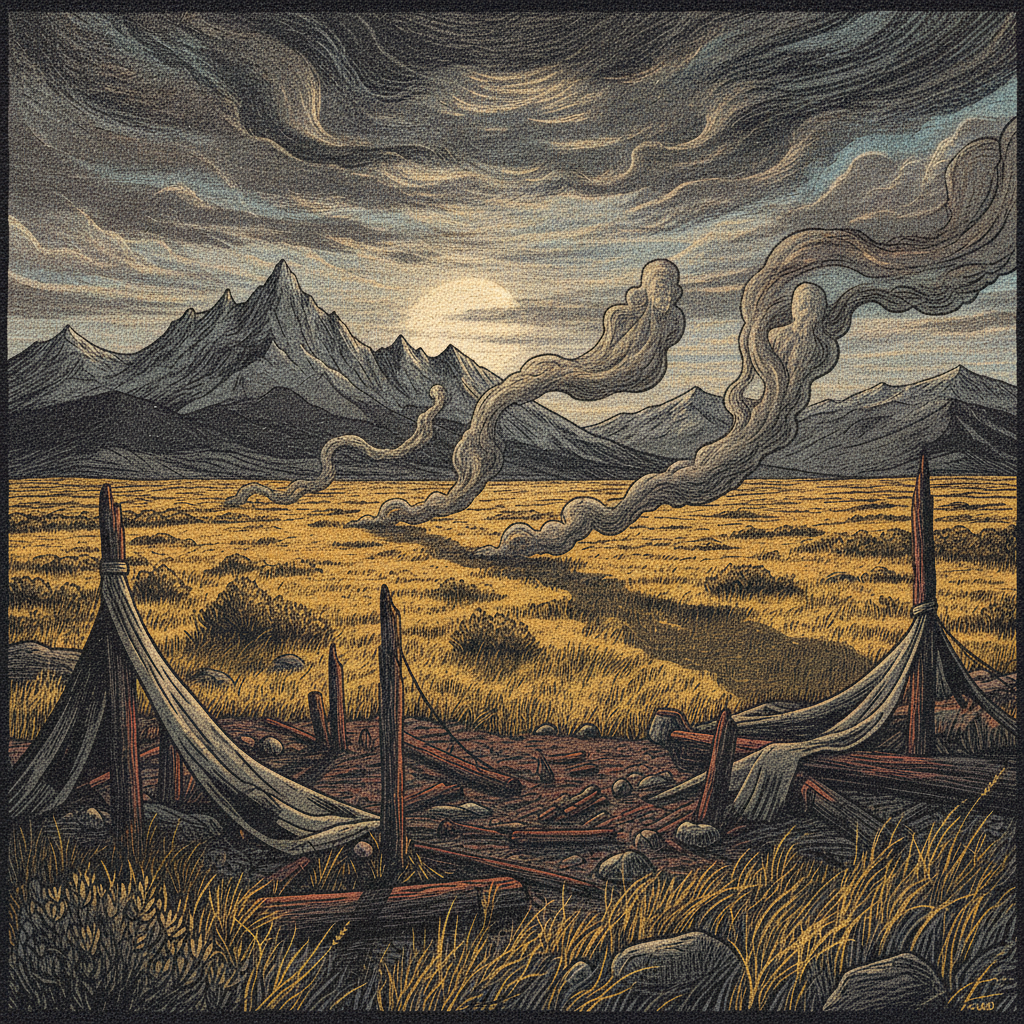
Out on the high plains of southern Colorado, about twelve miles northwest of Trinidad, a lone stone monument rises from the grass along a stretch of frontage road near Interstate 25. Cars pass it every day, most drivers unaware they’ve just gone by one of the deadliest single events in the history of American labor. But those who stop — and people have been stopping for over a century — often say the same thing: something about this place feels wrong. Heavy. Watching.
To understand why Ludlow lingers in Colorado’s collective memory, you have to go back to a September morning in 1913, when thousands of coal miners walked off the job and into a war.
The Coalfield War
In the early 20th century, southern Colorado’s coal industry was dominated by companies like the Colorado Fuel and Iron Company (CF&I), controlled by the Rockefeller family. Miners lived in company towns, were paid partly in company scrip, and worked in conditions that were among the most dangerous in the country. Colorado’s coal mines had a fatality rate more than twice the national average during this period, according to state mining records.
In September 1913, the United Mine Workers of America (UMWA) called a strike across the southern Colorado coalfields. Demands included recognition of the union, an eight-hour workday, the right to choose their own housing and doctors instead of being bound to company-run facilities, and enforcement of existing Colorado mining laws that companies routinely ignored. When miners walked out, the coal companies evicted them from company housing. In response, the UMWA helped strikers set up tent colonies on rented land near the mines, so families could stay close and maintain the picket lines. One of the largest of these colonies, housing an estimated 1,200 people — miners and their wives and children, many of them Greek, Italian, and Mexican immigrants — went up at a rail stop called Ludlow.
The strike quickly turned violent. Mine owners hired the Baldwin-Felts Detective Agency, notorious for strikebreaking, which brought in an armored car nicknamed the “Death Special” that reportedly opened fire on tent colonies at night. Colorado Governor Elias Ammons eventually called in the Colorado National Guard, ostensibly to keep order — but the Guard was underfunded, and increasingly staffed by mine guards and company men wearing state uniforms.
April 20, 1914
Tensions between the Guard and the strikers at Ludlow had been building for months when, on the morning of April 20, 1914 — the day after Orthodox Easter, which many of the Greek families at the colony had just celebrated — a machine-gun confrontation broke out between Guardsmen and strikers. Accounts differ on who fired first, but by the end of the day, the Ludlow tent colony was in flames.
As gunfire raked the camp, many families fled into the hills or dug into pits beneath their tents for shelter — a common precaution, since the flimsy canvas offered no protection from bullets. The colony burned through the afternoon and into the evening. The next day, searchers going through the ashes made a discovery that would define Ludlow in American memory: beneath one burned tent, in a pit that came to be called the “Death Pit,” they found the bodies of two women and eleven children who had suffocated or burned while hiding from the gunfire.
In total, an estimated 21 people died in the Ludlow Massacre, including miners, women, and children. The event triggered ten more days of open warfare across the southern Colorado coalfields — a period historians call the “Ten Days’ War” — in which enraged miners armed themselves and attacked mine guards and company property up and down the region, until President Woodrow Wilson sent federal troops to restore order.
Public outrage over Ludlow was national. Congressional hearings followed. John D. Rockefeller Jr., whose family controlled CF&I, was called before Congress to answer for conditions in the mines his company owned. While the strike itself ultimately failed to win union recognition, the Ludlow Massacre is widely credited by labor historians with pushing forward reforms in mine safety and labor law, and it remains one of the deadliest episodes of labor violence in United States history.
The Monument and What Remains
In 1918, the United Mine Workers of America purchased the site and erected a granite monument honoring the dead. The UMWA still owns and maintains the Ludlow Monument today, and the site was designated a National Historic Landmark in 2009. Visitors can walk the grounds, see the reconstructed foundation markers of the tent colony, and view the pit itself — preserved as a somber, open scar in the earth.
The monument has not gone untouched by controversy or violence of its own: in 1954 and again in 2003, vandals damaged the statues on the memorial, an act many in the labor community regarded as a continuing insult to the memory of the dead. Restorations followed both times, funded in part by union contributions from across the country.
The Ghosts of Ludlow
Given the nature of what happened there, it’s little surprise that Ludlow has become part of Colorado’s oral tradition of haunted places. For decades, locals and visitors passing through this stretch of the plains have described a heaviness at the site that goes beyond ordinary historical reverence — a sense of being watched, unexplained cold spots even in summer heat, and reports of hearing voices, crying, or the murmur of a crowd where no one is present.
Some who have visited the Death Pit itself describe a distinct drop in temperature or a wave of unease that sends them back to their cars before they mean to leave. Others tell of faint lights moving across the field at dusk, or the sound of children’s voices carried on the wind when the plains around Ludlow are otherwise silent. These accounts exist mostly as local legend and word-of-mouth rather than documented investigation — there is no peer-reviewed paranormal research on Ludlow, and no formal ghost-hunting society has published findings from the site. What exists is oral tradition, passed among union families, Trinidad locals, and travelers on I-25 who’ve made the short detour to see the monument.
It’s worth being careful here: none of this is proof of anything supernatural, and this piece isn’t claiming otherwise. But it’s also not hard to understand why the stories persist. Ludlow isn’t a battlefield in the traditional sense — it’s the site of a massacre where women and children died hiding from gunfire in a hole in the ground, killed not in the chaos of open combat but while trying to become invisible. That kind of death leaves a different kind of mark on a place, at least in the way we tell stories about it.
A Site That Refuses to Be Forgotten
Whether or not you believe anything walks the grounds at Ludlow, the site demands to be remembered on its own terms. The UMWA continues to hold a memorial service there every June, and the monument stands as one of the only physical markers in the country dedicated specifically to the victims of American labor violence.
The ghosts of Ludlow, real or not, serve a purpose the granite alone cannot: they keep people stopping on a lonely stretch of Colorado highway, asking what happened here — and why it still, in some intangible way, seems to hurt.