
Colorado's Ghost Airships: The 1897 Sky Mystery Before UFOs
Decades before flying saucers, mysterious airships lit up Colorado's night skies in 1897 — a forgotten mystery hidden in old newspaper archives.
A Familiar Light in the Sky
In August 2026, Denver7 reported that newly released government UFO files included sightings logged from Colorado Springs — the latest entries in a growing catalog of unexplained aerial phenomena that has, in recent months, also included a CIA-featured account of a “frightening” Colorado UFO encounter and a former Pentagon employee’s 2023 report of a translucent triangular object moving silently overhead, as covered by the New York Post. The Pentagon’s broader 2026 disclosures have included everything from glowing orbs and flying discs to an object so oddly shaped that outlets like Chicago Star Media took to calling it, only half-jokingly, “the potato.”
To longtime students of Colorado’s strange skies, none of this feels particularly new. Nearly 130 years before the term “UFO” existed, before Roswell, before Project Blue Book, before any Pentagon task force, Coloradans were already looking up and seeing things they couldn’t explain — cigar-shaped and elongated craft trailing colored lights, moving against the wind, reported in the pages of local newspapers during one of the strangest and least-remembered episodes in American history: the Mystery Airship wave of 1896–97.
The Airship Panic of 1897
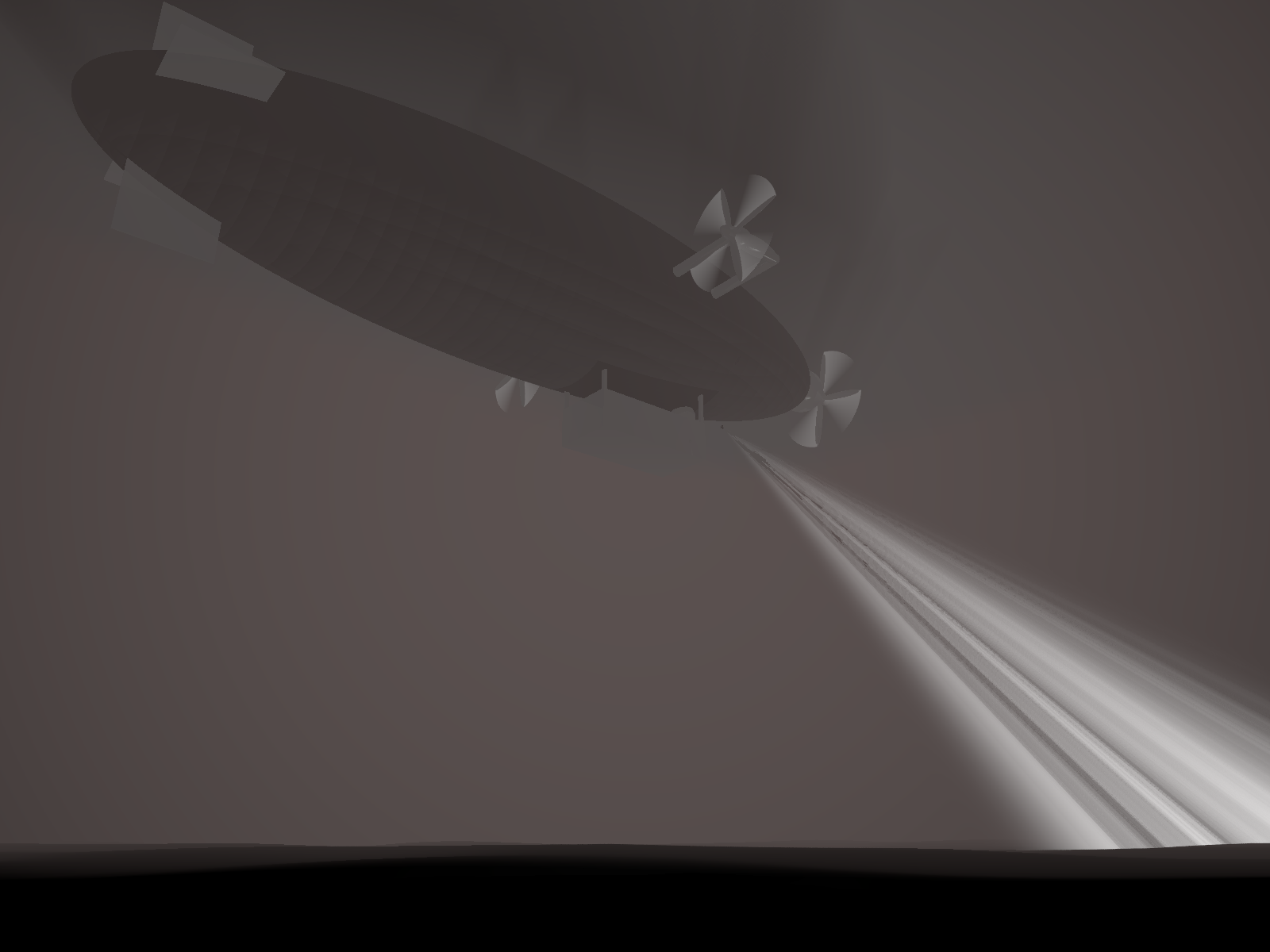
Beginning in November 1896 over Sacramento, California, and exploding into a nationwide phenomenon by the spring of 1897, thousands of Americans across dozens of states reported seeing the same basic thing: a dark, elongated or cigar-shaped craft, often described with a searchlight or glowing lamp, moving through the night sky in ways no balloon or dirigible of the era could match. The wave is extensively cataloged in UFO history references, including Jerome Clark’s The UFO Encyclopedia, which documents how the sightings spread state by state — from California and Nebraska through the Midwest, into Texas, and across the Western territories, including Colorado — before fading out by the summer of 1897.
This was, notably, a full half-century before Kenneth Arnold’s 1947 “flying saucer” sighting in Washington State gave the modern UFO era its name. There was no Air Force to call, no MUFON hotline, no cultural script for “alien visitation” as we understand it today. Witnesses in 1897 didn’t reach for extraterrestrials to explain what they saw — they reached for the era’s own obsession: invention. This was the age of the airship dreamer, when Americans were captivated by the promise of powered flight years before the Wright Brothers ever left the ground at Kitty Hawk. So when something strange crossed the sky, the assumption wasn’t “alien craft” — it was “some genius has built it.”
Colorado’s Place in the Wave
Colorado sat squarely within the geographic footprint of the 1897 airship craze. As part of the broader Western and Plains states swept up in the phenomenon, Colorado newspapers of the period — like papers throughout Kansas, Nebraska, Texas, and California — carried their share of airship reports during the height of the wave in April 1897. These accounts followed the same general pattern seen nationwide: nighttime sightings of a dark, torpedo- or cigar-shaped object, sometimes described with a bright light or lantern-like glow, moving in a manner witnesses insisted no known aircraft of the day could achieve.
It’s worth being precise about what can and can’t be verified more than a century later. The exact number of Colorado-specific sightings, and the full text of every period report, sits scattered across archived newspaper microfilm and isn’t something that can be responsibly summarized without access to those specific primary documents. What historians of the phenomenon agree on is the broader pattern: 1897 marked the first true nationwide “flap” of unexplained aerial sightings in American history, and Colorado — sitting along the rail and telegraph corridors that helped spread both the sightings and the stories about them — was very much a part of that story, not an outlier to it.
What Debunkers Point To
Skeptics and researchers alike have offered several down-to-earth explanations for the 1897 wave, and it’s worth taking them seriously rather than treating the airships as automatically otherworldly:
Misidentified celestial objects. Venus was unusually bright during parts of the wave, and numerous 1897 sightings are believed by researchers to have been cases of witnesses mistaking the planet — or bright stars low on the horizon — for a moving light.
Hoaxes and media sensationalism. Newspapers in the 1890s were locked in fierce circulation battles, and some airship reports are now understood to have been outright fabrications or exaggerated retellings, published because a good airship story sold papers. A handful of small-town editors later admitted to inventing sightings for exactly that reason.
Mass suggestion and cultural expectation. Once wire services began carrying airship stories from California eastward, the idea of the airship itself became a kind of contagious template. Once people expected to see something in the sky, ordinary lights — lanterns on kites, meteors, distant lamps — could be reinterpreted through that lens.
Taken together, these explanations account for a substantial share of the 1897 reports. But researchers who have spent decades cataloging the wave, including Clark, have generally stopped short of claiming they account for all of it. A residue of sightings — witnessed by multiple independent observers, in some cases described with details inconsistent with any known technology of 1897 — remains genuinely unresolved. That’s not evidence of little green men; it’s simply an honest acknowledgment that some of the record defies a clean explanation.
The Same Sky, A Century Apart
What makes the 1897 wave worth revisiting now isn’t nostalgia — it’s pattern recognition. The 2026 Pentagon file releases covered by Denver7 and others describe a familiar shape: unexplained lights and objects over Colorado Springs, a triangular craft reported by a credible former Pentagon employee, a strange floating object nicknamed for a root vegetable. Stacker’s recent breakdown of Colorado’s UFO hotspots suggests the state has never really stopped generating these reports — they’ve simply been renamed and reframed for each era, from “airships” to “flying saucers” to “UAP,” the government’s current preferred term.
Colorado’s reputation for the unexplained runs deeper still — the Denver Gazette’s coverage of the so-called Bermuda Triangle of the West points to a broader regional folklore of strange disappearances and aerial phenomena stretching back generations, of which the 1897 wave is simply the earliest well-documented chapter.
An Unfinished Record
The honest position, more than a century on, is the same one careful researchers take toward today’s Pentagon disclosures: some sightings were hoaxes, some were misidentifications, and some remain stubbornly unexplained. What the 1897 wave offers isn’t proof of anything otherworldly — it’s proof that Colorado’s skies have been generating unanswered questions for a very long time, long before “UFO” was even a word, and long before anyone thought to file a government report about it.