
The Brown Palace Hotel's Unsolved 1911 Murder and Its Ghost
Inside Denver's Brown Palace Hotel, a 1911 society murder still fuels ghost stories more than a century later. The true history behind the haunting.
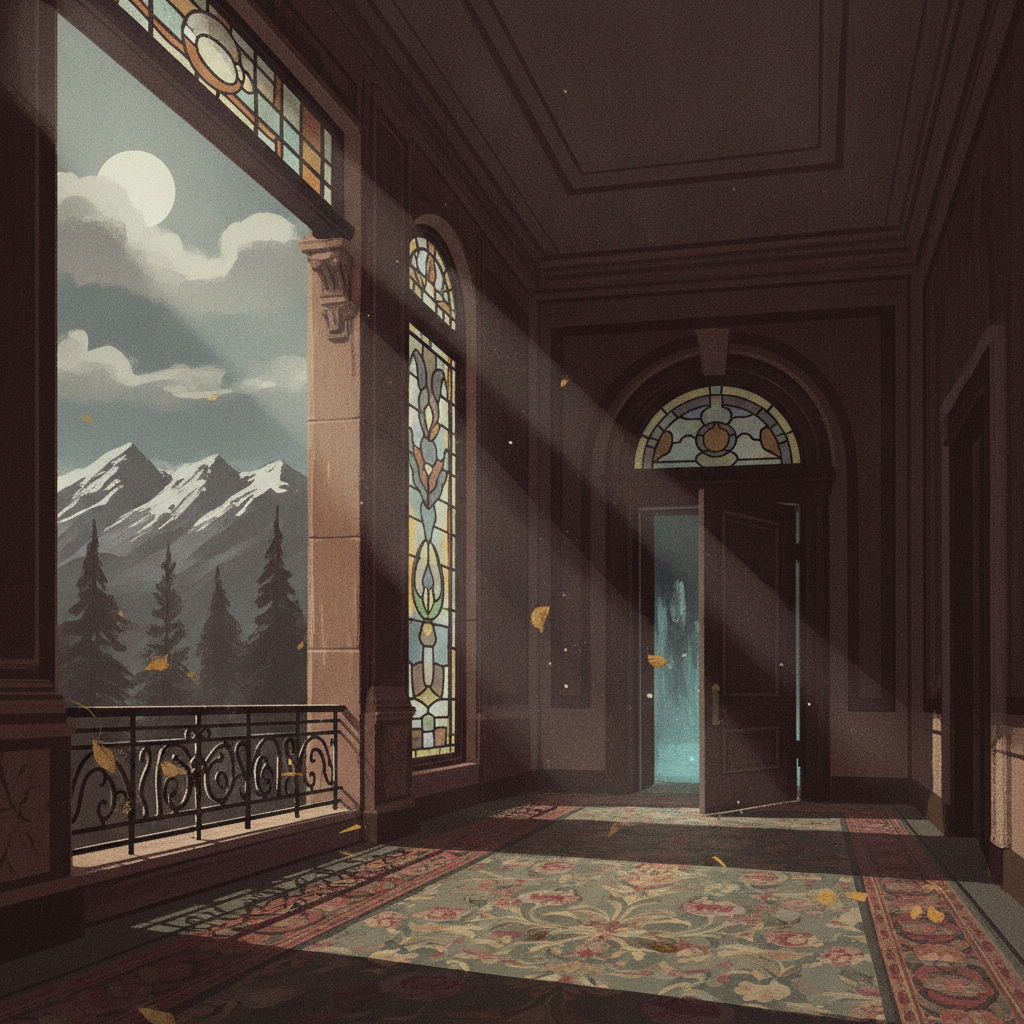
The Brown Palace Hotel’s Unsolved 1911 Murder and Its Ghost
There are hotels that collect ghost stories the way old buildings collect dust — a little bit at a time, settling into every corner until the whole place seems to hum with something unseen. Denver’s Brown Palace Hotel is one of those places. Opened in 1892 and still standing sentinel over 17th Street with its ornate sandstone facade and soaring atrium lobby, the Brown Palace has hosted presidents, movie stars, and touring royalty. It has also, according to more than a century of local lore, hosted something else entirely.
The haunting most associated with the Brown Palace traces back to a real, documented, and still-unsolved crime: the July 1911 shooting death of Sylvester Von Phul, a St. Louis businessman gunned down in one of the hotel’s rooms in the middle of a Denver high-society scandal involving a woman named Isabel Springer. No one was ever convicted. No one was ever definitively charged. And in the decades since, guests and staff have reported enough strange encounters on the Brown Palace’s upper floors that the murder and the mystery have become permanently entangled with the building’s identity.
A Society Scandal Turns Deadly
By the summer of 1911, Isabel Springer was already a fixture of Denver gossip. She was the wife of John Springer, a wealthy and prominent Denver businessman, but her name kept surfacing alongside other men — most notably Sylvester Von Phul, a visitor from St. Louis with whom she was reportedly involved in a romantic entanglement that had grown volatile.
According to newspaper coverage from the period, preserved in Denver historical archives, Von Phul was staying at the Brown Palace when he was shot on the night of July 23, 1911. The shooting followed a heated encounter, and Von Phul died from his wounds days later. Isabel Springer was present in the room, and another man tied to her romantic life, Harold Francklyn, was also implicated in the tangled sequence of events surrounding the shooting.
What followed was a sensational investigation covered extensively by the Rocky Mountain News and other Denver papers of the era, feeding a public appetite for scandal involving the city’s elite. Despite the intense scrutiny, the case was never resolved with a conviction. The specifics of who fired the fatal shot, and why, were argued over in print and in whispered Denver conversation for years, but the official record closes without a clean answer. It remains, by any honest accounting, an unsolved homicide — one of Denver’s most notorious cold cases from the early twentieth century.
The Room Number Debate
Ghost tour guides and paranormal enthusiasts have long pointed to a specific room on the Brown Palace’s eighth floor as the site of the shooting, and that room number gets repeated often in local ghost-story circulation. It’s worth noting, as any careful researcher should, that pinning down the exact room with certainty is difficult more than a hundred years later — hotel room numbering, renovations, and the passage of time complicate matters. What’s solidly documented is the crime itself, the victim, the scandal, and the hotel where it happened. The precise room has become part of the legend surrounding the case, whether or not it can be verified down to the door number.
How the Ghost Story Grew
The Brown Palace didn’t become known as one of Denver’s most haunted hotels overnight. Its reputation built gradually, the way most hotel hauntings do — through decades of guest comments, staff anecdotes, and the kind of unofficial folklore that hospitality workers pass along to each other long before it ever reaches a paranormal television crew.
Over the years, reports associated with the hotel have included the sense of a presence in hallways near the upper floors, unexplained cold spots, and the kind of “someone was just here” feeling that guests describe in older buildings with long, layered histories. None of these accounts come with the rigor of the documented murder case itself — they exist in the softer realm of oral tradition, hotel lore, and the paranormal tourism industry that has grown up around historic buildings throughout Colorado.
This distinction matters. The murder of Sylvester Von Phul is a matter of historical record — verifiable through newspaper archives and Denver history books. The idea that his spirit, or some residual energy from that violent night, still lingers in the Brown Palace is folklore that developed afterward, the natural byproduct of an unsolved death inside a building that has stood for over 130 years. Colorado has no shortage of similar stories where real tragedy becomes the seed for enduring ghost lore — the reported hauntings at Denver’s Peabody-Whitehead Mansion follow a similar pattern, where documented history and generations of storytelling blend until it’s hard to see where one ends and the other begins.
Part of a Larger Denver Tradition
The Brown Palace’s story fits into a broader current of interest in Colorado’s haunted history that shows no sign of slowing down. Paranormal investigation teams have recently turned their attention to other historic Denver properties, including a downtown music venue and a restaurant that once operated as a mortuary, according to recent coverage from CBS News and Denver7. Even a well-known haunted Denver mansion made headlines this year for going up for lease, drawing renewed interest from those fascinated by the building’s reputation. Denver, it seems, has an appetite for its own dark history — and the Brown Palace, with its real unsolved murder at the center of its haunted reputation, remains one of the most compelling entries in that catalog.
Unlike some Colorado ghost stories built on thinner historical ground, the Brown Palace’s haunting has an unusually solid foundation: an actual homicide, extensively reported by the newspapers of 1911, that was never solved. That fact alone — a killer who was never identified, in a case that generated headlines across the city — gives the hotel’s ghost story a weight that pure invention could never match.
What Remains Unknown
More than a century later, the Von Phul case still raises questions that Denver’s newspapers of the day couldn’t answer: who fired the shot, what exactly happened between Isabel Springer, Von Phul, and Francklyn that night, and why the case never resulted in a conviction. Those unanswered questions are the real haunting at the Brown Palace — not necessarily a specter wandering the eighth floor, but a piece of unfinished business from Denver’s past that has never been closed.
Whether or not something lingers in the halls of the Brown Palace, the hotel remains a living piece of Denver history, its marble lobby and stained-glass ceiling bearing witness to over a century of the city’s triumphs, scandals, and mysteries. The next time you find yourself sipping afternoon tea beneath that famous atrium, it’s worth remembering that not every ghost story in Colorado is built on speculation. Some of them start with a very real gunshot, a very real scandal, and a case that Denver never quite managed to close.