
Molly Brown House: Titanic Survivor's Haunted Denver Legacy
Inside Denver's Molly Brown House Museum, where staff and visitors report footsteps, cold spots, and a Titanic survivor who may have never left.
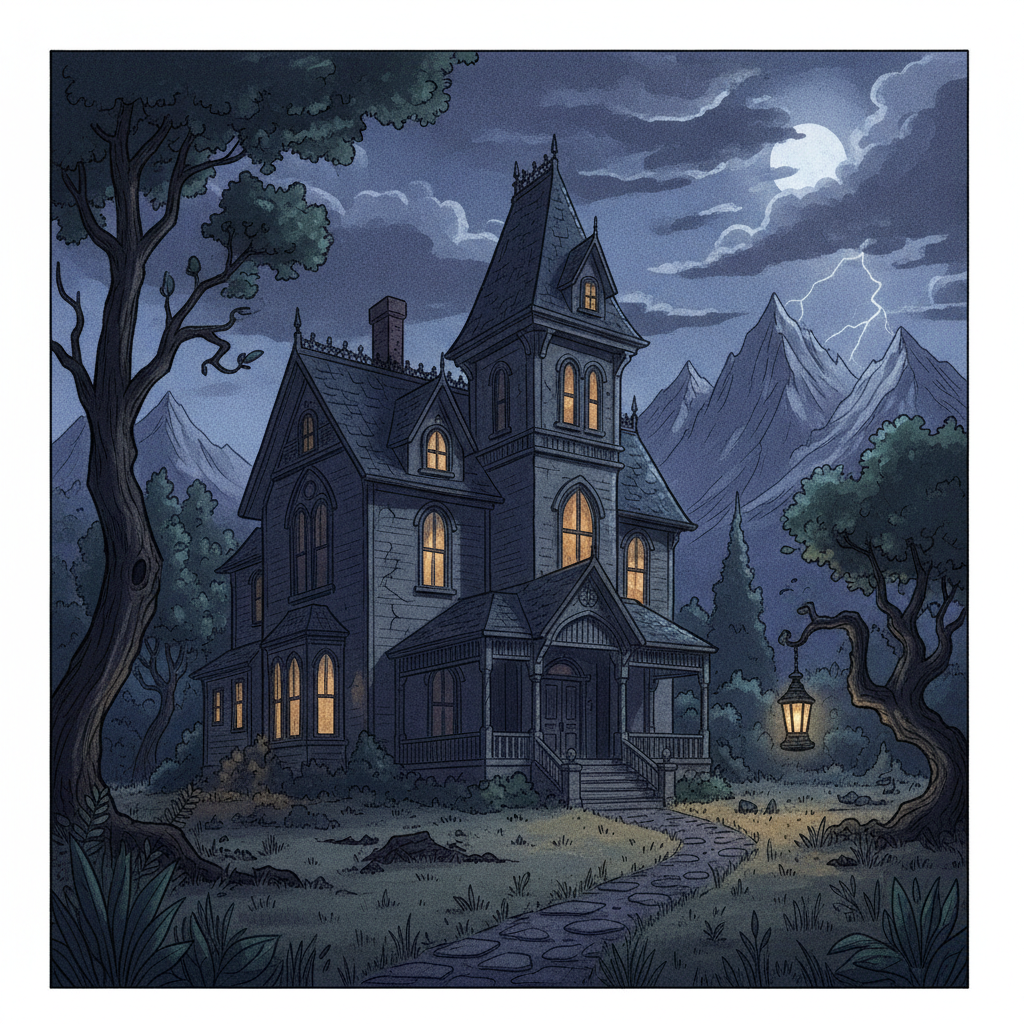
A House That Remembers
At 1340 Pennsylvania Street in Denver’s Capitol Hill neighborhood stands a Victorian stone-and-sandstone mansion that has weathered more than a century of Colorado history — silver booms and busts, a world war, the sinking of the Titanic, and decades as one of the most visited historic homes in the American West. The Molly Brown House Museum tells the well-documented story of Margaret “Molly” Brown, one of Denver’s most famous residents. But according to staff, volunteers, and visitors over the years, the house may still be telling that story with Brown herself present to narrate it.
This is a look at what’s verifiably known about Molly Brown’s remarkable life, how her home became a museum, and the decades of reported paranormal activity that have made it a fixture on Denver’s list of haunted places — including a visit from a nationally broadcast ghost-hunting team.
The Real Molly Brown
Margaret Tobin Brown was born in 1867 in Hannibal, Missouri, and came west as a young woman, eventually marrying James Joseph “J.J.” Brown, a mining engineer. When J.J.’s work in Leadville’s silver mines struck it rich, the couple’s fortunes changed dramatically, and in 1894 they purchased the Capitol Hill mansion that now bears her name. The house had been built in 1889 by architect William Lang, known for his ornate Victorian designs scattered throughout the neighborhood.
Brown became a fixture of Denver high society and a committed philanthropist and activist, advocating for women’s suffrage, workers’ rights, and education. She ran for the U.S. Senate years before women nationwide even had the right to vote.
Her lasting fame, though, comes from a single night in April 1912. Brown was a first-class passenger aboard the RMS Titanic and survived the sinking in Lifeboat No. 6, where she is widely credited with helping row and organize fellow survivors, and reportedly urged the crew to turn back for people still in the water. Her actions that night, and her fundraising for survivors afterward, earned her posthumous fame as “the Unsinkable Molly Brown” — a nickname popularized after her 1932 death, largely through the 1960 Broadway musical and the 1964 film that dramatized her life.
From Boarding House to Museum
After Brown’s death, the Pennsylvania Street mansion passed through different owners and uses, including a stint as a boarding house, and by the 1970s it faced the threat of demolition. Its rescue became the founding preservation project of Historic Denver, Inc., a nonprofit formed specifically to save the house. It opened to the public as a museum in 1970 and has since operated as a historic house museum dedicated to Brown’s life, the Victorian era in Denver, and the broader story of the city’s mining-era elite.
That layered history — a family home, a rooming house, decades of renovation and restoration — is exactly the kind of backdrop paranormal investigators and local ghost-story collectors point to when explaining why a place might be “active.”
What Staff and Visitors Have Reported
Over the years, the Molly Brown House has developed a reputation as one of Denver’s most talked-about haunted sites, a status reinforced by local news coverage and appearances on paranormal investigation programs. Reported phenomena, as described in various local features and paranormal accounts, generally fall into a familiar pattern for historic haunted houses:
- Footsteps on the staircases and upper floors when no one else is present in the house.
- Unexplained cold spots that staff and visitors describe moving through rooms.
- Doors opening or closing on their own, and lights or electrical equipment behaving erratically.
- The scent of cigar smoke or period perfume lingering in rooms with no obvious source.
- Occasional reports of a woman’s figure glimpsed in period dress, sometimes associated with an upstairs bedroom or the staircase.
These accounts are anecdotal — they come from museum docents, visitors on public tours, and paranormal enthusiasts rather than controlled scientific studies. As with most reportedly haunted historic sites, there’s no verified physical evidence of a ghost; what exists is a long, consistent oral tradition of strange experiences tied to a house whose backstory — sudden wealth, tragedy at sea, family loss, near-demolition, and rebirth as a museum — gives the claims an emotional resonance that keeps visitors talking.
When the Ghost Hunters Came to Denver
The Molly Brown House’s haunted reputation reached a national audience when it was investigated by Syfy’s long-running paranormal series Ghost Hunters, featuring the Rhode Island-based team TAPS (The Atlantic Paranormal Society). The team, known for using audio recorders, EMF meters, and infrared cameras to document alleged anomalies in historic locations across the country, spent time in the museum after hours, examining the same reports of footsteps, temperature shifts, and unexplained sounds that staff had described for years.
As is typical of the show’s format, the investigation combined firsthand accounts from museum staff with the team’s own equipment readings, presenting the findings to viewers without offering hard scientific proof one way or the other. It added the Molly Brown House to a list of Colorado locations that have drawn attention from professional and amateur paranormal investigators alike — a list that continues to grow, as seen in recent years with television crews descending on other Denver-area sites, from a former mortuary turned restaurant to Capitol Hill’s Peabody-Whitehead Mansion and downtown music venues like Ophelia’s Electric Soapbox.
Separating History From Haunting
It’s worth being clear about what is documented fact and what remains firmly in the realm of local legend. Molly Brown’s biography — her survival of the Titanic, her philanthropy, her advocacy work, and the preservation of her Denver home — is thoroughly documented through historical records, Historic Denver’s own archives, and contemporary newspaper accounts from her lifetime. The ghost stories are a different matter entirely: they rest on the testimony of staff and visitors, repeated over decades, and amplified by television coverage, rather than on any verifiable proof of paranormal activity.
That distinction doesn’t make the stories less compelling. If anything, it’s the tension between the two — a woman whose real, extraordinary life reads like fiction, paired with an unresolved question of whether some trace of her lingers in the house she once called home — that keeps the Molly Brown House Museum on Colorado’s short list of essential haunted destinations.
Visiting Today
The Molly Brown House Museum remains open to the public as a historic site operated by Historic Denver, offering guided tours focused on Brown’s life, the Victorian architecture of the home, and Denver’s Gilded Age history. Whether visitors leave with a deeper appreciation for one of Colorado’s most fascinating historical figures, an unexplained chill on the staircase, or both, the house continues to do what it has done for more than a century: hold onto its stories, and maybe its people, a little longer than expected.