
The Face on the Floor: Central City's Barroom Legend
Inside the Teller House's eerie painted face and the ghost stories of Central City's mining-era cemeteries, one of Colorado's oldest urban legends.
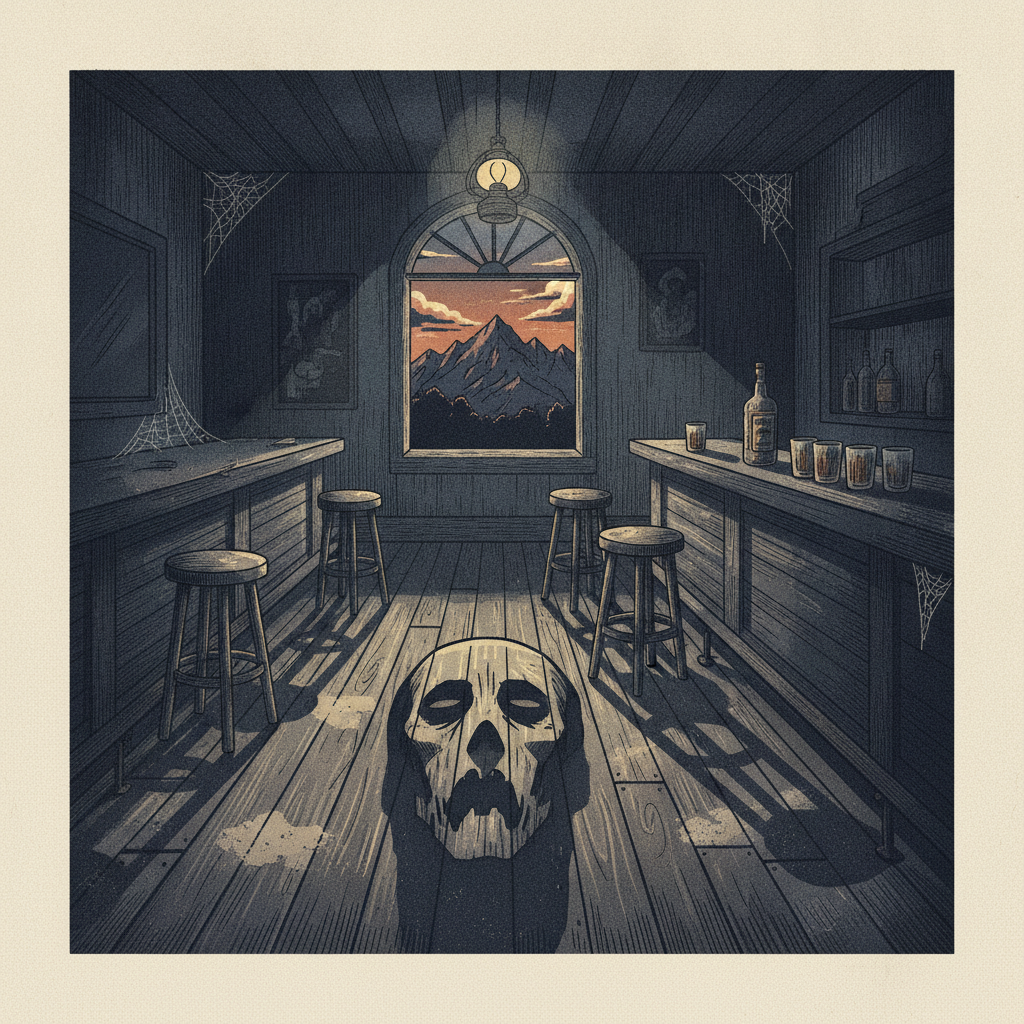
A Boomtown’s Ghost in Oil Paint
Drive up the winding switchbacks from Black Hawk into Central City, Colorado, and you’ll find a town that still wears its nineteenth-century mining boom like a threadbare coat. Brick storefronts lean against the mountainside. Old assay offices sit beside casinos. And in the barroom of the Teller House, one of the oldest hotels in the Rockies, a man’s face stares up from the floorboards — painted there nearly ninety years ago, and still, according to local lore, impossible to fully explain away.
This is the story of “The Face on the Barroom Floor”: a real painting, with a real, documented origin, that has nonetheless accumulated a thick layer of legend in the decades since it was created. Separating the two — the verifiable history and the ghost story built on top of it — is part of what makes Central City one of Colorado’s richest pockets of urban folklore.
The Teller House and the Real Boomtown
Central City earned its nickname, “the richest square mile on Earth,” after gold was discovered in the surrounding gulches in 1859, touching off one of Colorado’s first major mining rushes. The Teller House opened in 1872, built by the Teller family (relatives of Colorado Senator Henry M. Teller) as a first-class hotel to serve the wealth pouring out of the hills. It hosted dignitaries, including President Ulysses S. Grant, who reportedly walked into the hotel on a sidewalk paved with silver bricks during an 1873 visit — a detail well documented in Colorado historical accounts of the era.
Like most boomtowns, Central City’s fortunes followed the ore. When the easy gold ran out, the population thinned, buildings emptied, and the town settled into the long, quiet decline familiar to mining communities across the Rockies. The Teller House survived, eventually becoming tied to the Central City Opera House Association, which still maintains the hotel and its barroom today.
The Painting: Documented Fact
In 1936, decades after the Teller House’s boomtown heyday, an artist named Herndon Davis was commissioned to add décor to the hotel’s barroom floor. Davis was a working artist and illustrator known for portrait work, and according to the Central City Opera House Association’s own historical materials, he painted the image of a man’s face directly onto the floorboards near the bar.
The image was inspired by a poem: “The Face Upon the Floor,” written by Hugh Antoine d’Arcy and first published in 1887. The poem tells the story of a heartbroken, down-on-his-luck artist who wanders into a barroom, trades a sketch for a drink, and sketches the face of the woman who ruined him onto the barroom floor before collapsing — dead, in the poem’s telling, from grief. D’Arcy’s poem was hugely popular in its day, reprinted in newspapers and recited in vaudeville halls across the country, part of the wave of sentimental “barroom ballad” poetry popular in the late nineteenth century.
Davis’s painting was a tribute to that poem — a piece of intentional, artist-commissioned décor meant to give the historic barroom a bit of theatrical flavor. That’s the documented origin. There was no death in the room, no recorded tragedy tied to the painting’s creation. It was, plainly, a work of art commissioned for a hotel bar, executed by a known artist with a known career, illustrating a well-known piece of American verse.
Where the Legend Takes Over
What happened after 1936 is where documented history gives way to barroom folklore — and Central City has had ninety years to let the story grow.
Locals and visitors have long claimed the face cannot be permanently scrubbed away or painted over — that no matter how hard staff try to strip it from the floor, the image bleeds back through. Some versions of the tale hold that Herndon Davis’s face resists removal entirely, as though the wood itself refuses to let it go. Others insist the painting photographs differently depending on who’s looking, or that the expression on the face seems to shift subtly between visits — sorrowful in one glance, hollow and staring in the next.
None of this is documented in any historical record; there’s no contemporary account of restoration crews being thwarted, no newspaper report of the paint mysteriously reappearing. It’s the kind of story that spreads because it’s a good story — a floor painting of a face, in a 150-year-old mining hotel, is exactly the sort of image that invites embellishment. The gap between “an artist painted this in 1936” and “this face cannot be erased” is where oral tradition does its work, and in a town built on gold rush myth-making to begin with, that tradition runs deep.
The Hillside Cemeteries
The face isn’t the only piece of Central City lore rooted in real history. Scattered across the hills above town sits an unusual cluster of small, separate cemeteries — Catholic, Masonic, Independent Order of Odd Fellows (IOOF), and a nondenominational City Cemetery — laid out side by side rather than combined into one plot. This segregation by fraternal order and faith was common practice in nineteenth-century mining towns, where community organizations like the Masons and IOOF often managed their own burial grounds and mutual aid for members.
Because Central City boomed and busted so quickly, and because mining work was dangerous and often fatal, many burials from the town’s earliest decades were poorly marked, recorded inconsistently, or lost to time altogether as wooden markers rotted and paperwork went missing — a common problem in boomtown cemeteries throughout Colorado. That reality, well documented by regional historians and preservation groups who’ve worked to catalog and restore the plots, has fueled generations of local ghost stories: tales of restless miners, unmarked graves disturbed by later construction, and figures glimpsed wandering the hillside paths after dark. As with the Teller House painting, the historical bones are real — the fractured burial system, the lost records, the hard, often short lives of the miners buried there — even where the ghost stories layered on top of them can’t be verified.
Fact, Folklore, and Why It Endures
What makes “The Face on the Barroom Floor” such a durable piece of Colorado lore is exactly this blend: a real painting by a real artist, illustrating a real nineteenth-century poem, sitting inside a real boomtown hotel surrounded by real, historically documented cemeteries full of forgotten names. The legend didn’t need to invent much — it just needed a striking image and a town with enough genuine history of loss and mystery to make the embellishments feel plausible.
Whether or not the face has ever truly resisted a paintbrush, it’s easy to understand why the story persists. Stand in that barroom, look down at Herndon Davis’s nearly century-old brushwork, and it’s hard not to feel Central City’s whole strange, gold-soaked history looking back up at you.