
Miramont Castle: The Haunted History of a Manitou Sanitarium
Inside Miramont Castle, the eccentric Manitou Springs mansion turned tuberculosis sanitarium whose staff and visitors still report ghostly encounters today.
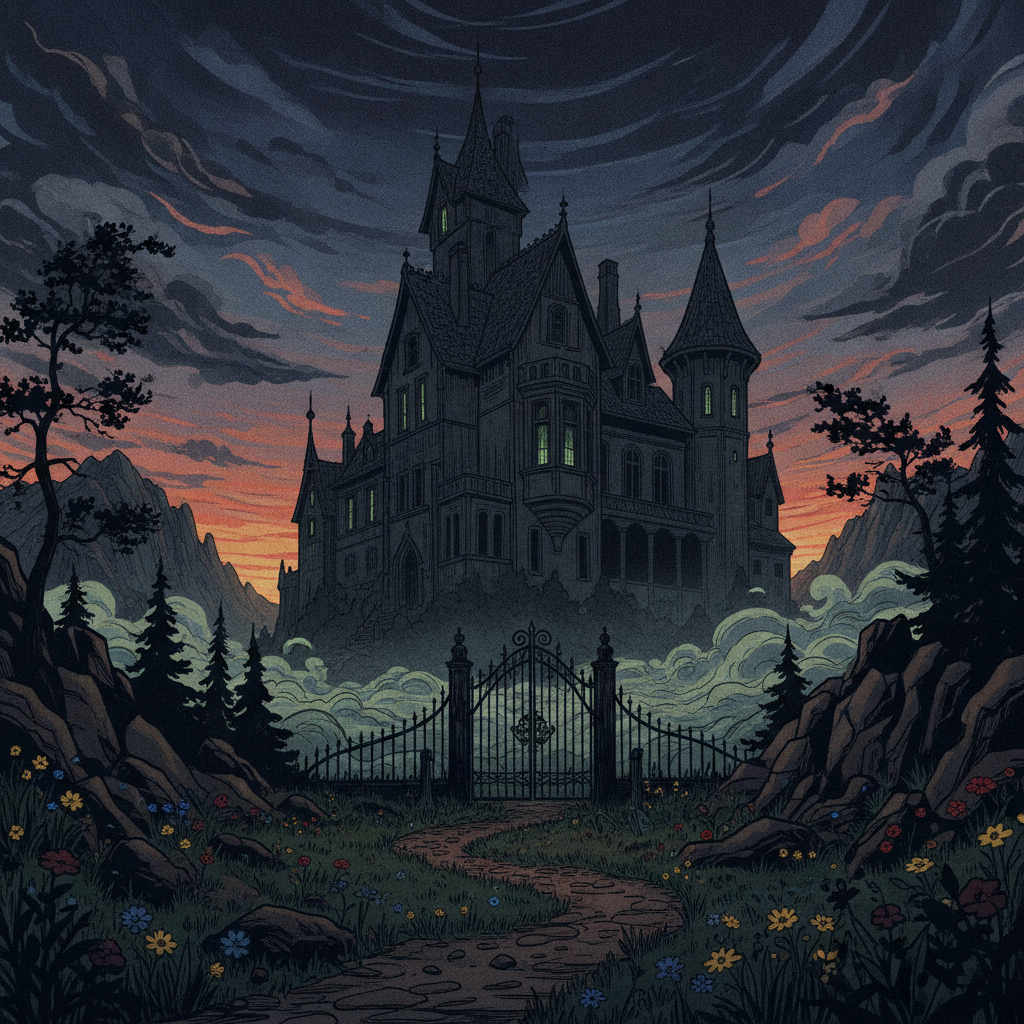
The mountain air in Manitou Springs carries a particular kind of hush after sunset, when the shops along Manitou Avenue go dark and the only light left comes from the sandstone turrets of a mansion that shouldn’t, by any architectural logic, exist. Miramont Castle sits above the town like something dreamed up by a fever — because, in a sense, it was. Long before it became one of Colorado’s most reliably reported haunted sites, it was the obsession of a French priest, a refuge for the desperately ill, and finally a hard-won preservation project that saved it from the wrecking ball. Its ghost stories, passed down through generations of staff and visitors, are inseparable from that real and often heartbreaking history.
A Priest’s Strange Vision
Miramont Castle was built in 1895 by Father Jean Baptiste Francolon, a French Catholic priest who came to Manitou Springs partly for his health and partly, historians believe, to be near his mother, Marie Francolon, for whom he built the home. What Francolon commissioned was less a single building than an argument between nine different architectural styles crammed into one structure — Queen Anne turrets, Romanesque stonework, Tudor half-timbering, Flemish stepped gables, Byzantine and Moorish touches, all stitched together into a 14,000-square-foot curiosity that still confuses architecture buffs today. The house’s massive fireplace, built from native stone, remains one of its signature features, along with a four-story spiral staircase tower that visitors often describe as the coldest part of the building.
Francolon’s own history is nearly as strange as his house. Some historical accounts connect him to French nobility and diplomatic circles, though the priest kept much of his personal life deliberately obscure. He sold the property in 1900 and left Manitou Springs, but the building he left behind was only beginning its transformation.
From Mansion to Sanatorium
At the turn of the twentieth century, Colorado — and Manitou Springs in particular — had become a destination for tuberculosis patients. The region’s dry mountain air, elevation, and mineral springs were widely believed to offer relief, even a cure, for the disease that was then one of the leading causes of death in the United States. It was in this era that Miramont’s former mansion became the Montcalm Sanatorium, later operated in part by the Sisters of Mercy, treating patients who had traveled long distances in hope of recovering their health in the Colorado climate.
Life inside a sanatorium in this period was not gentle. Tuberculosis wards of the early 1900s were places of prolonged suffering, quarantine, and, frequently, death — treatment relied heavily on rest, fresh air, and time rather than the antibiotics that wouldn’t be widely available until decades later. Buildings that housed sanatoriums during this era, including Miramont, carry that documented history of illness and loss as a matter of historical record, independent of any ghost story attached to them later.
The building continued to change hands through the twentieth century, eventually being subdivided into apartments before falling into disrepair by the 1970s.
Preservation and a Museum Born from Ruin
Miramont Castle survives today largely because of the Manitou Springs Historical Society, which purchased the deteriorating building in 1976 and undertook its restoration. The effort paid off: Miramont Castle was listed on the National Register of Historic Places in 1977, cementing its status as one of the most architecturally significant buildings in the Pikes Peak region. Today it operates as a museum, with period rooms, a model railroad display, and the Queen’s Parlour Tea Room, drawing visitors curious about both its eccentric architecture and its layered, sometimes somber history.
That history — a priest’s strange folly, a tuberculosis sanatorium, decades of institutional use, near-demolition, and rescue by local preservationists — is well documented in Historical Society records and National Register documentation. It’s also, unsurprisingly, the foundation on which decades of ghost lore have been built.
The Ghosts of Miramont
Ask around Manitou Springs long enough and you’ll hear the stories: footsteps echoing on empty staircases after closing, sudden cold spots that move through rooms with no draft to explain them, the sense of being watched in the castle’s tower, doors that seem to open and close on their own. Staff members and visitors over the years have described these experiences to local media, tour guides, and paranormal researchers, and the castle has become a fixture on Colorado’s informal haunted-places circuit, frequently listed alongside other reportedly active sites in roundups of the state’s strangest and creepiest locations.
The lore surrounding Miramont draws its emotional weight directly from the building’s sanatorium years. Local legend holds that some of the apparitions reported inside — glimpses of figures in old-fashioned dress, the impression of a woman near the tower stairs — are connected to patients or caregivers from the Montcalm Sanatorium era, though no verified historical record confirms the identity of any specific spirit. This is folklore in the truest sense: stories shaped by real suffering that occurred within real walls, retold and reshaped over a century until fact and legend become difficult to separate.
It’s worth being clear about what is and isn’t documented here. The building’s use as a tuberculosis sanatorium, its architectural history, and its rescue by the Manitou Springs Historical Society are established historical facts, verifiable through National Register documentation and the Historical Society’s own records. The ghost stories — the cold spots, the footsteps, the shadowy figures — are reported experiences and long-circulating local legend, not verified paranormal events. No credible physical evidence has ever confirmed a haunting at Miramont Castle, and readers should treat the ghost lore as exactly that: a rich, atmospheric tradition rather than established fact.
A Piece of a Larger Pattern
Miramont’s reputation fits into a much broader and currently very active thread of Colorado ghost lore. In just the past year, paranormal investigation crews have turned their attention to a former Denver mortuary now operating as a restaurant, to Ophelia’s Electric Soapbox, and to the Peabody-Whitehead Mansion, all sites where staff and investigators have reported unexplained phenomena, according to recent coverage from CBS News, Denver7, and the Denver Gazette. Roundups like Uncover Colorado’s compilations of the state’s creepiest documented stories suggest an enduring public appetite for these tales — one Miramont Castle has fed for decades, long before ghost-hunting became a televised genre.
Whether or not you believe anything lingers in Miramont’s stone hallways, the castle rewards a visit on its history alone: a monument to one eccentric priest’s architectural ambitions, a witness to one of the deadliest diseases of its era, and a rare case of a threatened historic building saved by a community that decided it was worth keeping. The ghost stories are the atmosphere. The history is the substance. At Miramont Castle, both are worth the climb up the hill.