
The Croke-Patterson Mansion: Denver's Most Cursed House?
Inside Denver's Croke-Patterson Mansion, an 1891 Capitol Hill landmark linked to suicides, financial ruin, and a century of ghost stories.
A Mansion Built on Ambition — and Bad Timing
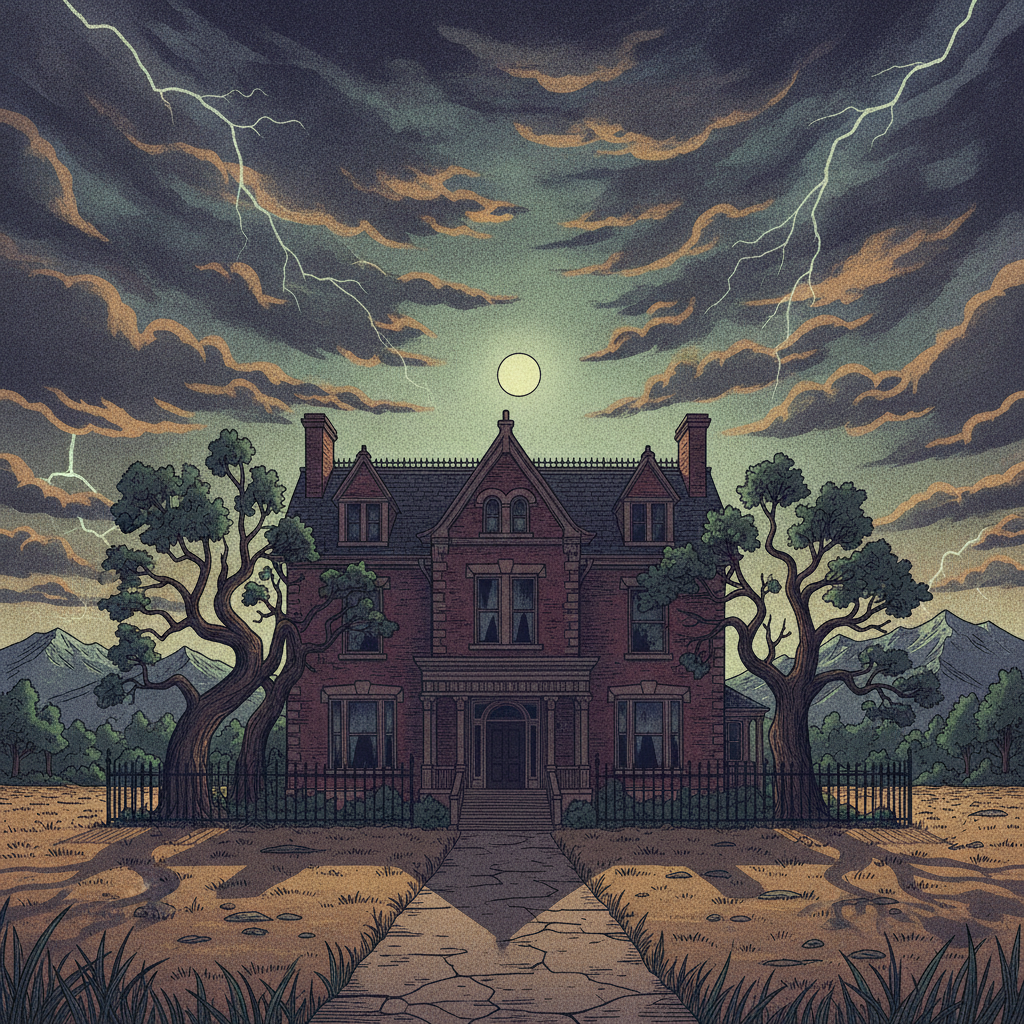
At the corner of 11th Avenue and Pennsylvania Street in Denver’s Capitol Hill neighborhood stands a hulking Richardsonian Romanesque castle of pink rhyolite stone, its round tower and heavy arches looking more suited to a Scottish moor than a Rocky Mountain boomtown. For more than a century, Denverites have called it cursed. Real estate agents have struggled to lease it. Paranormal enthusiasts trade stories about it at ghost tours across the city. And unlike a lot of haunted-house lore, the Croke-Patterson Mansion’s reputation is built on a documented history of financial ruin, sudden loss, and a near-brush with the wrecking ball that is very much a matter of public record.
This is the story of what’s known — and what’s merely whispered — about one of Colorado’s most storied addresses.
Built for a Man Who Never Lived There
The mansion was constructed in 1890-91 for Thomas B. Croke, an Irish-immigrant businessman who had made a fortune in Denver real estate and mining investment during the city’s silver boom years. Designed in the Richardsonian Romanesque style popular among Gilded Age tycoons, the house was meant to announce Croke’s arrival among Denver’s elite.
It never got the chance. According to Denver preservation history and the mansion’s National Register of Historic Places documentation, Croke sold the house not long after its completion — some accounts suggest he never formally moved in at all. Colorado’s silver economy was cratering toward the Panic of 1893, and Croke’s fortunes reportedly went with it. The timing has fueled more than a century of speculation that the house itself was somehow to blame, though the more mundane and verifiable explanation is that Croke was simply another casualty of a brutal statewide financial collapse that ruined countless Colorado mining and real estate fortunes in the same period.
Senator Patterson’s Household
The mansion’s more stable and better-documented era came with its next owner, Thomas M. Patterson — a U.S. Senator, U.S. Representative, and publisher of the Rocky Mountain News, one of the most powerful political and media figures in early Colorado history. Patterson purchased the home and it became a residence associated with his family for years, eventually giving the house the “Patterson” half of its hyphenated name. A later owner, William Campbell, added the third name sometimes used in formal references to the property: the Croke-Patterson-Campbell Mansion.
Patterson’s tenure is generally remembered as the mansion’s most prestigious chapter, a period grounded in verifiable political and journalistic history rather than legend. It’s the later ownership changes — and the losses attached to them — that gave the house its darker reputation.
The “Curse” Narrative
Here’s where the historical record and local legend begin to blur, and where any honest telling of this story has to slow down and separate the two.
For decades, Denver ghost-tour operators, local journalists, and history writers have repeated a version of the same claim: that after Patterson’s era, a string of owners and residents of the mansion suffered disproportionate misfortune — bankruptcies, failed marriages, sudden deaths, and at least one reported suicide connected to the property over its long history. This narrative has circulated widely enough in Capitol Hill ghost lore that the mansion is routinely named alongside places like the Molly Brown House and the Peabody-Whitehead Mansion (another Capitol Hill property with its own well-covered haunted reputation) as one of Denver’s classic “cursed house” stories.
It’s important to be precise about what’s actually verifiable here: property records confirm the mansion changed hands multiple times over the 20th century, cycling through periods as a private residence, a rooming house, and eventually commercial office space — a pattern common to many aging Capitol Hill mansions as the neighborhood’s grand single-family homes became too costly to maintain and too large for shrinking households. Whether any specific death at the property was directly tied to the house itself, as opposed to being a private tragedy that happened to occur there, is the kind of claim that’s been passed down through secondhand retellings rather than documented in contemporary newspaper accounts available for public review. Readers should treat the “curse” framing as local legend layered onto a real and turbulent ownership history — not as an established supernatural fact.
Saved From the Wrecking Ball
What is unambiguously documented is the mansion’s brush with demolition. By the mid-20th century, many of Capitol Hill’s Gilded Age mansions were being torn down to make way for parking lots and apartment towers as the neighborhood’s fortunes declined. The Croke-Patterson Mansion nearly met the same fate in the 1970s, when it faced serious demolition pressure amid the broader wave of teardowns reshaping the district.
Preservationists intervened, and the mansion was ultimately listed on the National Register of Historic Places, a designation that helped secure its survival. That listing remains one of the clearest, most citable facts in the mansion’s entire history — official recognition that anchors the building’s legal protection to this day, regardless of what one believes about the stories attached to it.
Offices, Events, and Modern Reports
In the decades since its preservation, the Croke-Patterson Mansion has lived a much quieter institutional life: it has served at various points as commercial office space and as a venue for private events, including weddings, drawing on the architectural drama of its restored interiors — carved woodwork, stained glass, and the signature round tower room. Denver-area coverage over the years has periodically revisited the property, both for its architectural pedigree and its ghost-story reputation, and it has occasionally reappeared in local real estate listings as available office or event space.
It’s in this modern commercial chapter that most of the mansion’s specific “ghost” reports originate — the kind of testimony common to old buildings that host rotating staff, tenants, and event guests rather than a single family. Over the years, people who have worked in or visited the mansion have described the standard hallmarks of Capitol Hill’s haunted-mansion lore: unexplained cold spots, the sound of footsteps on empty staircases, doors that seem to close on their own, and a persistent sense of being watched in the tower room. These accounts circulate largely as secondhand and anecdotal reports passed along through local ghost tours, blog posts, and word of mouth rather than formal, named, on-the-record testimony — worth noting seriously as part of the mansion’s folklore, but not verifiable in the way its ownership records or National Register listing are.
What We Actually Know
Strip away the legend, and the Croke-Patterson Mansion’s real history is dramatic enough on its own: a fortune-teller of a house that ruined the man who built it, sheltered one of Colorado’s most powerful political figures, cycled through a turbulent series of owners as Capitol Hill itself transformed, and survived a demolition scare that claimed many of its architectural peers. Whether something lingers in that tower room is, and likely will remain, unprovable. But the mansion’s very real history of loss, ambition, and near-erasure is precisely why Denverites keep telling ghost stories about it — the building has always seemed to invite them.
If you find yourself walking Pennsylvania Street in Capitol Hill after dark, the mansion is easy to spot: the pink stone catches streetlight in a way that few of its neighbors do, and the tower still looks like it’s watching the block. Whether that’s architecture or something else is, as with most of Denver’s oldest ghost stories, left for you to decide.