
Baby Doe Tabor's Frozen Vigil at Leadville's Matchless Mine
The true story of silver queen Baby Doe Tabor, found frozen in a Leadville mining shack in 1935 — and the haunting legend that followed.
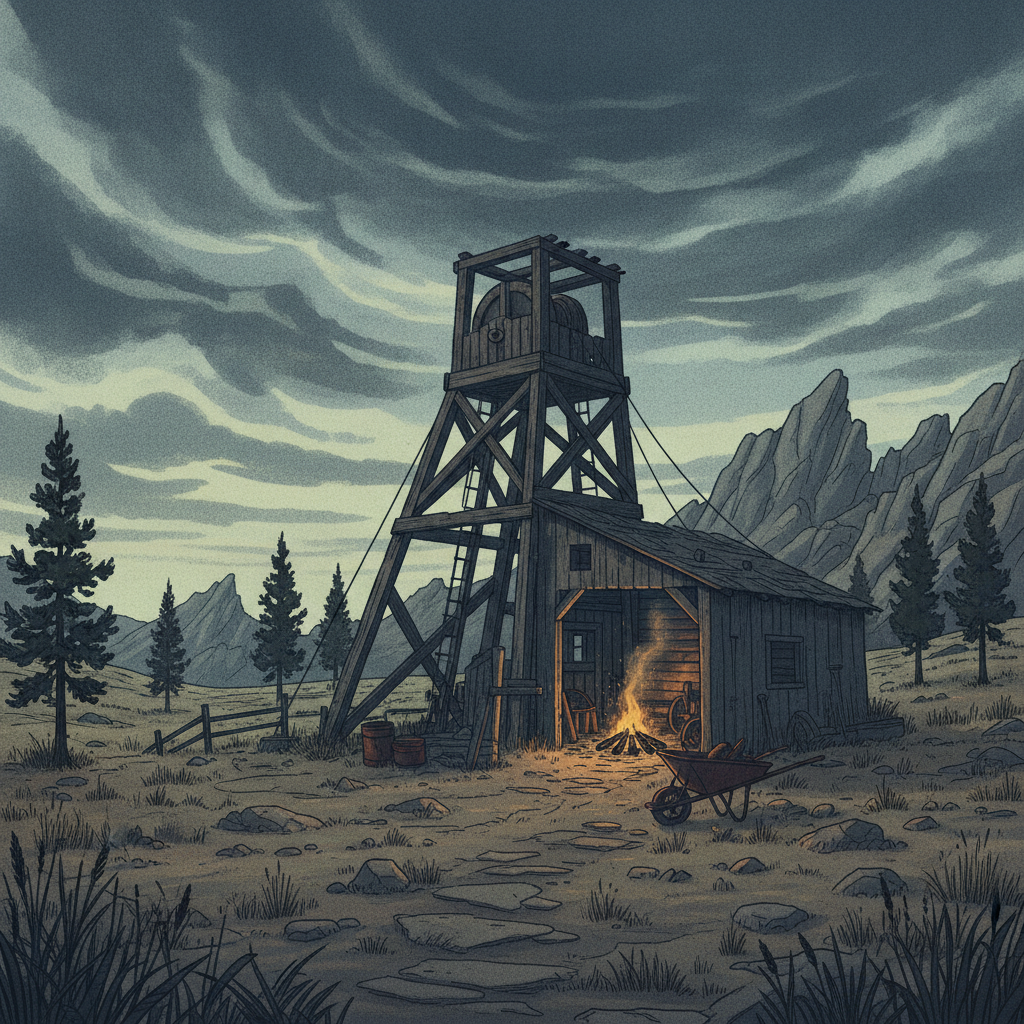
The wind that comes down off Mount Massive in the dead of a Leadville winter has a particular kind of cruelty to it — thin, dry, relentless, carrying cold into places that seem like they should be sheltered. It was this wind, and the silence beneath it, that finally led a fuel-delivery man to a locked cabin door at the Matchless Mine on March 7, 1935. Inside, he found the frozen body of a woman who had once been called the most beautiful bride in Colorado, the wife of a millionaire senator, and the toast of Washington society. By the time she died, most of Leadville had forgotten her name was Elizabeth. Everyone simply called her Baby Doe.
Her story is one of the strangest true arcs in Colorado history — a rise from mining-camp scandal to Gilded Age royalty, a catastrophic financial collapse, and a final three decades of self-imposed exile guarding a played-out silver mine until it killed her. It’s also become one of the state’s most enduring ghost legends, though what actually happened at the Matchless Mine is stranger, and sadder, than any haunting.
The Silver King and His Scandalous Bride
Horace Tabor arrived in Colorado during the gold rush years and, through a combination of grubstaking prospectors and sheer luck, became one of the wealthiest men in the American West after striking it rich with the Little Pittsburg and later the Matchless Mine near Leadville. According to the Colorado Encyclopedia, by the early 1880s Tabor’s silver fortune had made him a state political power broker — lieutenant governor, and briefly a U.S. senator.
His personal life detonated Colorado high society just as thoroughly as his mining ventures built it. Tabor divorced his first wife, Augusta, to marry Elizabeth “Baby Doe” McCourt, a divorcée from Wisconsin two decades his junior. Their 1883 wedding in Washington, D.C. — reportedly attended by President Chester Arthur — scandalized the political establishment, and Washington wives largely shunned Baby Doe. Back in Colorado, the couple lived in extravagant style, building the Tabor Grand Opera House in Denver and cementing their status as symbols of frontier-made wealth.
It would not last.
The Panic of 1893 and a Fortune Undone
The Silver Panic of 1893 is one of the pivotal — and often underappreciated — economic disasters in Colorado history. When the federal government repealed the Sherman Silver Purchase Act, the bottom fell out of silver prices nationwide. Mining towns across Colorado, Leadville chief among them, collapsed almost overnight. Fortunes built on silver, including Tabor’s, evaporated within months. Horace Tabor, once one of the richest men in the region, died in 1899 nearly penniless, working a low-level job at the Denver post office that friends had arranged for him.
According to popular and long-repeated accounts of Tabor’s final words to Baby Doe, he urged her to hold on to the Matchless Mine, believing silver prices would someday rebound and restore the family fortune. Whether or not he spoke those exact words has never been independently verified — but what is documented is that Baby Doe took the mine’s ownership, and the burden of it, with total seriousness for the rest of her life.
Three Decades Alone on Fryer Hill
What followed is one of the most remarkable acts of devotion, obsession, or both in Colorado history. Baby Doe Tabor moved into a one-room wooden toolshed adjacent to the Matchless Mine’s shaft house on Fryer Hill outside Leadville and stayed there, on and off, for roughly 36 years, refusing to abandon the claim even as the mine produced nothing and the fortune it once represented never returned.
Leadville locals occasionally saw her in town, increasingly eccentric in dress — reportedly wrapping her feet in burlap and layering mismatched clothing against the mountain cold — but she remained fiercely private, and by most accounts reclusive. She kept diaries during these years that have survived and are held today by the Colorado Historical Society (History Colorado), offering a fragmented but genuine window into her religious devotion, her financial desperation, and her unwavering belief that the Matchless would someday produce again.
In March 1935, after Leadville residents realized they hadn’t seen her deliver fuel requests or make her usual trips into town, a delivery man found her frozen inside the cabin. Contemporary newspaper coverage, including reporting later referenced in Colorado historical archives, indicates she had likely been dead for several days before she was discovered, alone in the depth of a Rocky Mountain winter, in the same shack she’d guarded for decades. She was in her early eighties.
From Mining Claim to Museum — and Ghost Story
Today, the Matchless Mine site is preserved as a historic attraction just outside Leadville, and the cabin where Baby Doe died still stands, restored and open to visitors during the summer season. The site holds recognition tied to its documented role in Colorado’s silver mining history, and it remains one of the most visited historical stops in Lake County alongside Leadville’s National Historic Landmark District.
It’s also, unsurprisingly, become fertile ground for ghost stories. Local legend and visitor reports — the kind that circulate in Leadville guidebooks, ghost-tour scripts, and roundups of Colorado’s creepiest real locations — describe a woman’s figure glimpsed near the cabin window, cold spots inside the small structure, and a persistent sense of being watched on the hillside where the shaft house once operated. Some visitors and tour guides claim to have captured unexplained photographs or felt sudden temperature drops inside the tiny space where she died.
None of this rises to documented evidence — it’s folklore, the natural afterglow of a genuinely tragic true story rubbing up against a landscape that already feels haunted on its own terms. Leadville sits at over 10,000 feet, ringed by played-out mines and cemeteries full of miners who died young from accidents, silicosis, and brutal winters just like the one that killed Baby Doe. It’s the kind of place where ghost stories don’t need much help taking root.
What’s verifiable is this: the diaries, the newspaper accounts of her death, the collapse of the Tabor fortune in 1893, and the physical cabin itself, still standing on Fryer Hill. Whatever else lingers there is, appropriately, unresolved — much like Baby Doe’s own decades-long wait for a silver strike that never came again.
A Colorado Story That Refuses to Fade
Baby Doe Tabor’s life reads like a cautionary tale about the fragility of Gilded Age fortunes and the particular brutality of the American West’s boom-and-bust mining economy. But it’s her final act — the stubborn, solitary vigil at a dead mine — that has kept her story alive in Colorado’s imagination for nearly a century. Whether or not anything of her truly remains at the Matchless, her real story doesn’t need embellishment. It’s haunting enough on its own.