
Hotel Colorado: Glenwood Springs' Gilded Age Ghosts
Inside the haunted history of Glenwood Springs' Hotel Colorado, where Teddy Roosevelt, Doc Holliday's shadow, and restless spirits linger.
A Palace Rising from the Hot Springs
Long before Glenwood Springs became a stop on Colorado ghost tour circuits, it was a Gilded Age playground built on the promise of healing waters. The Hotel Colorado opened its doors in 1893, the vision of silver and coal magnate Walter Devereux, who wanted to give the remote mountain town a resort worthy of the East Coast elite and European aristocracy he hoped to attract. Devereux modeled the building after the Villa de Medici in Rome, importing Italian craftsmen and materials to construct twin towers, arched loggias, and a grand facade that still looks strikingly out of place against the red rock canyons of the Roaring Fork Valley.
The hotel sat beside the massive Glenwood Hot Springs pool — then, as now, one of the largest hot springs pools in the world — and together the two attractions turned Glenwood Springs into a genuine destination. Wealthy travelers arrived by rail from Denver and beyond, drawn by the supposed curative powers of the mineral waters and the promise of mountain air. In its earliest decades, the Hotel Colorado hosted a who’s who of American wealth and power, and its reputation as “the Little White House of the West” was cemented by a string of very real presidential visits.
Roosevelt, Hunting Trips, and a Teddy Bear Legend
Theodore Roosevelt is the hotel’s most famous documented guest. He used the Hotel Colorado as a base during hunting expeditions into the surrounding mountains in the early 1900s, and the hotel leaned into that history hard, decorating public spaces with Roosevelt-era memorabilia and photographs that still hang there today. His stays are well established in local and regional histories of Glenwood Springs.
What’s murkier — and worth separating clearly from documented fact — is the popular local legend that ties the Hotel Colorado to the origin of the teddy bear. The most widely accepted historical account credits a 1902 hunting trip in Mississippi, where Roosevelt famously declined to shoot a tied-up bear, as the true inspiration for the toy. Glenwood Springs has its own competing version of the story, tied to a hunting trip in the area and hotel staff supposedly sewing stuffed bears for Roosevelt’s visit. This is local lore repeated in hotel tourism materials and regional retellings, not a verified historical event, and should be treated as legend rather than settled history.
The Shadow of Doc Holliday
Glenwood Springs carries another, darker piece of frontier history that predates the Hotel Colorado itself. Dentist-turned-gunfighter John Henry “Doc” Holliday, famous for his role alongside Wyatt Earp at the O.K. Corral, spent his final months in Glenwood Springs seeking relief for his advanced tuberculosis in the town’s hot springs and dry mountain air. He died there in November 1887 — six years before Hotel Colorado’s construction even began, staying instead at the since-demolished Hotel Glenwood.
That timeline matters. Doc Holliday never set foot in the Hotel Colorado that stands today, and any ghost story that places him wandering its halls is chronologically impossible. What is real is the broader haunted reputation of Glenwood Springs as a town, layered with frontier deaths, a downtown built atop a landscape already steeped in Ute history, and a cemetery on Linwood Mountain overlooking the valley where Holliday is buried (or believed to be — his exact gravesite has long been disputed). The Hotel Colorado exists within that same haunted geography, which is likely part of why the two stories get tangled together in popular retellings, even though the hotel’s own ghost lore stands on its own.
The Lady in White and Other Hotel Legends
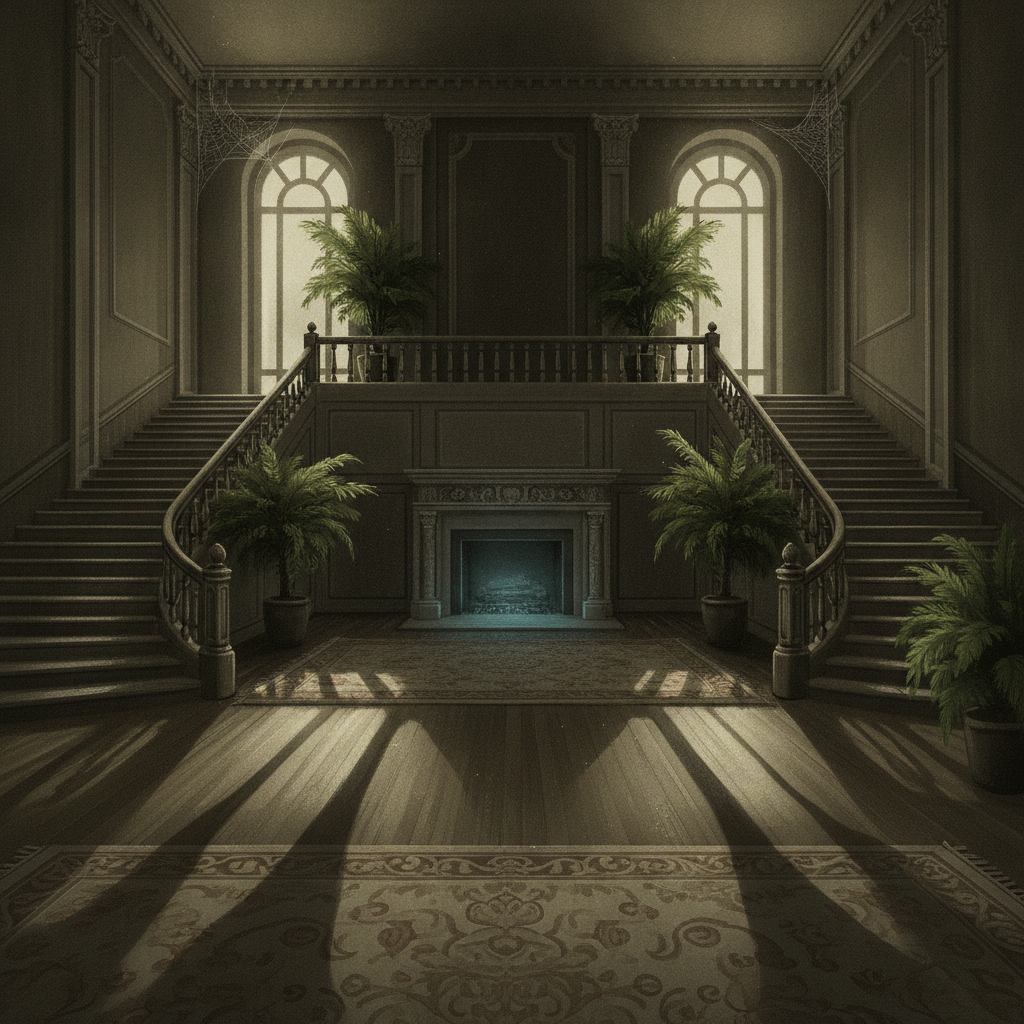
The Hotel Colorado’s own haunted reputation is a matter of long-standing local folklore rather than documented paranormal investigation. Stories passed down through staff, guests, and Colorado ghost-tour operators describe a “Lady in White,” a spectral woman reportedly glimpsed in hallways, on staircases, and near the hotel’s upper floors. Accounts vary widely on her identity — some tellings connect her to a grieving mother, others to an unnamed guest from the hotel’s early years — and no single origin story has anything close to documented historical backing.
Beyond the Lady in White, the hotel’s folklore includes the usual grammar of American haunted-hotel legend: footsteps in empty corridors, doors that open and close without explanation, cold spots in specific rooms, and the sense — reported informally by staff and guests over the decades — of being watched in certain parts of the building. These accounts appear consistently in Colorado paranormal tourism material and regional ghost-story roundups, which treat the Hotel Colorado as one of the state’s marquee haunted lodging destinations alongside places like the Stanley Hotel in Estes Park. But it’s worth being direct about what that means: these are legends sustained by tourism and oral tradition, not claims backed by rigorous documentation, recorded EVP sessions, or peer-reviewed investigation. No newspaper archive or historical record ties a specific named individual, verified death, or documented incident inside the Hotel Colorado to the ghost stories now attached to it.
That distinction doesn’t make the stories worthless — folklore is its own kind of historical record, telling us what a community chooses to remember and mythologize. A hotel built to mimic Renaissance Italian nobility, filled with the ghosts of Gilded Age excess and presidential history, sitting in a town where a famous gunfighter died slowly of disease, is fertile ground for legend regardless of whether any specific haunting can be verified.
What’s Real, and What’s Legend
The Hotel Colorado’s documented history is impressive enough on its own merits: an 1893 Gilded Age landmark built in the image of a Roman villa, host to a sitting American president on multiple real hunting expeditions, and a survivor of more than a century of Colorado tourism trends, economic downturns, and changing ownership. Its proximity to the site of Doc Holliday’s death adds a layer of frontier tragedy to the town’s history, even if the two stories don’t intersect the way casual retellings suggest.
The ghosts — the Lady in White, the unexplained footsteps, the cold spots on the third floor — belong to a different category entirely: living folklore, sustained by ghost tours, guest anecdotes, and Colorado’s genuine appetite for haunted history. Whether or not something lingers in the Hotel Colorado’s Italianate halls, the building itself remains a rare, tangible piece of Gilded Age Colorado, standing exactly where wealth, power, illness, and myth all once crossed paths in a small mountain town built around a hot spring.