
Hotel Boulderado's Haunted History: Boulder's Grand Dame of Ghosts
Inside the century-old Hotel Boulderado, where staff and guests report a persistent spirit, cold spots, and Colorado's most storied haunted hallway.
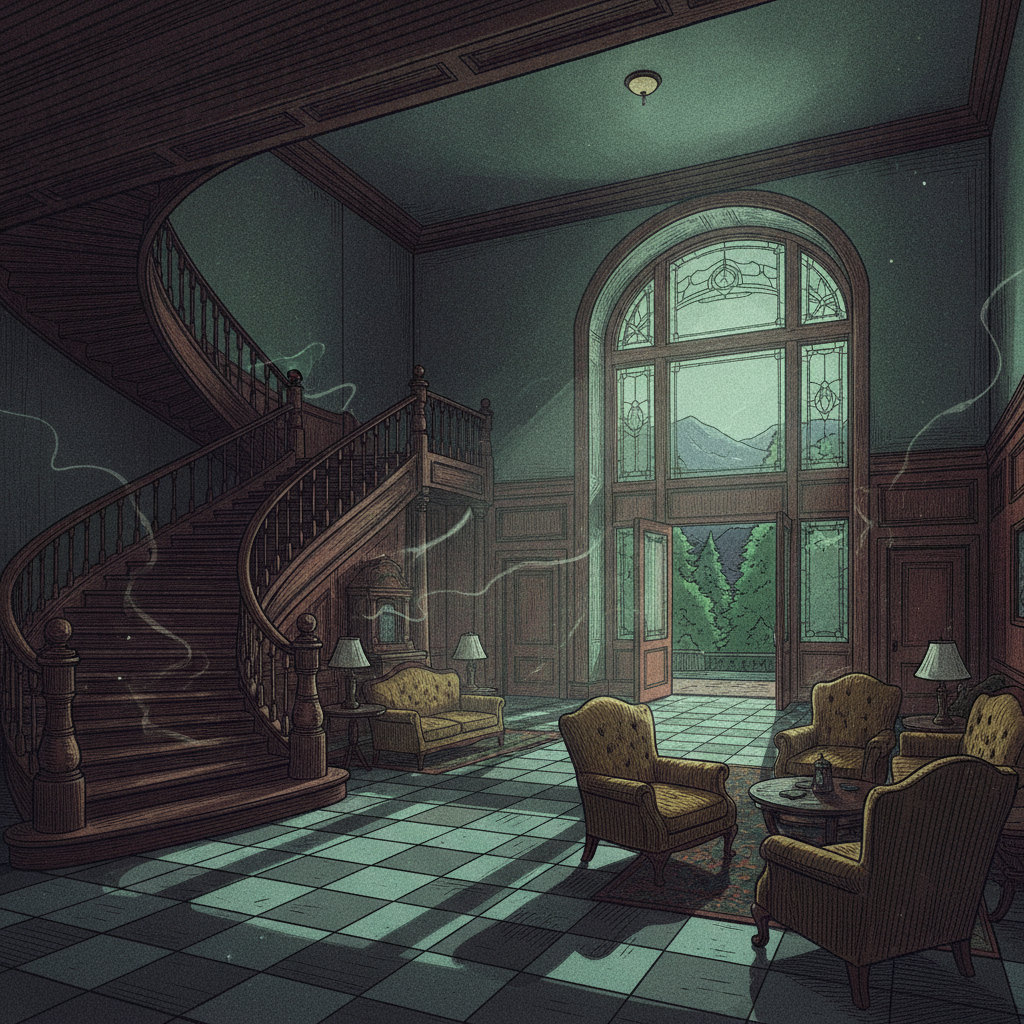
The Hotel Boulderado has stood at the corner of 13th and Spruce in downtown Boulder since 1909, its stained-glass ceiling and cherry-wood staircase presiding over more than a century of guests, weddings, political fundraisers, and — according to generations of staff and visitors — at least one occupant who never checked out.
Unlike the Stanley Hotel in Estes Park or the Brown Palace in Denver, both already well-trodden ground for Colorado ghost hunters, the Boulderado’s reputation has grown more quietly, built on decades of firsthand accounts from the people who actually work its halls: housekeepers, bartenders, front-desk staff, and the guests who return year after year and swear something in that building is watching them back.
A Hotel Built on Civic Pride
The Boulderado’s origin story is, in its own way, as remarkable as its ghost lore. In the early 1900s, Boulder’s business leaders and residents wanted a grand hotel to rival anything in Denver — a building that would announce the town as a serious destination rather than a mining-supply outpost at the base of the Flatirons. Rather than waiting for outside investors, the community raised the money itself through public stock subscription, with local citizens buying shares to fund construction. The hotel opened its doors on New Year’s Day, 1909.
The building’s Italian Renaissance Revival design, with its cantilevered mahogany and cherry staircase and the ornate stained-glass canopy suspended above the lobby, made it an architectural standout from the start. That lobby ceiling — still one of the most photographed features in Boulder — has watched over a guest list that reportedly included Louis Armstrong, Helen Keller, and Robert Frost, among other notable visitors over the decades.
The Boulderado is listed on the National Register of Historic Places, a designation that reflects both its architectural significance and its role in Boulder’s civic history. Like many grand hotels of its era, it saw periods of decline in the mid-20th century before a restoration effort helped return it to prominence — a resurrection that, some longtime staff and locals have suggested, may have stirred up more than dust.
The Hallway, the Mezzanine, and the Cold Spots
Ask around Boulder long enough and you’ll hear some version of the same story: a guest wakes in the night convinced someone is standing at the foot of the bed. A staffer working an overnight shift hears footsteps on the mezzanine when no one else is in the building. A cold spot moves through a hallway on an otherwise warm afternoon, distinct enough that people notice it and comment on it before they know the hotel’s reputation.
These accounts have circulated in Boulder for decades, passed between employees and folded into the local lore that surrounds nearly every historic building on Pearl Street. The Boulderado itself has never shied away from its haunted reputation — the hotel has long acknowledged the stories as part of its identity, embracing rather than downplaying them, in a way that distinguishes it from properties that treat ghost lore as a liability. Local historical walking tours in Boulder, including those organized around the city’s haunted history, regularly include the Boulderado as a stop, with guides recounting the accumulated decades of guest and staff reports.
What’s notable about the Boulderado’s reputation, compared to some of Colorado’s more theatrically marketed haunted hotels, is how grounded and repetitive the reports tend to be. It’s rarely full-body apparitions or dramatic confrontations. Instead, it’s the smaller, stranger details: a specific stretch of hallway that consistently unsettles people, an elevator that seems to have a mind of its own, lights that flicker in patterns that feel deliberate, a presence felt near the grand staircase after hours. Longtime employees have talked to local press over the years about experiences they can’t quite explain — not always dramatic, but persistent enough that the stories have outlasted any single staff member’s tenure.
What Might Explain It — And What Might Not
A skeptic’s toolkit fits easily over a building like the Boulderado. It’s more than a century old, built with materials and construction techniques that shift, settle, and creak in ways modern buildings don’t. Old wiring can produce electromagnetic fields that some researchers believe may contribute to sensations of unease or the feeling of being watched. Drafts move differently through century-old hallways with uneven insulation, which could easily account for localized cold spots. And a building with this much history — decades of guests, employees, weddings, wakes, and everything in between — naturally accumulates stories, some of which get exaggerated with each retelling.
But the Boulderado’s haunted reputation has proven durable precisely because it isn’t built on a single dramatic incident or a manufactured legend designed to sell ghost tours. It’s cumulative — an ongoing, low-grade pattern of reports from people with no particular incentive to embellish, some of whom worked in the building for years before ever hearing about its reputation, only to later realize their own unexplained experiences fit a pattern others had already noticed.
Part of a Larger Colorado Pattern
The Boulderado’s story fits into a broader thread running through Colorado’s paranormal landscape. The state has no shortage of historic properties with reputations for the unexplained — from Denver’s Brown Palace to Estes Park’s Stanley Hotel to lesser-known sites like the Peabody-Whitehead Mansion, which has drawn its own attention in recent local coverage for its unsettling history. Colorado’s front range, in particular, seems to hold an outsized share of buildings where the past doesn’t quite feel finished.
What sets the Boulderado apart is its specific character: a hotel built not by a single wealthy eccentric but by an entire town pooling its resources to make a statement, standing for over a hundred years as both a functioning business and a living piece of Boulder’s civic memory. Whatever walks its halls after hours — if anything does — has had over a century of history to draw from, layered through Prohibition-era speakeasies rumored to have operated in its basement, decades of transient guests, and a mid-century decline that nearly saw the building lost altogether before its restoration.
Visiting the Boulderado
The Hotel Boulderado remains a fully operating hotel today, welcoming guests to stay beneath that same stained-glass ceiling that has presided over the lobby since 1909. For those curious about its reputation, Boulder’s historic walking tours occasionally include the hotel as a stop, offering a chance to hear the accumulated stories firsthand from local guides steeped in the city’s history.
Whether you come away convinced that something lingers in that mezzanine or simply appreciative of one of Colorado’s best-preserved historic hotels, the Boulderado rewards a slow walk through its lobby and up that cantilevered staircase. Just don’t be surprised if, somewhere along the hallway, the temperature drops a few degrees for no reason you can find.