
The Buckhorn Exchange: Denver's Oldest Haunted Restaurant
Inside Denver's 1893 Buckhorn Exchange, where taxidermy, Wild West history, and reported ghost sightings still linger over dinner.
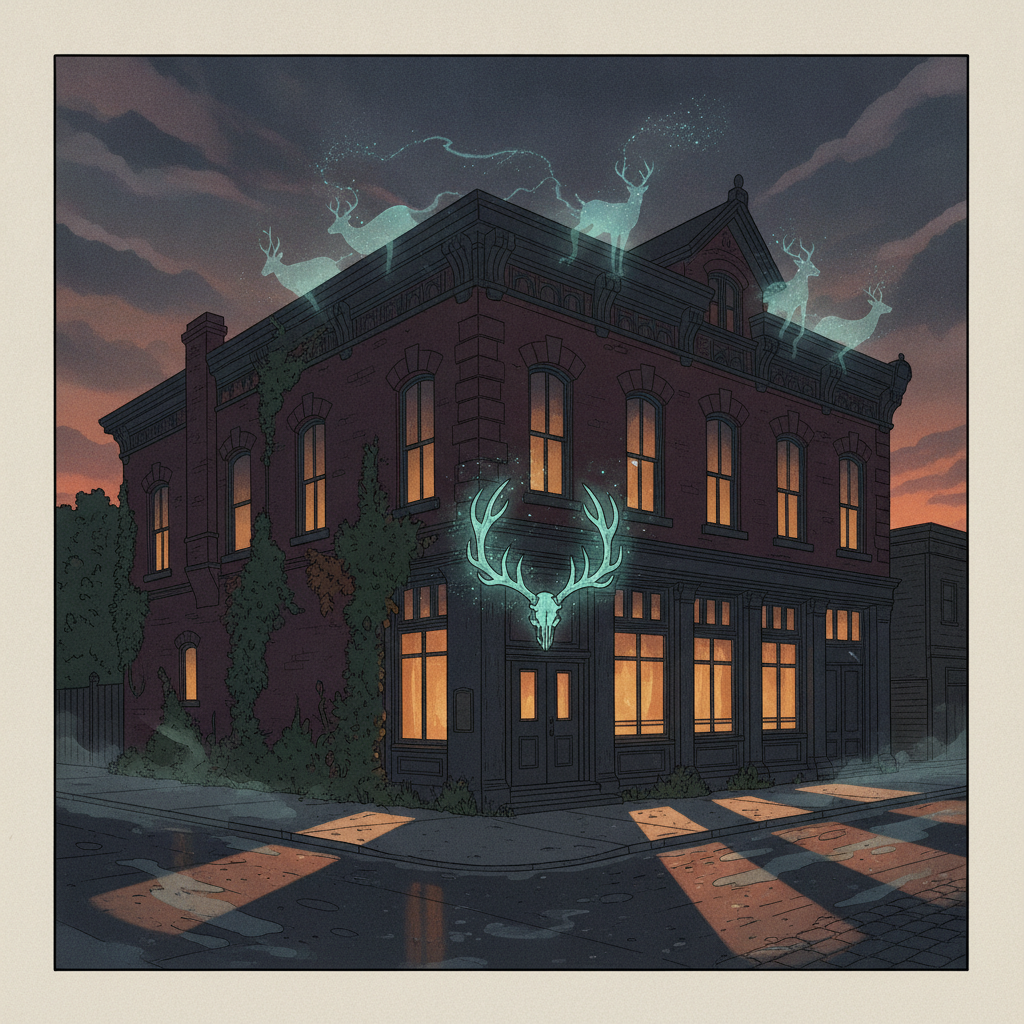
A Restaurant Older Than Colorado’s Statehood Traditions
Tucked along the South Platte River near the old Denver stockyards, the Buckhorn Exchange has been serving steaks, game meat, and stiff drinks since 1893 — making it, by most accounts, Denver’s oldest restaurant. It holds Colorado Liquor License No. 1, a distinction that speaks to just how long this building has been pouring whiskey for railroad workers, ranchers, politicians, and, according to generations of staff and visitors, a few guests who never quite checked out.
Before you get to the ghost stories, though, you have to understand the history — because at the Buckhorn, the two are almost impossible to separate.
Henry “Shorty” Zietz and the Real Wild West
The restaurant was founded by Henry H. “Shorty” Zietz, a scout and hunter who reportedly worked with Buffalo Bill Cody and ran with the kind of frontier characters who made Colorado’s early history feel more like legend than record. Zietz opened the Buckhorn Exchange at 1000 Osage Street to serve the railroad crews and cattlemen working the nearby Denver stockyards, and it quickly became a gathering spot for a rougher, wilder Denver than the one visitors see today.
Buffalo Bill Cody himself is closely tied to the Buckhorn’s early lore, and the restaurant has long been associated with hosting notable Western figures of the era. Theodore Roosevelt is also frequently cited in the restaurant’s own history as a patron who dined there, drawn — as the story goes — by tales of the hunting and taxidermy that filled the walls even in the building’s earliest days. Whether every specific visit by every famous name has been independently documented in outside historical records is harder to verify than the restaurant’s own long-standing claims, but the Buckhorn’s connection to that first generation of Colorado cattlemen, railroad men, and frontier hunters is well established.
More Taxidermy Than Most Museums
Step inside today and you’re greeted by more than 500 pieces of taxidermy — deer, elk, buffalo, mountain lions, and birds crowd the walls and ceiling, a collection built up over more than a century. It’s the kind of interior that makes the Buckhorn feel less like a restaurant and more like a preserved fragment of the 19th-century West, frozen mid-hunt.
That density of mounted, glass-eyed animals watching over every table is, unsurprisingly, part of what gives the Buckhorn its eerie reputation. Even visitors with no interest in ghost stories tend to describe the dining room as unsettling after dark — a room full of unmoving eyes, low light, and more than a century of accumulated history pressing in from every wall.
Where the Ghost Stories Begin
Denver has no shortage of buildings with reputations for the paranormal — the Peabody-Whitehead Mansion and various historic homes and hotels across the city regularly turn up in local haunted-Denver features. The Buckhorn Exchange sits comfortably within that tradition, and local folklore and word-of-mouth accounts among staff and regulars have long held that the building isn’t entirely empty after closing.
The stories generally follow a familiar pattern for buildings this old: reports of unexplained footsteps on the stairs after hours, glasses or place settings that seem to have moved without explanation, and a persistent feeling — described by some staff and visitors over the years — of being watched, which some attribute to the sheer number of taxidermied eyes in the room rather than anything supernatural at all.
It’s worth being direct about what can and can’t be verified here. Unlike the Pentagon’s declassified UAP files or the CIA’s own documented “frightening” UFO sighting report tied to Colorado — cases with paper trails, government records, and named agencies attaching their credibility to the account — the Buckhorn’s ghost stories exist almost entirely in the realm of oral tradition and local folklore. There is no equivalent of a government file or newspaper archive establishing a specific date, witness name, or documented event for a haunting at the Buckhorn Exchange. What exists is the kind of layered local legend that attaches itself naturally to any building old enough to have buried a century of history in its walls.
That doesn’t make the stories worthless — it makes them a different kind of evidence. Folklore about a building tells you something about how a community relates to its own history, even when it can’t be checked against a police report or an official record. A restaurant that has operated continuously since before Colorado had many of its modern institutions is going to accumulate stories the way it accumulates taxidermy: slowly, and without much effort at all.
A Building That Has Seen Everything
Consider what the Buckhorn’s walls have actually witnessed, as documented fact rather than legend: the rowdy, transactional culture of the Denver stockyards in the 1890s; the era of Buffalo Bill Cody’s Wild West mythology taking shape in real time; Prohibition, which the restaurant’s status as Colorado’s first liquor license holder suggests it navigated in its own particular way; and more than a hundred years of Denver transforming from a frontier cattle town into a modern American city.
That kind of continuous operation is rare. Most buildings from 1893 Denver are gone, replaced, or repurposed beyond recognition. The Buckhorn Exchange has stayed remarkably intact — same building, same taxidermy-crowded walls, same name over the door. When a place resists change that thoroughly for that long, it’s almost inevitable that visitors start to feel like the past hasn’t fully left the room.
Separating the Steakhouse from the Séance
None of this is to say the Buckhorn Exchange is definitively haunted — there’s no documented paranormal investigation report, no named witness account in a local newspaper archive, and no government file (unlike, say, the recently declassified UAP sightings over Colorado Springs) establishing anything unusual on the record. What we do have is a genuinely remarkable piece of Colorado history: a working restaurant that predates statehood-era institutions, holds the state’s very first liquor license, and has hosted, by its own well-documented account, some of the biggest names of the Old West.
The ghost stories are real in the sense that people really do tell them, and have for a long time. Whether anything supernatural actually lingers among the mounted elk heads and century-old bar rail is, and likely will remain, unknowable — which is exactly the kind of mystery that keeps a place like the Buckhorn Exchange interesting long after the last steak has been served.
If you find yourself dining there on a quiet weeknight, under all those glass eyes, you may understand why the stories persist — whether or not you believe a single one of them.