
St. Elmo: The Ghost Town Colorado Never Truly Abandoned
Inside St. Elmo, Colorado's best-preserved ghost town—where the Stark family's decades-long isolation birthed a legend that still haunts Chaffee County.
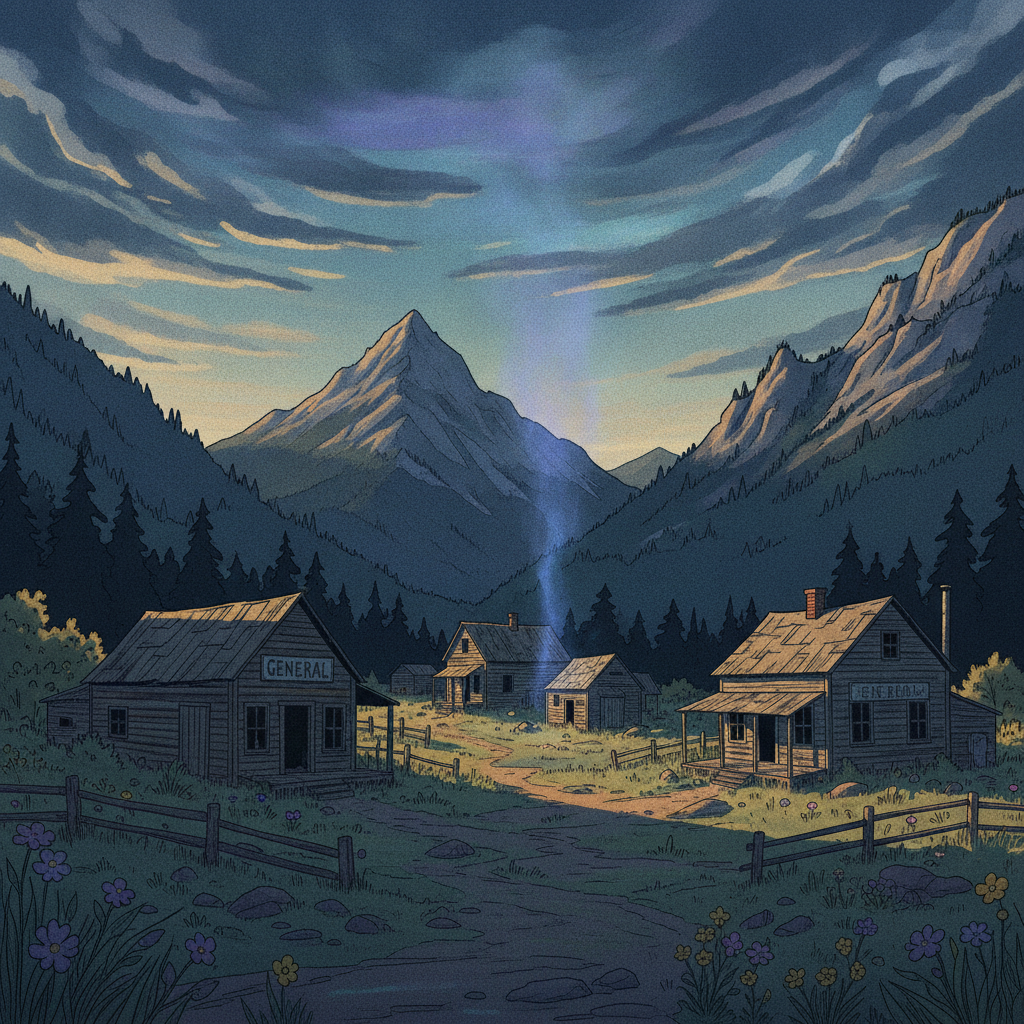
High in the Sawatch Range, where Chalk Creek cuts a narrow canyon between 14,000-foot peaks, a row of weathered false-front buildings still lines a dirt main street. No cars pass through on their way to anywhere else. No one has lived here full-time in decades. And yet St. Elmo doesn’t feel abandoned so much as it feels like it’s waiting—for a train that stopped running, for a boom that never came back, for residents who, in one form or another, never really left.
Located in Chaffee County about 20 miles southwest of Buena Vista, St. Elmo is widely regarded as one of Colorado’s best-preserved ghost towns, and it draws thousands of visitors, hikers, and self-styled ghost hunters every year. Its reputation as haunted rests on a specific, well-known piece of local legend involving a figure said to appear in the window of the old general store. But before St. Elmo became a stop on Colorado’s paranormal tourism circuit, it was a real, thriving mining town with a documented history of boom, bust, and one of the more remarkable stories of human isolation in the American West.
A Boomtown Born of Silver
St. Elmo was founded in 1880, part of the wave of settlements that sprang up across the Colorado high country during the silver mining rush of the late 19th century. At its peak, the town supported a population that historical accounts place in the low thousands, along with the infrastructure of a functioning frontier community: a general store, a town hall, a schoolhouse, saloons, hotels, and telegraph service. Its fortunes were tied directly to the Denver, South Park and Pacific Railroad, which routed a line through the area via the Alpine Tunnel, one of the engineering marvels of its era and, for a time, the highest railroad tunnel in the world.
That connection to the rail line was both the town’s lifeline and, eventually, its death sentence. When silver prices collapsed following the Panic of 1893 and the repeal of the Sherman Silver Purchase Act, mining towns across Colorado emptied out almost overnight. St. Elmo held on longer than many of its neighbors, sustained in part by continued rail traffic, but the Alpine Tunnel’s operations wound down in the early 20th century, and with them went the town’s remaining reason to exist. By the 1920s, St. Elmo’s population had dwindled to a small fraction of its boomtown peak.
The Starks: The Family Who Wouldn’t Leave
What sets St. Elmo apart from Colorado’s hundreds of other faded mining camps is not just its physical preservation, but the human story that unfolded there after nearly everyone else had gone.
The Stark family—siblings born to early settlers in the area—became St. Elmo’s last permanent residents, and their decades-long presence is the reason the town survives largely intact today rather than having been picked apart, burned, or bulldozed. Chief among them was Annabelle Stark, who along with her brothers Anton and Roy remained in St. Elmo long after the rest of the population had scattered to other towns and other lives. Historical accounts of the Starks describe a fiercely private family that ran the general store and post office, effectively keeping the ghost of a town alive through their refusal to abandon it.
Local and regional histories describe the Starks as increasingly reclusive as the decades wore on, guarding the empty buildings around them and rebuffing outsiders who wandered in. Whatever the exact texture of their day-to-day lives—much of which was never formally documented and has been filled in over the years by oral tradition—the documented fact is this: the Starks’ occupancy stretched St. Elmo’s active history well into the 20th century, long after most Colorado mining camps of its era had been reduced to foundations and rumor. Annabelle is generally recognized as the last of the siblings to remain in town, and her presence there into her later years has become central to how St. Elmo is remembered today.
From Ghost Town to Historic District
St. Elmo’s survival, thanks in large part to the Starks, eventually earned it formal recognition. The town is preserved today as part of a nationally recognized historic district, and much of the surrounding land falls under the management of the U.S. Forest Service within the San Isabel National Forest. Colorado tourism authorities list it among the state’s most intact ghost towns, and unlike many former mining camps that exist now only as scattered timber and mine tailings, St. Elmo retains dozens of standing structures along its original grid, including the general store building that anchors most of the town’s modern folklore.
This is where documented history ends and legend begins.
The Legend in the Window
According to regional oral tradition passed down among Chaffee County locals and repeated in countless ghost-town guides and paranormal tourism accounts, visitors to St. Elmo have long reported seeing a woman’s figure in the upstairs window of the old general store—the same building where the Stark family lived and worked for so many years. The story, as it’s typically told, holds that the figure is Annabelle Stark herself, still watching over the town she refused to abandon in life.
It’s important to be clear about what this is and isn’t. There is no documented historical record—no period newspaper account, no formal investigation—establishing sightings of a ghostly figure in St. Elmo during the Starks’ lifetimes. What exists is a modern oral tradition, the kind that attaches itself naturally to isolated, well-preserved places with a compelling human backstory. The tale has been repeated often enough, in enough guidebooks and blog posts and word-of-mouth retellings among visitors, that it has become inseparable from how many people experience the town today. That doesn’t make it true. It makes it folklore—which is its own kind of real, even if the ghost isn’t.
Why St. Elmo Still Pulls People In
Whether or not anything supernatural lingers in that general store window, St. Elmo’s appeal is easy to understand. It offers something increasingly rare in Colorado: a genuine, physical connection to the 19th-century mining era, preserved not by a museum board or a restoration grant but by a family that simply stayed. The buildings lean the way old buildings lean. The boardwalks creak. The mountains that swallowed the silver boom still rise up on every side, indifferent to the town below.
Today, St. Elmo functions as both a historic site and an informal pilgrimage spot for ghost-town enthusiasts and paranormal tourists exploring Colorado’s back roads. Visitors can walk the original streets, photograph the general store, and decide for themselves what, if anything, watches back from the windows. What’s certain is the documented part of the story: a boomtown that rose fast, a railroad that made and then unmade it, and a small, private family that held on long after everyone else had gone—leaving behind not just empty buildings, but a legend that Chaffee County has never quite let go of either.