
Buffalo Bill's Grave: Colorado's Wild Body-Snatching Feud
The strange true story of the armed standoff over Buffalo Bill Cody's grave atop Lookout Mountain, and Wyoming's decades-long grudge.
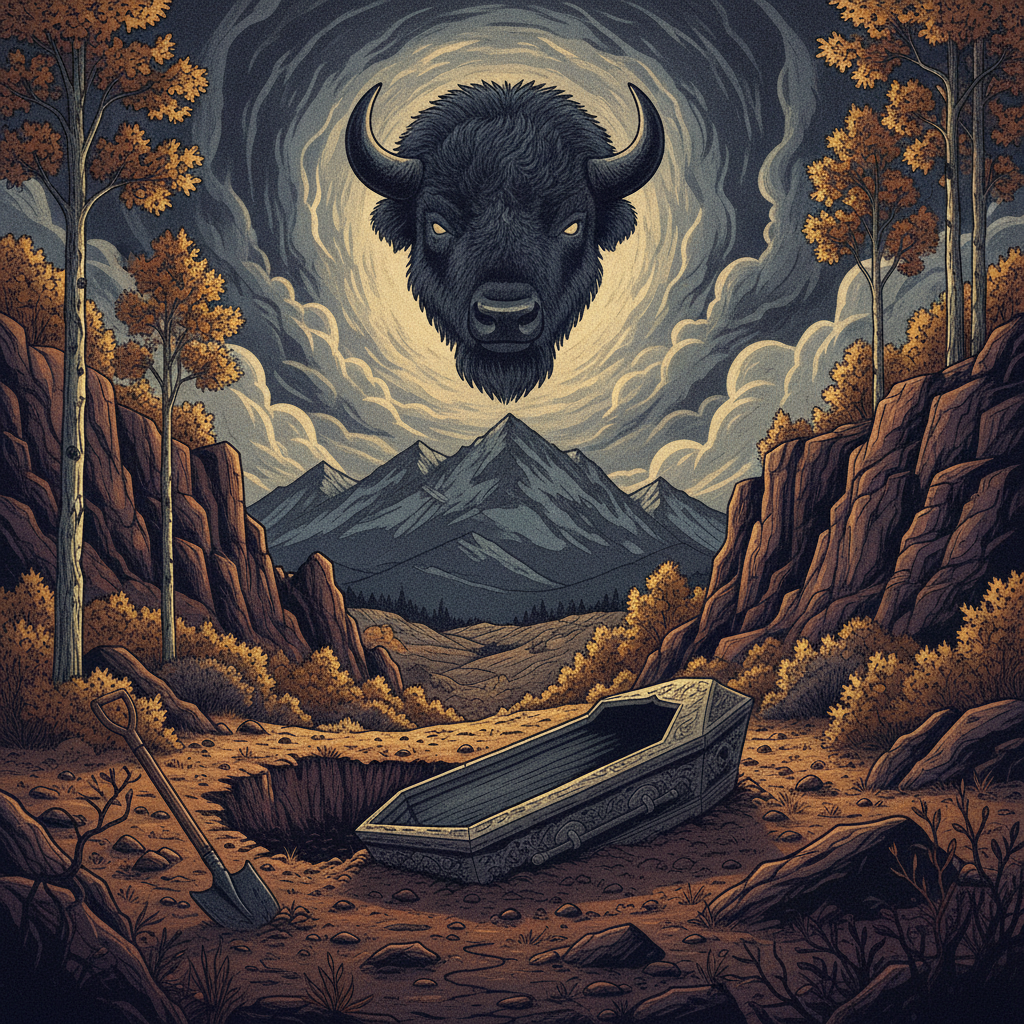
A Grave Worth Fighting Over
On a clear day, the view from Lookout Mountain stretches east across the entire Denver basin — the skyline, the plains, and on a good afternoon, the curve of the earth itself fading into haze. It’s a fitting place to spend eternity, and it’s exactly where William F. “Buffalo Bill” Cody has rested since 1917. But for decades, that resting place has been the subject of one of the strangest, most stubborn feuds in Colorado history — a dispute so heated that at one point, armed guards stood watch over a dead man’s bones.
This isn’t a ghost story, exactly. There’s no spectral cowboy roaming the ridgeline (though local lore likes to suggest otherwise). It’s something arguably weirder: a decades-long, well-documented grudge between two states over where a legend should spend forever.
The Death of a Showman
Buffalo Bill Cody — scout, showman, and the man who invented the American idea of the Wild West through his famous traveling show — died on January 10, 1917, at his sister’s home in Denver. He was 70 years old, and by the time of his death, he was arguably the most famous American on Earth, having toured Europe and the United States for decades with his Wild West extravaganza.
The trouble started almost immediately with the question of where he’d be buried.
Cody had spent much of his later life associated with the town that bears his name — Cody, Wyoming, which he founded in 1896. Many residents there assumed, reasonably, that their namesake would be buried on Cedar Mountain overlooking the town. Some accounts suggest Cody himself had expressed a wish, at various points in his life, to be laid to rest there.
Instead, his widow, Louisa Cody, decided he would be buried atop Lookout Mountain in Golden, Colorado, overlooking Denver. The decision has been the subject of speculation for over a century. Persistent claims — repeated in numerous Colorado history accounts — hold that Denver business interests, eager for the tourism boost a Buffalo Bill grave would bring, paid Louisa a substantial sum to secure the burial site on Lookout Mountain rather than in Wyoming. The exact truth of any payment has never been definitively proven, but the accusation stuck, and in Cody, Wyoming, it stuck hard.
”Stolen” Body, Wyoming’s Grudge
To many in Cody, the burial wasn’t a widow’s choice — it was a heist. Colorado, in their telling, had bought and paid for the honor of hosting America’s greatest frontier legend, robbing Wyoming of its rightful claim to the man who founded the town, gave it his name, and helped put it on the map.
That grievance didn’t fade with time. It calcified into local legend, repeated in Wyoming barrooms and civic meetings for decades, and it eventually escalated well beyond grumbling.
According to widely reported Colorado history accounts, in 1948 — more than thirty years after Cody’s death — members of an American Legion post in Cody, Wyoming, along with other aggrieved citizens, threatened to do something drastic: drive to Golden, dig up Buffalo Bill’s body, and haul it back to Wyoming where they believed it belonged. Some versions of the story describe talk of literally storming the grave with heavy equipment.
Colorado authorities didn’t treat the threat as an idle joke. Reports indicate that armed guards — some accounts specify Colorado National Guardsmen, others point to local law enforcement — were posted at the gravesite to prevent any attempt at a nighttime exhumation. For a period, the final resting place of one of the 19th century’s most famous entertainers was, quite literally, under armed watch against grave robbers motivated not by treasure, but by civic pride and old-fashioned regional spite.
Concrete, Steel, and a Grave Built Like a Bunker
The 1948 threat left a permanent mark on the grave itself. To make absolutely sure no one could dig up Buffalo Bill and spirit him off to Wyoming, the burial site atop Lookout Mountain was reinforced with poured concrete and steel — turning a simple grave into something closer to a vault. It’s a detail repeated across Colorado history sources and materials from the Buffalo Bill Museum and Grave site that operates there today: this isn’t just a headstone over dirt. It’s a fortified plot, engineered specifically to withstand exactly the kind of raid Wyoming partisans threatened to carry out.
It worked. No shovel ever broke that ground. Buffalo Bill has remained on Lookout Mountain for over a century now, his grave a quiet tourist stop with sweeping views, a small museum, and a gift shop — a far cry from the armed standoff its history implies.
A Rivalry That Never Really Died
Here’s the part that makes this more than a musty historical footnote: the Cody-versus-Golden rivalry never fully went away. It’s softened into something more like a running joke passed between the two towns, but it’s a joke with real teeth underneath it. Cody, Wyoming still nurses its sense that Buffalo Bill belongs there — the town is home to the Buffalo Bill Center of the West, a major museum complex dedicated to his life and the history of the American West, built by a community that has never quite let go of the idea that Denver money out-bid them for a body.
Golden, meanwhile, has leaned into its prize. The Buffalo Bill Museum and Grave remains one of the more offbeat attractions in the Denver foothills, drawing visitors who come as much for the panoramic view as for the history — and for the story of the feud itself, which staff and local historians have kept alive as part of the site’s identity.
The Watcher on the Mountain
There’s no rigorously documented ghost story attached to Buffalo Bill’s grave — no catalog of witness sightings, no newspaper accounts of apparitions the way there are for places like the Stanley Hotel or the Croke-Patterson Mansion. But ask around Golden long enough, and you’ll hear the softer, more local version of the legend: that Cody’s spirit still lingers on Lookout Mountain, watching over the Denver skyline he loved enough — or was paid enough — to spend eternity overlooking.
Whether that’s true is, like most things in this story, unresolved. But the documented history alone is strange enough to earn its place in Colorado’s catalog of weird history: a body fought over by two states, a grave reinforced against grave robbers, and armed guards once posted on a quiet mountainside — all because a legend of the American frontier couldn’t decide, even in death, which state actually owned his legacy.