
Redstone Castle: Colorado's Haunted Coal Baron Mansion
Inside Cleveholm Manor, the opulent Redstone Castle built by coal baron John Osgood — and the ghost stories tied to its Gilded Age history.
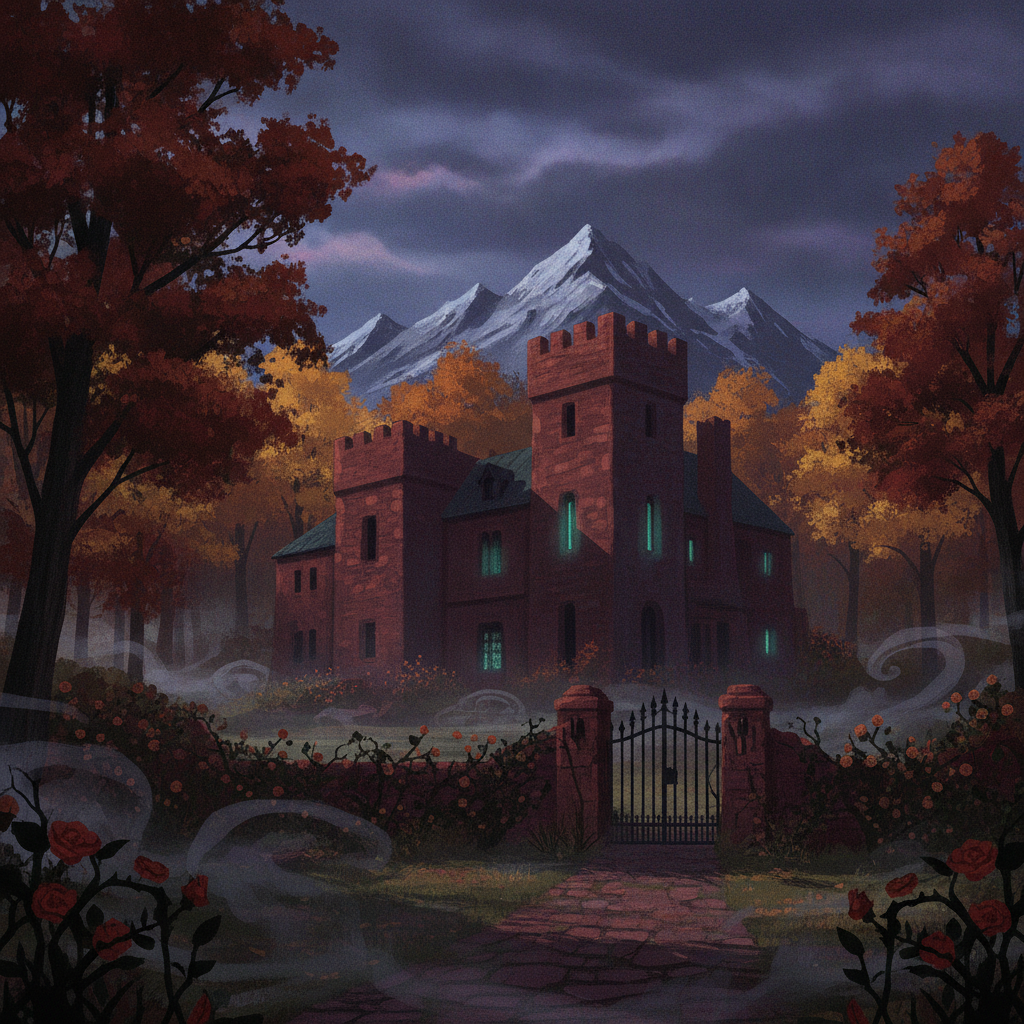
A Coal Baron’s Fortress in the Crystal River Valley
Tucked into the Crystal River Valley near Carbondale, Colorado, Redstone Castle rises out of the aspen and scrub oak like something transplanted from an English countryside estate. Officially named Cleveholm Manor, the 42-room Tudor Revival mansion was completed in 1902 for John Cleveland Osgood, one of the most powerful — and most controversial — industrialists in Colorado history. Today it operates as a historic inn and event venue, but for over a century it has also carried a quieter reputation: as one of the most persistently “haunted” addresses in the state.
This is a story that has to be told in two layers. The first is the documented history — verifiable through the National Register of Historic Places, the Colorado Historical Society, and the extensive paper trail Osgood’s empire left behind. The second is the folklore that grew up around the house once its Gilded Age glamour faded: the staff and guest accounts of footsteps, cold spots, and a presence that never quite checked out. Both layers matter to the story of Redstone Castle, but they deserve to be kept separate.
Who Was John Cleveland Osgood?
Osgood made his fortune in coal and coke production, eventually consolidating operations into the Colorado Fuel and Iron Company (CF&I), which by the turn of the 20th century was one of the largest employers in the American West. Cleveholm Manor was built as his private residence — a lavish showcase of Gilded Age wealth, reportedly furnished with imported European antiques, hand-carved woodwork, and one of the first-ever indoor swimming pools in a private Colorado home. The estate was part of a larger vision: the nearby town of Redstone was developed by Osgood as a model company town, complete with worker cottages, a clubhouse, and amenities meant to demonstrate a more paternalistic style of industrial management than his coal-camp competitors.
That contrast is central to understanding Osgood’s place in Colorado history. While Redstone was marketed as a “utopian” alternative for coal workers, the broader CF&I labor system Osgood built his fortune on was entangled in the same industrial conflicts that would later erupt at Ludlow in 1914, when a strike at a CF&I-affiliated camp (by then under Rockefeller family control after Osgood lost majority ownership of the company years earlier) ended in the deaths of striking miners and family members — one of the deadliest chapters in American labor history. Osgood himself had largely stepped back from CF&I’s day-to-day control by the time of the Ludlow Massacre, but his legacy is inseparable from the coal industry’s brutal labor conditions of the era, even as Redstone stood as his attempt to prove a gentler model could work.
The Rise and Fall of Cleveholm
Osgood spared little expense on the manor. Architectural surveys and National Register documentation describe a house built with structural steel framing sheathed in sandstone and wood — a hybrid of old-world craftsmanship and then-modern engineering. Osgood hosted prominent guests there, and the estate functioned as both a private residence and something of a statement piece: proof that a coal baron could live like European nobility in the Colorado Rockies.
But Osgood’s control of CF&I didn’t last. He lost his majority stake to the Rockefeller-Gould interests in the early 1900s, and with it went much of the influence he’d used to build Redstone. He continued living at Cleveholm on and off until his death in 1926. After that, the estate passed through a series of owners and uses over the following decades — including stretches as a private club, a guest lodge, and, according to historical accounts, a period of near-abandonment when the building sat vacant and deteriorating. Like many Gilded Age mansions that outlived the economic system that built them, Cleveholm Manor’s mid-20th-century years were marked more by decay than glamour, before later owners undertook restoration efforts that returned much of its original detail — including the woodwork, wallpaper, and furnishings — closer to its 1900s appearance. Today it operates as Redstone Castle, offering tours, lodging, and event space, and it holds a listing on the National Register of Historic Places for its architectural and historical significance.
The Ghost Stories
It’s in that long stretch of vacancy and change of ownership that Redstone Castle’s haunted reputation took root. Regional travel and history journalism covering Colorado’s historic buildings — outlets that regularly profile the state’s reputedly haunted sites, from Denver’s Peabody-Whitehead Mansion to old mining-era hotels in the high country — have long included Redstone Castle on their lists, citing recurring claims from staff and overnight guests over the years: unexplained footsteps in empty hallways, doors that open and close on their own, sudden temperature drops in certain rooms, and a sense of being watched in the manor’s grander chambers, particularly around the areas tied to Osgood’s personal quarters.
Some of the lore centers on Osgood himself, with visitors reportedly describing an oppressive or watchful presence in the parts of the house most closely tied to his life there — though it should be said plainly that these are anecdotal accounts, not documented paranormal evidence. No verified recordings, investigations, or peer-reviewed studies establish anything supernatural at Cleveholm Manor. What exists is a body of oral tradition: the kind of guest and caretaker testimony that accumulates around any grand, isolated, century-old building with a history as dramatic as Osgood’s.
That said, the appetite for these stories is real and growing. Colorado Public Radio recently put out a call for residents to share their own Colorado ghost stories, urban legends, and strange tales — a reminder that the state’s haunted-house lore, from Redstone to Denver’s historic mansions, remains an active part of the region’s identity, still being collected and retold rather than settled into fixed legend.
Visiting Redstone Castle Today
Redstone Castle now welcomes visitors as a bed-and-breakfast and event venue, with guided historical tours that walk through Osgood’s biography, the architecture of the manor, and the broader story of the Redstone company town he built around it. Whether or not you come away believing something lingers in its halls, the house itself is a genuine artifact of one of Colorado’s most turbulent industrial eras — a monument to Gilded Age ambition built on the same coal economy that, a decade after Cleveholm’s completion, would erupt into one of the darkest chapters in American labor history at Ludlow.
The ghosts, if they’re there, share the house with a history that needs no embellishment. Sometimes the true story is haunting enough on its own.