
Glen Eyrie Castle: Colorado Springs' Haunted Founder's Home
Inside Glen Eyrie, the Tudor castle built by Colorado Springs founder William Jackson Palmer, where staff and guests report ghostly encounters.
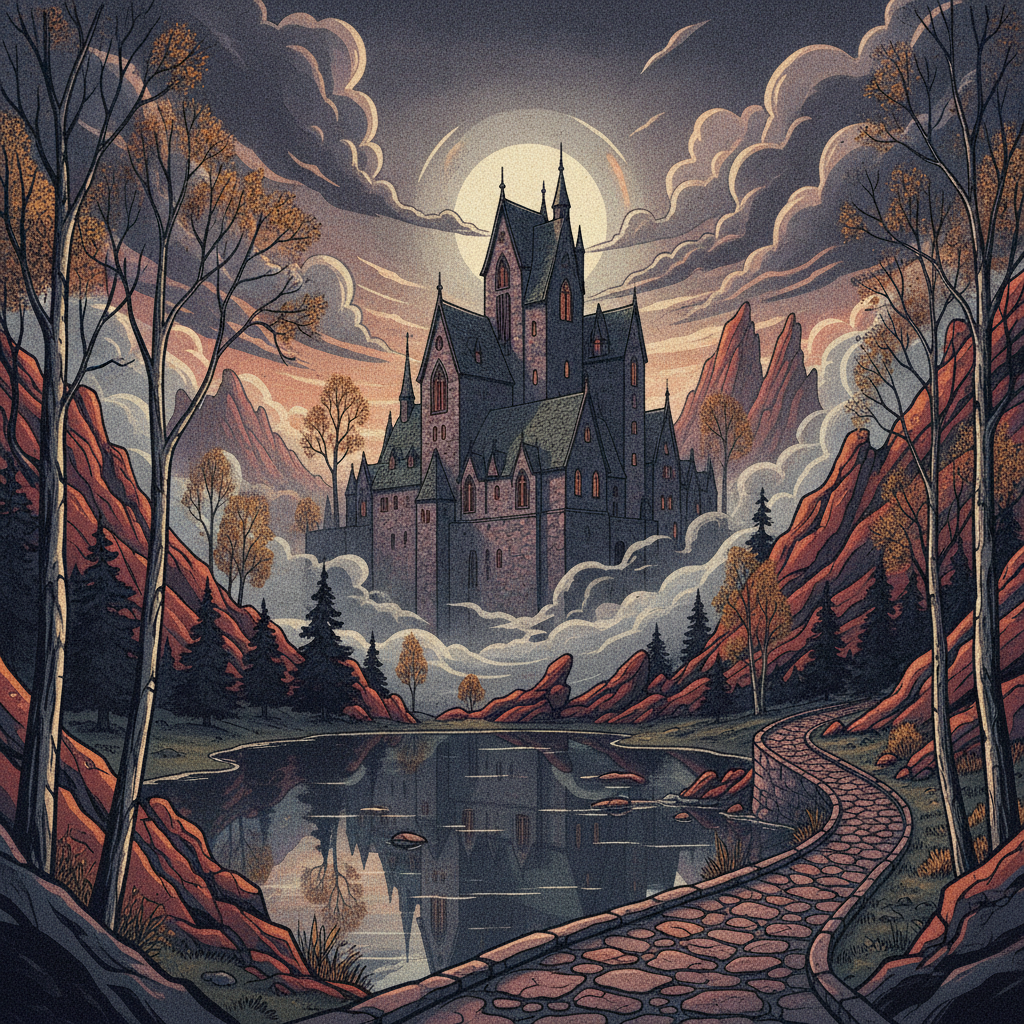
The road into Glen Eyrie winds through a narrow, red-rock canyon at the base of the Garden of the Gods, the sandstone walls closing in until, quite suddenly, they open onto a green valley and a Tudor castle that has no business existing in the Colorado high desert. It looks like something transplanted from the English countryside — turrets, timber framing, dozens of chimneys — and in a way, that’s exactly what it is. The man who built it wanted a piece of the old world at the foot of Pikes Peak. He got that, and according to generations of staff and visitors, he may still be there.
The General Who Built a City
Glen Eyrie was the home of General William Jackson Palmer, the Union Army cavalry officer and railroad man who founded Colorado Springs in 1871. Palmer wasn’t just a wealthy speculator passing through — he built the Denver and Rio Grande Railway, laid out the city’s wide, tree-lined streets with a temperance-minded vision of a “Fountain Colony” free of saloons, and donated land for parks, including Palmer Park and much of what became the city’s public green space.
He began construction on Glen Eyrie in 1871, choosing a site tucked against the dramatic rock formations he’d fallen in love with during his surveying expeditions. The original house was a modest sandstone structure, but Palmer had grander ambitions. Between 1904 and 1905, he oversaw a massive expansion that transformed the estate into the 67-room Tudor-style castle that stands today, complete with a great hall, a library, and stonework quarried locally to match the surrounding cliffs. At its peak, the estate encompassed thousands of acres and Palmer treated it as a working ranch and personal retreat as much as a residence.
Queen Mellen Palmer and a Marriage Cut Short
Central to Glen Eyrie’s history — and to its ghost lore — is Palmer’s wife, Queen Mellen Palmer. The couple married in 1870, and Palmer named the estate’s centerpiece rock formation, and by some accounts the region itself, with her in mind; “Queen’s Canyon” near Glen Eyrie still bears her name. Historical records indicate Queen suffered from heart problems and, following the birth of the couple’s children, spent much of her later life in the eastern United States and Europe seeking treatment, often separated from Palmer for long stretches even as they maintained an affectionate correspondence.
Queen Mellen Palmer died in 1894 in England, years before the castle reached its final, most magnificent form. General Palmer himself died in 1909 at Glen Eyrie, following complications from a riding accident that had left him partially paralyzed. He never remarried, and by most historical accounts, he never stopped grieving her. That timeline — a devoted wife who died young and far from the home her husband was still building for her — is the historical foundation on which much of the castle’s ghostly reputation has been built.
From Private Estate to Christian Retreat Center
After Palmer’s death, Glen Eyrie passed through several owners, including a period tied to the Union Pacific Railroad and later Alexander Smith Cochran, a textile magnate. In 1953, the estate was purchased by The Navigators, an international Christian discipleship organization, which relocated its headquarters there. The Navigators still own and operate Glen Eyrie today, running it as a conference center, retreat, and hotel that welcomes overnight guests, tour groups, and event bookings — meaning that unlike many haunted landmarks, this one is genuinely open for the public to spend the night in.
That accessibility is part of why Glen Eyrie’s ghost stories have persisted and spread over the decades. It’s not a shuttered ruin or a private residence sealed off from outsiders — it’s a working hotel where staff, guests, and tour groups have had decades of opportunity to notice things that don’t quite add up.
The Lore: Footsteps, Cold Spots, and a Woman in White
Colorado Springs has a long, informal tradition of ghost stories attached to Glen Eyrie, circulated through local media, regional folklore collections, and word of mouth among staff and guests over the years. None of these accounts constitute verified paranormal evidence, and The Navigators, as a matter of institutional identity, do not promote the castle as a haunted attraction. But the stories persist, and they follow a fairly consistent pattern.
The most frequently repeated legend involves a woman in white — sometimes described as a figure glimpsed on the staircase or in an upper hallway — that many storytellers connect to Queen Mellen Palmer, imagining her spirit finally settled into the finished castle she never got to live in. It’s worth being clear that this connection is speculative folklore, not documented history; there is no historical record of Queen herself ever making such a claim, obviously, nor any contemporaneous account from her lifetime suggesting she anticipated haunting the place.
Staff and guests over the years have also described unexplained footsteps echoing through empty hallways, particularly late at night when the building should be still. Cold spots — sudden, localized drops in temperature with no obvious draft or source — are another recurring detail in anecdotal reports, often centered around the older wings of the house closest to Palmer’s original 1871 construction. Some visitors have reported a sense of being watched in the library or great hall, rooms that retain much of their early-1900s character, heavy wood paneling and all.
These are the kinds of accounts common to many old, architecturally distinctive buildings with a documented history of loss — anecdotal, largely secondhand, shaped over decades of retelling. No formal paranormal investigation team appears to have conducted a widely publicized, documented study of Glen Eyrie comparable to those done at other Colorado landmarks. What exists instead is a durable local tradition, the kind that gets passed down among conference attendees, retreat staff, and Colorado Springs residents who grew up hearing about the castle in the canyon.
What the History Actually Tells Us
Strip away the ghost stories and Glen Eyrie remains a remarkable piece of Colorado history in its own right: the home of the man who founded Colorado Springs, built in two dramatic phases spanning more than three decades, shaped by personal tragedy, and preserved for seventy years by an organization that has kept its architecture largely intact rather than gutting it for modern development.
Whether Queen Mellen Palmer or General Palmer himself linger in the halls is, and will likely remain, unanswerable. What’s verifiable is the emotional weight the building carries — a castle built partly in tribute to a marriage cut short by illness and distance, finished only after the person it may have been built for was already gone. That’s a kind of haunting all its own, whether or not anything supernatural walks the halls.
Visiting Glen Eyrie Today
Glen Eyrie operates as a hotel and conference center, offering tours, dining, and overnight stays to the public. For those interested in Colorado Springs history — or simply drawn to the eerie beauty of a Tudor castle wedged into a red-rock canyon — it remains one of the region’s most striking landmarks, ghost stories or not. Anyone who stays the night, of course, gets to decide for themselves whether the footsteps in the hallway belong to another guest, or to someone who never checked out.