
Crybaby Bridge: Colorado's Most Haunted Urban Legend
Colorado has at least three 'Crybaby Bridge' legends. We trace the ghost story's roots, the real bridges behind it, and why it refuses to die.
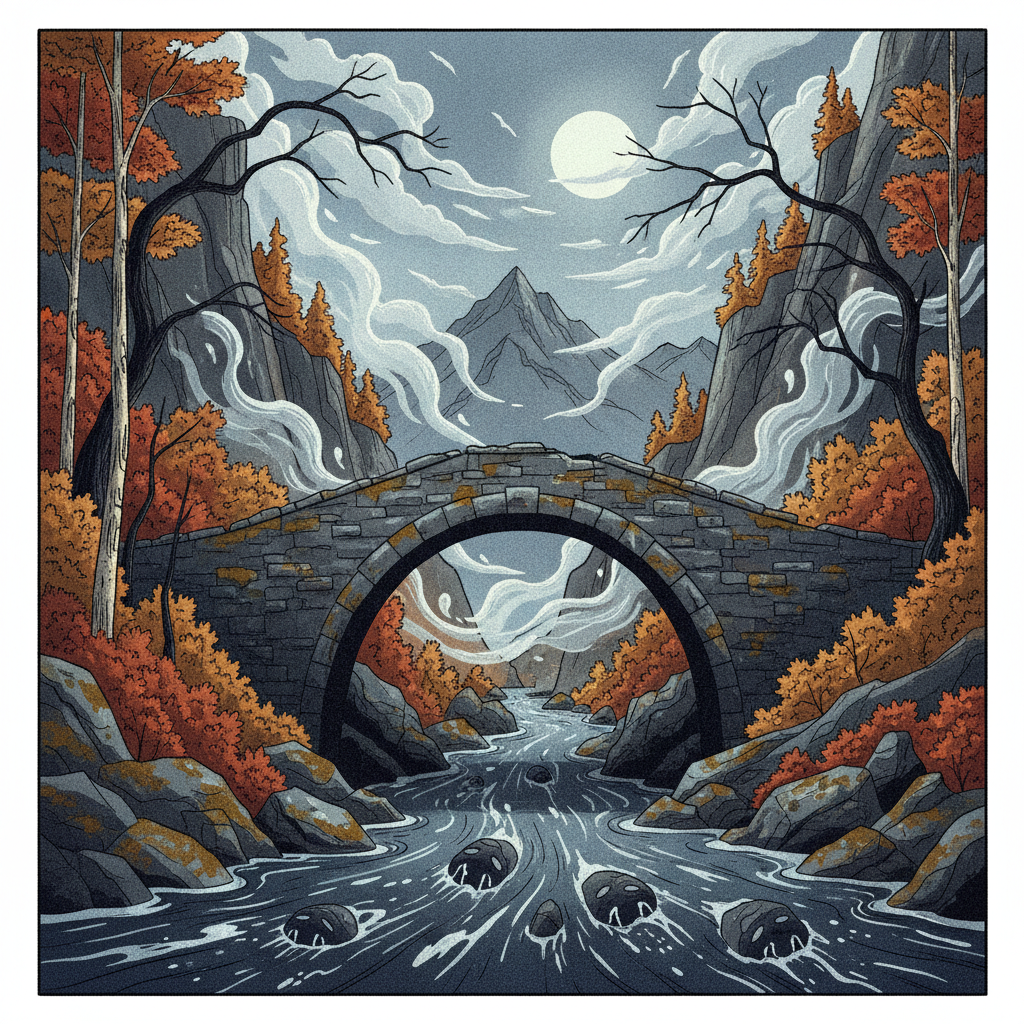
The Bridge That Won’t Stay in One Place
Drive far enough into the back roads of southern Colorado, or idle on a county bridge outside Loveland at midnight with your headlights off, and someone local will eventually tell you the same story with a different zip code attached. A baby died here — thrown, dropped, drowned, or lost in a wreck, depending on who’s telling it. A mother, driven mad by grief, still walks the span. Cut your engine. Roll down the window. Listen for the crying.
This is Crybaby Bridge, and Colorado doesn’t have just one. It has at least three well-documented versions of the legend — tied to Trinidad, the La Junta/Otero County area, and the Loveland region — each pointing to a real, physical bridge that locals will drive you to, even as the ghost story attached to it slips and changes shape depending on the decade and the teller.
A Legend With No Fixed Address
Folklorists have a name for stories like this: migratory legends. They’re narratives that travel — sometimes across a state, sometimes across a continent — attaching themselves to whatever local landmark fits the shape of the tale. The “Crybaby Bridge” motif is one of the most widespread of these in American folklore, showing up in dozens of states from Ohio to Texas to California, almost always with the same bones: an infant’s death near or on a bridge, a grieving or guilty mother, and a warning that if you stop your car and listen closely enough — or flash your headlights, or honk three times — you’ll hear a baby crying somewhere in the dark where no baby could possibly be.
Colorado’s contribution to this national pattern isn’t one legend but a cluster of them, each rooted in a specific span of concrete or iron that locals can point to on a map. That’s part of what makes these stories durable: they’re not floating abstractions. They’re anchored to a real place you can actually stand on.
Trinidad’s Version
In the folklore surrounding Trinidad, in Las Animas County, residents have long pointed to a specific bridge on the outskirts of town as the site of the legend. As the story is typically told, a baby died near or under the bridge — the details of how vary telling to telling — and drivers who stop on the span late at night report hearing an infant’s cries carried on the wind, with no source ever found. Some versions of the local telling add the detail of handprints appearing on car windows, a common embellishment that shows up in crybaby bridge stories nationwide, suggesting later tellers borrowed from the broader genre rather than from anything specific to Trinidad itself.
La Junta and Otero County
Farther east along the Arkansas River valley, a similar legend attaches to a bridge in the La Junta/Otero County area. Here again, the core story follows the same shape: a mother and a lost child, a bridge as the site of tragedy, and a lingering cry in the night air. Regional folklore collections and local historical societies in southeastern Colorado have noted the story as one of the area’s most frequently repeated pieces of oral tradition, passed largely through teenagers daring each other to visit the site after dark — itself a classic feature of how these legends survive. A ghost story that requires a nighttime pilgrimage to test is a ghost story that guarantees its own retelling.
The Loveland-Area Bridges
Northern Colorado has its own crybaby bridge folklore clustered around the Loveland area, where more than one rural bridge over the years has picked up the reputation. Loveland’s legend fits the same national template — a baby’s death, a mother’s grief made permanent, cries heard by those who dare to stop — but locals disagree, as they often do in these stories, about which bridge is the “real” one. That disagreement is itself telling. When a community can’t agree on the exact location of a ghost story, it’s often a sign the story arrived fully formed from elsewhere and simply found the nearest bridge to settle on.
What Folklorists Actually Say
Scholars who study American ghostlore — most famously Jan Harold Brunvand, whose work cataloging “urban legends” as a modern folk genre helped define the field — have long argued that stories like Crybaby Bridge persist not because of any single haunting, but because they perform real cultural work. They give shape to genuine anxieties: about infant mortality in eras before modern medicine, about maternal grief that a community has no other language for, about the unsettling darkness of rural roads at night. The bridge itself becomes a stage on which those anxieties get rehearsed, generation after generation, by teenagers looking for a reason to drive somewhere spooky after dark.
It’s worth noting plainly: there is no verified historical record — no coroner’s report, no newspaper account, no documented infant death — tied definitively to any of Colorado’s crybaby bridges that matches the specific details of the ghost story. That doesn’t mean tragedy never touched these places; rural bridges have seen real accidents, and grief is not always well documented in small-town archives. But the supernatural claim — that a specific dead infant’s cries can be heard at a specific span — is, in every Colorado case, unverifiable folklore rather than documented history. The folklore itself is real and well attested, told and retold across generations. The haunting is not something that can be checked against a record.
Why the Story Refuses to Die
Part of the answer is structural. Crybaby Bridge legends are, in a sense, self-testing: they invite the listener to go stand on the bridge and find out. Few urban legends offer such a direct, low-stakes ritual of participation — you don’t need a séance or an ouija board, just a car, a bridge, and the nerve to roll down your window at midnight. That built-in dare is a powerful engine for a story’s survival, and it explains why so many small Colorado towns, decades and even a century apart in their founding, ended up telling versions of the same tale.
The other part of the answer is simpler. Bridges are liminal spaces by nature — neither here nor there, suspended over water or rail lines or empty draws, dark even when the road around them is lit. They’re the natural architecture of a ghost story. Colorado’s landscape, threaded with old iron truss bridges and lonely county crossings left over from a rural, pre-interstate past, offered no shortage of candidates for the legend to land on.
Whether or not anything actually cries out from beneath those bridges, the legend itself has proven far harder to kill than any ghost. It moves from town to town, bridge to bridge, generation to generation — changing its details, keeping its shape, and asking, every time, whether you’re brave enough to stop the car and listen.