
The Strater Hotel: Durango's Victorian Ghosts Check In
Inside Durango's 1887 Strater Hotel, where Victorian elegance, a infamous brothel next door, and decades of guest reports create one of Colorado's most storied hauntings.
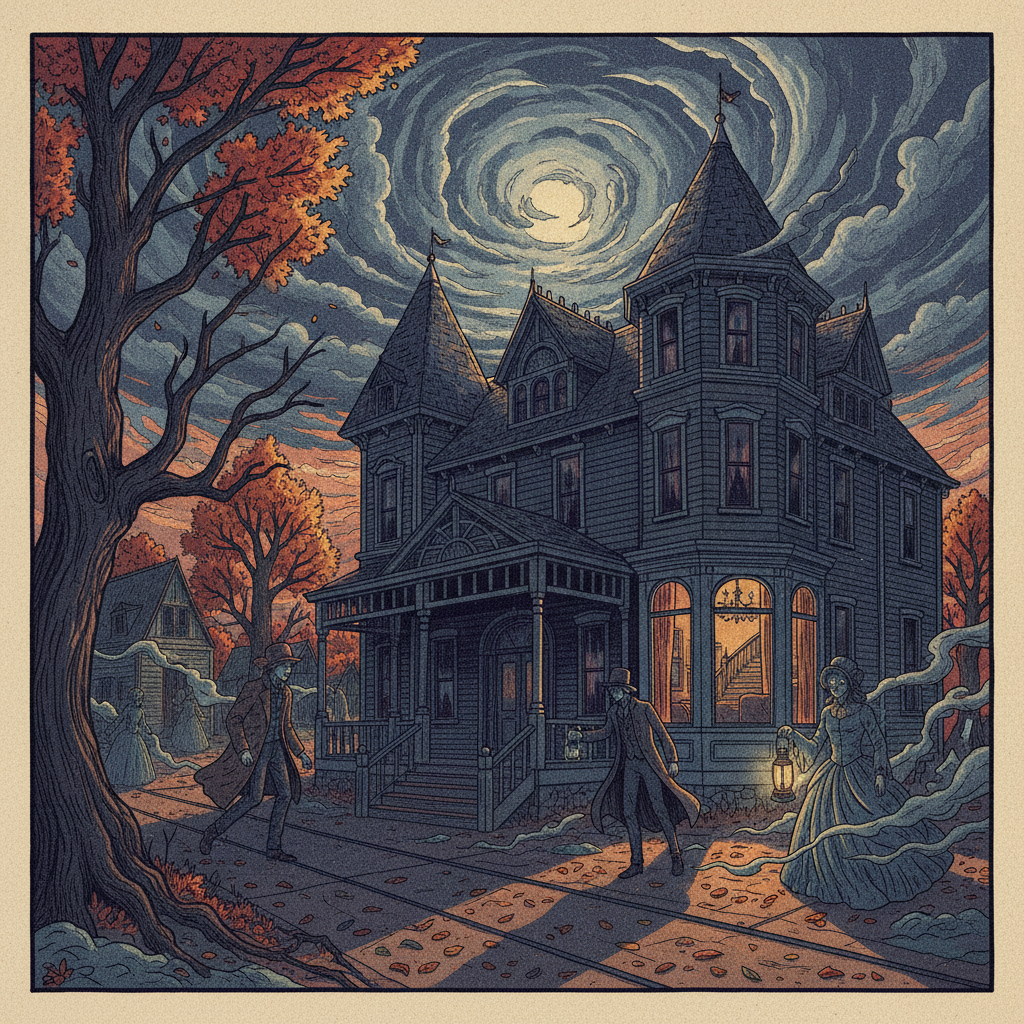
Checking In
Along Main Avenue in Durango, where the San Juan Mountains cast long shadows over red-brick storefronts and the Animas River winds past old mining-era architecture, the Strater Hotel has been welcoming guests since 1887. It’s one of Colorado’s oldest continuously operating hotels, and in a state whose haunted-hotel circuit tends to orbit around the Stanley in Estes Park, the Brown Palace in Denver, and the Hotel Colorado in Glenwood Springs, the Strater occupies a quieter but no less storied corner of the map — the Western Slope, where Victorian elegance and frontier roughness have always sat uneasily side by side.
Built by Henry Strater, a young pharmacist who arrived in the booming railroad town of Durango with ambitions bigger than his drugstore trade, the hotel opened its doors as a 50-room showcase of ornate Victorian architecture, complete with hand-carved black walnut furniture — still largely intact today and considered one of the largest collections of American Victorian walnut antiques in the country. The building itself is a Durango landmark, its red-brick facade and white gingerbread trim a fixture of postcards and historic tours. The Barker family purchased the hotel in 1926 and has owned and operated it ever since, making it a rare example of a century-old Colorado hotel that has stayed in continuous family hands rather than passing through a chain of corporate owners.
A Writer, A Brothel, and the Birth of the Western Gunfight
Long before paranormal investigators took an interest in the Strater, it had already found its way into American literary history. Western novelist Louis L’Amour was a regular guest at the hotel, and according to hotel history and regional accounts, he did much of his writing in Room 222, directly above what was once a rowdy saloon and brothel next door. The noise drifting up through the walls — the arguments, the music, the occasional scuffle — is said to have worked its way into his prose, lending an authentic, unruly energy to the gunfights and saloon brawls that populate his pulp westerns. It’s a detail that’s been repeated often enough in Durango lore and hotel materials to have become part of the Strater’s identity: a hotel that didn’t just host the writing of the American West, but helped soundtrack it.
That same proximity to the saloon trade and the rough edges of a 19th-century railroad boomtown is, in the folklore that’s grown up around the building, part of what gives the Strater its reputation for restlessness. Mining towns like Durango drew fortune-seekers, gamblers, and transient laborers by the thousands in the late 1800s, and not everyone who passed through such places left peacefully. Whether or not that history has anything to do with what guests report today is, of course, unprovable — but it’s the kind of backdrop that makes the stories feel at home.
Room 222 and the Reported Hauntings
Room 222 — the same room associated with L’Amour — has become the epicenter of the hotel’s ghost lore. Over the decades, guest accounts collected by local historians, Durango tour operators, and paranormal-interest writeups have described a recurring set of phenomena: the sensation of being watched, cold spots that seem to move through the room independent of drafts or air conditioning, and reports of a presence most often described as a woman in Victorian-era dress. Some versions of the story identify her as tied to the hotel’s early years or to the brothel that once stood next door; others simply describe an unnamed guest from another century who never checked out.
It’s worth being clear-eyed about the nature of these claims: they are guest reports and local legend, repeated and embellished over generations, not documented paranormal evidence. No verified photographic or recorded evidence has been published establishing a haunting at the Strater. What is documented is the persistence of the stories themselves — passed down through staff, written into Durango ghost-tour scripts, and repeated in regional roundups of Colorado’s haunted places, including compilations like Uncover Colorado’s surveys of the state’s creepier real-world locations. That persistence is its own kind of historical artifact, even if it can’t be treated as proof of anything supernatural.
Other reports from the hotel describe less localized phenomena: footsteps in empty hallways, doors that seem to open and close on their own, and the occasional sound of a piano or voices from unoccupied parts of the building late at night. As with Room 222, these are guest and staff accounts rather than verified incidents, and should be read as folklore — the kind of atmospheric detail that tends to accumulate around any building old enough to have outlived everyone who built it.
Durango’s Place on Colorado’s Haunted Map
Colorado’s most famous haunted hotels tend to cluster around the Front Range and the mountain resort corridor. The Stanley Hotel’s connection to Stephen King and The Shining has made it a pop-culture pilgrimage site. The Brown Palace in downtown Denver carries over a century of high-society history and its own ghost stories involving long-term guests and unexplained sounds. The Hotel Colorado in Glenwood Springs, with its ties to Teddy Roosevelt and reputed connections to Kate “Cattle Kate” rumors and other frontier-era figures, rounds out the state’s best-known trio.
The Strater rarely gets mentioned in the same breath — a product, probably, of geography more than substance. Durango sits roughly six hours by car from Denver, tucked into the southwestern corner of the state where the tourist traffic skews toward Mesa Verde, the Durango & Silverton Narrow Gauge Railroad, and hiking in the San Juans rather than ghost-hunting. But the hotel’s pedigree is, if anything, more intact than some of its Front Range counterparts: original Victorian furnishings, continuous family ownership since 1926, and a building that has never stopped operating as a hotel since Grover Cleveland was president.
A Colorado Moment for the Paranormal
The Strater’s quieter corner of the haunted-hotel conversation arrives at a moment when Colorado’s appetite for the unexplained shows no sign of slowing. Colorado Public Radio recently put out a call asking residents to share their own ghost stories, urban legends, and strange tales from around the state — a reminder that this kind of folklore is still very much alive and being actively collected, not just archived. Meanwhile, paranormal investigation crews have been making the rounds of Denver’s historic buildings, including a former mortuary turned restaurant and the music venue Ophelia’s Electric Soapbox, both the subject of recent televised investigations. Even the skies have been busy: the federal government has continued declassifying UAP case files this year, including reports tied to sightings over Colorado Springs, adding an unexpected layer to the state’s broader relationship with the unexplained.
Against that backdrop, the Strater Hotel offers something a little different — not a flash of modern mystery, but a slow-burn haunting built on 137 years of continuous operation, a literary legend about gunfights composed over a noisy brothel, and a room number that regulars still bring up when the conversation turns to things that go bump in the Victorian night. Whether or not anything otherworldly actually walks its halls, the Strater remains exactly what a good ghost story needs: a real place, with real history, old enough to have secrets it isn’t telling.