
The Elitch Theatre: Denver's Haunted Century-Old Stage
Explore the real history and ghost legends of Denver's historic Elitch Theatre, one of America's oldest summer-stock playhouses, said to still host its actors.
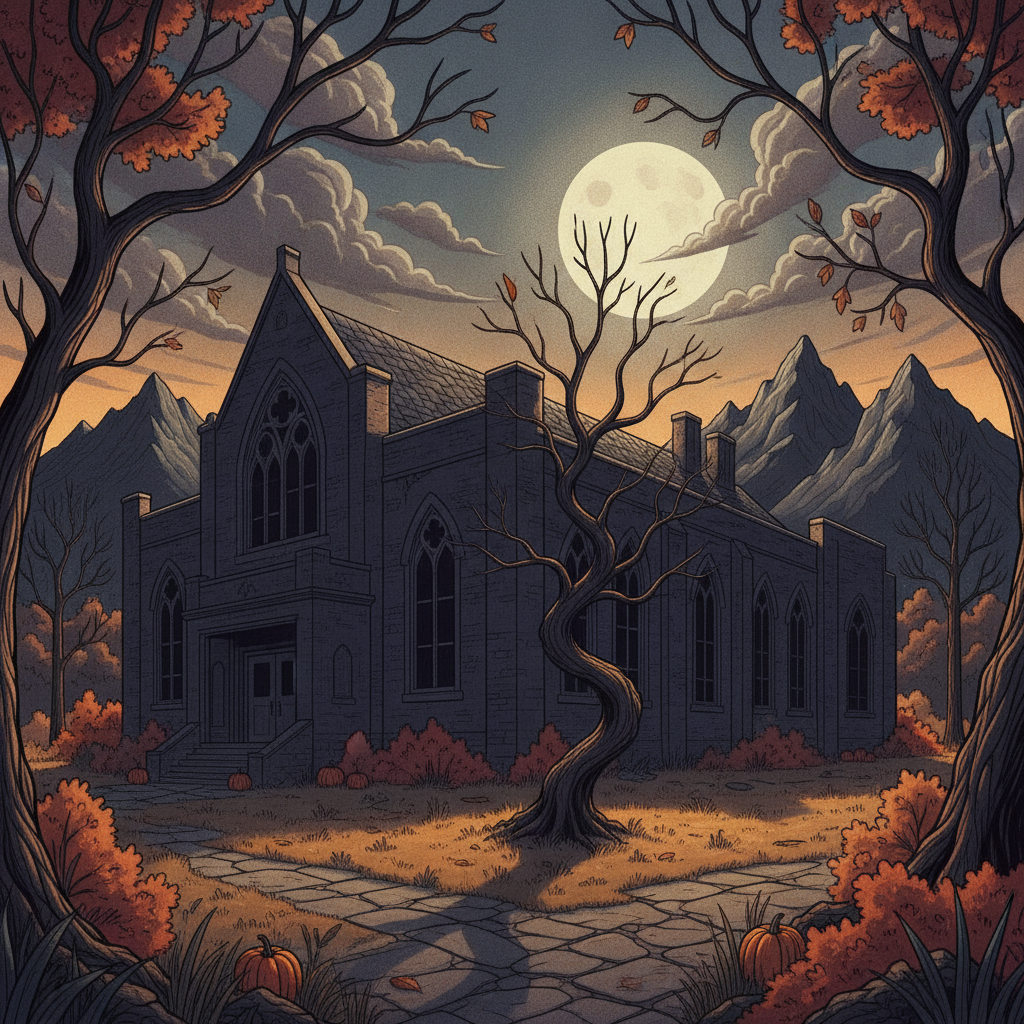
A Stage Older Than the City’s Memory
Long before Denver’s haunted hotels became tourist attractions and ghost-hunting reality shows descended on local bars and mortuaries, there was a wooden stage in the Highland neighborhood where the applause has never quite stopped echoing — at least according to those who believe the old actors never left.
The Elitch Theatre doesn’t get the attention that the Stanley Hotel or Brown Palace receive in Colorado’s ghost tourism circuit. It isn’t on most haunted bus tours, and it rarely makes the listicles. But by most historical accounts, it is the oldest surviving summer-stock theater in the United States — a title that comes with over a century of performances, heartbreak, financial collapse, and a preservation fight that nearly erased it entirely. And for just as long, locals have whispered that something of the theater’s long history still lingers inside its walls.
Built for a Garden That No Longer Exists
The Elitch Theatre was constructed in 1891 as the centerpiece of Elitch Gardens, the beloved Denver amusement park and zoo founded by John and Mary Elitch. The Gardens opened in 1890 on a plot of land in what is now northwest Denver, and the theater quickly became one of its signature draws — a summer-stock playhouse where touring companies and resident troupes performed for Denver audiences during the warm months, decade after decade.
Summer stock theater, for those unfamiliar with the tradition, was a uniquely American institution: seasonal repertory companies that staged a rotating slate of plays through the summer, often serving as a proving ground for young performers working their way toward Broadway or Hollywood. The Elitch Theatre became part of that national circuit, and its long, continuous run of productions is a major reason it holds the distinction of being the oldest surviving summer-stock theater in the country — a claim reflected in its listing on the National Register of Historic Places.
Mary Elitch herself became something of a legend in Denver history, running the Gardens for years after her husband’s death and earning a reputation as a pioneering woman in American entertainment and horticulture. The theater she helped build outlived the rest of the Gardens’ original 19th-century infrastructure by a wide margin.
A Century of Curtain Calls — and a Fight to Save It
Elitch Gardens operated on its original Highland site for over a hundred years, but by the early 1990s, the aging amusement park could no longer compete with modern entertainment venues. In 1994, operators relocated Elitch Gardens to a new site near downtown Denver along the South Platte River, where it continues to operate today under the name Elitch Gardens Theme Park.
That move left the historic Highland property in limbo. Most of the original park’s rides and structures were demolished to make way for a mixed-use residential development that would eventually become Highlands Garden Village. The theater, however, was spared the wrecking ball — though not without a fight. Preservationists pushed to keep the 1891 building standing on its original site, arguing that its historical and architectural significance outweighed the value of the land beneath it. That effort succeeded, and the Elitch Theatre remains today, still standing where it was built, now surrounded by a neighborhood that looks nothing like the Gardens it once anchored.
Since then, a nonprofit effort — long organized under the banner of Historic Elitch Theatre — has worked to restore and maintain the building, holding events, tours, and performances aimed at keeping the stage relevant more than 130 years after its first curtain rose.
Local Legend Holds: The Actors Who Never Took Their Final Bow
It’s here, in that long gap between the Gardens’ heyday and its modern preservation, that the ghost stories took root.
Local legend holds that the Elitch Theatre is haunted by the echoes of its own history — faint applause in empty rooms, footsteps crossing the stage when no one is there, and the sense of being watched from the wings by performers who gave everything to the summer-stock tradition the building represents. Some stories describe cold spots backstage or dressing-room doors that won’t stay shut. Others speak of shadowy figures glimpsed near the stage during quiet restoration work, gone the moment a light is raised.
As with many historic theaters, the folklore leans into the idea that a building which absorbed a century of live performance — triumphant opening nights, closing-night tears, actors who rehearsed lines in its dressing rooms for decades — might hold onto some residue of that energy. It’s a theme common across American playhouses, where the romantic notion of actors “still performing” long after death has become its own subgenre of ghost lore.
It’s worth being clear about what is and isn’t documented here. The construction date, the National Register listing, the relocation of Elitch Gardens, and the preservation battle over the theater building are all matters of public historical record. The ghost stories, by contrast, exist in the realm of local legend and oral tradition — the kind of stories traded by neighborhood old-timers, preservation volunteers, and Denver ghost-story enthusiasts rather than documented in sworn affidavits or scientific investigation. That doesn’t make them worthless; it makes them exactly what ghost stories usually are — a community’s way of keeping a building’s memory alive, wrapped in just enough mystery to make you walk a little faster past it at night.
An Overlooked Haunt in a City Full of Them
Denver’s paranormal reputation tends to orbit around its grand hotels and historic bars — and Colorado’s broader paranormal news cycle these days leans heavily toward declassified UFO files and military sightings rather than century-old stages. But the Elitch Theatre deserves a place in that conversation. It’s a building that survived the death of the amusement park it was built for, a preservation fight that could easily have gone the other way, and well over a hundred years of Colorado history packed into its timber frame.
Colorado Public Radio recently put out a call for residents to share their own ghost stories, urban legends, and strange tales from around the state — a reminder that Colorado’s haunted history isn’t confined to a handful of famous landmarks. The Elitch Theatre, quietly standing in the Highland neighborhood long after the rides and midway games around it vanished, is a perfect example of the kind of place that deserves more of that attention.
If you’ve ever stood on the grounds of Highlands Garden Village and felt like the old theater was watching you back, you’re far from the first. The stage may be dark most nights now, but according to those who’ve spent time near it, the show, in some form, has never really stopped.