
The Hearthstone Inn: Colorado Springs' Quietly Haunted Victorian
Inside the Hearthstone Inn, a 19th-century Colorado Springs mansion where guests and staff have reported ghostly encounters for decades.
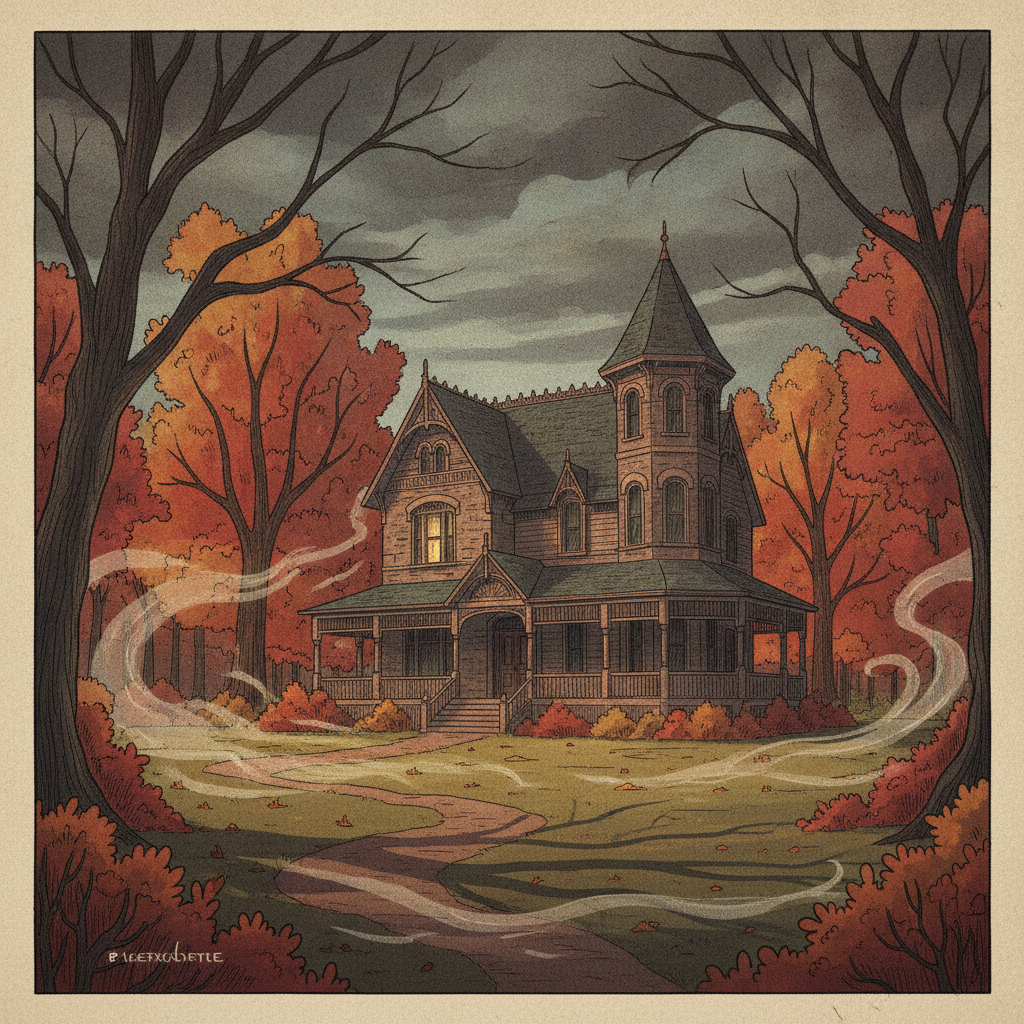
The Colorado Public Radio request that went out this fall — asking listeners to send in their ghost stories, urban legends, and strange tales from across the state — landed at an interesting moment for Colorado’s paranormal tourism scene. Pentagon UAP file releases have kept Colorado Springs in the UFO news cycle for much of 2026, Paranormal Cirque is rolling into town, and ghost hunters have been making the rounds at haunted restaurants and leased-out Denver mansions. But amid all that noise, it’s worth remembering that some of Colorado’s most enduring haunted reputations were built the old-fashioned way: slowly, over a century, inside a single house that never stopped being lived in.
The Hearthstone Inn, a Victorian mansion-turned-bed-and-breakfast at 506 North Cascade Avenue in Colorado Springs, is one of those places. It doesn’t have the brand recognition of the Stanley Hotel in Estes Park or the Broadmoor’s Lake Avenue legends, but locals and longtime ghost-tour guides have quietly logged its strange history for decades. If CPR is looking for lesser-known Colorado hauntings, this Queen Anne on Cascade Avenue deserves a spot on the list.
A Victorian Built to Last
The Hearthstone Inn occupies a pair of connected Victorian homes dating to 1885, built during the boom years when Colorado Springs was transforming from a dusty railroad town into “Little London,” the genteel resort city envisioned by founder General William Jackson Palmer. North Cascade Avenue became the city’s address of choice for the newly wealthy, lined with the ornate Queen Anne and Victorian homes built by mining money, railroad fortunes, and the tourism dollars flowing in from the nearby springs and mountains.
The mansion that now houses the inn sits within this historic corridor, part of the architectural fabric that eventually earned recognition on the National Register of Historic Places. Like much of North Cascade Avenue, the home reflects the ambitions of its era: turrets, wraparound porches, elaborate woodwork, and the kind of detailed craftsmanship that 19th-century builders used to signal permanence and prosperity. These weren’t just houses — they were statements, built by families who expected their names to matter in Colorado Springs for generations.
By the mid-20th century, many of these grand homes along Cascade Avenue had been subdivided, converted to apartments, or demolished outright as the city grew. The building that became the Hearthstone Inn survived that era of attrition, eventually passing through a series of private hands before its conversion into a bed-and-breakfast — a fate that, as it turns out, may have helped preserve both its architecture and whatever else has lingered inside it.
From Private Residence to Haunted Inn
The transformation of the Cascade Avenue mansion into the Hearthstone Inn placed it among a wave of Colorado Victorian homes repurposed as inns during the late 20th century, when historic preservation and heritage tourism gave old mansions new economic life. Converting a private home into a hospitality business means strangers sleeping in rooms that once belonged to specific families, inheriting furniture, staircases, and closed-off spaces that carried decades of private history before the first guest ever checked in.
It’s a pattern paranormal researchers point to again and again: buildings that shift from private to semi-public use — inns, restaurants, event venues — tend to generate reports from a much wider range of people than a private residence ever would. A family living quietly in a haunted house might mention odd occurrences to friends; a bed-and-breakfast with a steady rotation of guests, housekeeping staff, and overnight visitors creates something closer to an ongoing data set, however informal and anecdotal that data set may be.
That appears to be exactly what happened at the Hearthstone Inn.
Guests Who Never Check Out
Over the decades, the Hearthstone Inn has built a reputation — documented in regional guidebooks, local ghost-tour circuits, and periodic local press coverage — as one of Colorado Springs’ most quietly haunted buildings. Unlike the Stanley Hotel, whose fame exploded after inspiring Stephen King’s The Shining, or the Broadmoor, whose ghost stories are wrapped up in the glamour of one of Colorado’s grandest resorts, the Hearthstone’s reputation has grown the slower way: through word of mouth among staff and guests, repeat visitors swapping stories, and ghost-tour operators in Colorado Springs who include the inn on their historic walking routes through the North End neighborhood.
Reports associated with the property over the years have followed familiar patterns common to Victorian-era hauntings: cold spots in certain rooms, the sound of footsteps on staircases when no one else is present, doors that open or close without explanation, and the sense — reported by multiple guests over time, according to ghost-tour operators who include the property on their routes — of being watched in rooms that are otherwise empty. Some accounts describe a sense of a lingering female presence, a common thread in many Victorian mansion hauntings across Colorado, where women who spent much of their lives inside these ornate homes are often the figures most associated with reported encounters.
It’s worth being direct about what can and can’t be verified here. There is no scientific study confirming paranormal activity at the Hearthstone Inn, and the specific guest and staff accounts that circulate through ghost-tour scripts and word of mouth haven’t been independently documented with named, on-the-record witnesses in the way a contemporary news investigation would require. What is verifiable is the building’s genuine 19th-century provenance, its documented architectural history, and its long-standing local reputation — repeated across ghost-tour circuits and regional hauntings compilations for years — as one of Colorado Springs’ persistently “haunted” addresses.
Beyond the Stanley and the Broadmoor
Colorado’s paranormal landscape is often reduced to its two most famous entries, and for good reason — both the Stanley and the Broadmoor have genuine documented histories and enormous cultural footprints. But CPR’s call for ghost stories is a useful reminder that Colorado’s haunted geography is much wider than its postcard-famous hotels. Old mining towns, repurposed mortuaries like the one Denver paranormal investigators recently explored, mansions sitting empty and up for lease, and quiet Victorian inns like the Hearthstone all carry their own accumulated layers of local legend.
What makes the Hearthstone Inn compelling isn’t a single dramatic event or a famous death — it’s the slow accumulation of small, repeated, unremarkable-seeming reports over decades, from people who had no reason to coordinate their stories and often didn’t know each other. That’s the kind of haunted reputation that doesn’t come from marketing. It comes from a house that’s been standing on Cascade Avenue since 1885, quietly watching Colorado Springs grow up around it.
Whether or not you believe something lingers in its halls, the Hearthstone Inn remains a genuine piece of Colorado Springs history — a Victorian survivor from the city’s gilded age, still standing, still welcoming guests, and still, according to those who’ve stayed there, not entirely empty after dark.