
The Ghosts of Auraria: Denver's Buried Neighborhood Haunts Campus
Before it was a college campus, Auraria was a living neighborhood razed by urban renewal. Some say its displaced residents never truly left.
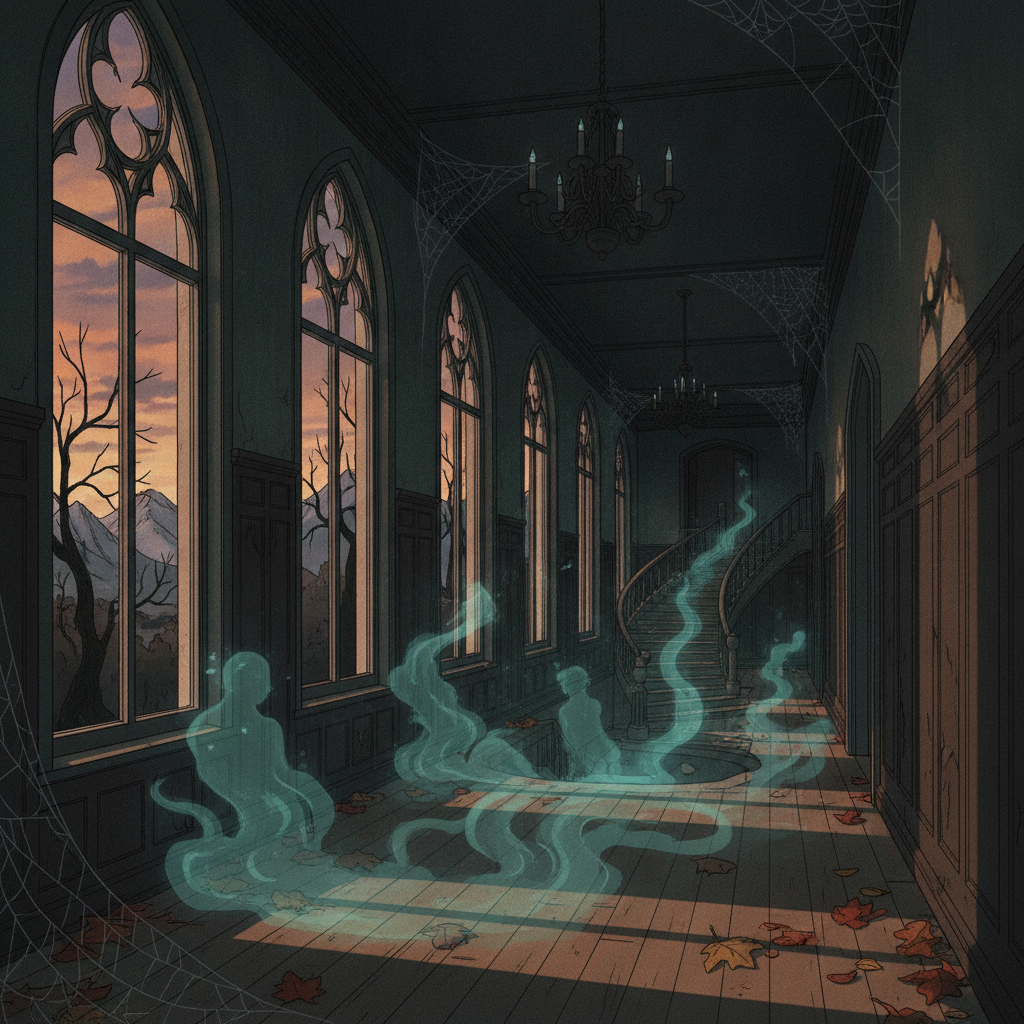
Walk across the Auraria Campus on a quiet evening — between classes, after the food trucks have packed up, when the three schools’ worth of students have thinned to a trickle — and you might notice something odd. The old brick buildings don’t quite match the modern classroom blocks around them. A chapel sits incongruously next to a parking structure. A row of Victorian-era houses faces a light rail line. It feels, because it is, like a neighborhood that was interrupted mid-sentence.
That feeling has become part of campus lore. According to a piece published by MSU Denver’s student news outlet RED, titled “The 5 most haunted places on the Auraria Campus,” students and staff have long traded stories about strange sounds, cold spots, and unexplained presences in several of the campus’s oldest structures. But to really understand why Auraria feels haunted, you have to understand what Auraria was — and what was done to it.
A Neighborhood Before It Was a Campus
Long before it housed the Community College of Denver, Metropolitan State University of Denver, and the University of Colorado Denver under the shared Auraria Higher Education Center, the land between Colfax Avenue and the confluence of Cherry Creek and the South Platte River was home to a real, living community. Auraria was one of Denver’s oldest neighborhoods, dating back to the city’s founding in 1858, and by the mid-20th century it had become a predominantly working-class, largely Hispanic enclave — a tight web of homes, churches, corner stores, and families who had put down roots there for generations.
In the late 1960s and early 1970s, that neighborhood was targeted for federal urban renewal. Denver voters approved a plan to raze much of Auraria to build a consolidated higher-education campus, and in the years that followed, roughly 300 families were displaced from their homes. Houses were bulldozed, blocks were erased, and a community that had existed for a century was largely wiped from the map to make way for parking lots, plazas, and classroom buildings. It’s a chapter of Denver history that doesn’t always make it into campus tours, but it’s as real and well-documented as any ghost story — covered by local historians and preserved in the Auraria Higher Education Center’s own institutional history.
A handful of structures were spared the wrecking ball, either for historic significance or practical reuse. Those survivors are now the emotional — and, students say, supernatural — anchors of the campus.
The Tivoli: Beer, Bones, and a Century of Change
The Tivoli Brewery building, parts of which date to 1859, is one of the oldest commercial structures in Denver. It operated as a working brewery for over a century before closing in 1969, right around the time urban renewal swept through the neighborhood. Today it’s known as the Tivoli Student Union, full of food court chatter and study groups — but the RED article notes it as one of the locations where students and staff have reported unexplained phenomena. Old industrial buildings like the Tivoli tend to produce their own eerie ambience naturally: creaking machinery long since removed, brick corridors that amplify sound, decades of accumulated history pressing in on the present. Whatever the explanation, it’s one of the few buildings on campus that remembers Auraria as it was before the neighborhood, and the brewery, both went quiet.
Emmanuel Gallery: Denver’s Oldest Surviving Sanctuary
Tucked near the center of campus is a small stone building with a much bigger story. Built in 1876, the Emmanuel-Sherman Chapel is widely cited as one of the oldest standing structures built for religious use in Denver. Over its long life it served as a synagogue, an Episcopal chapel, and — after the neighborhood’s demolition — an art gallery for the Auraria campus, now known as Emmanuel Gallery. Few buildings in Denver have shifted identity so many times while still standing on the same foundation stones.
It’s not hard to see why a building like this shows up on lists of the campus’s most haunted spots. A structure that has hosted a century and a half of worship, mourning, celebration, and now art openings carries an unusual kind of weight. The RED article includes Emmanuel Gallery among its featured haunted locations, reflecting a longstanding thread of campus folklore rather than any formal paranormal investigation — but the building’s genuine historical density is not folklore at all.
St. Cajetan’s: A Church Without Its Congregation
Perhaps no building on campus embodies the uncanny collision of past and present quite like St. Cajetan’s. Built to serve Auraria’s Hispanic Catholic community, St. Cajetan’s functioned as an active parish church for decades, a center of baptisms, weddings, funerals, and daily life for the families who lived around it. When urban renewal displaced those families in the early 1970s, the church lost its congregation along with the neighborhood. The building itself survived — it’s now used as an event and meeting space for the Auraria campus — but its purpose was severed from the people it was built for.
That history gives the ghost stories associated with St. Cajetan’s a different texture than typical campus spook tales. Whatever students report hearing or feeling inside, the documented truth is enough to raise the hair on your neck: an entire parish community was uprooted, and the physical church that held their rites of passage was left standing — empty of the people, full of the memory.
Ninth Street Historic Park: The Neighborhood That Got to Stay
If you want to see what Auraria actually looked like before 1970, walk down Ninth Street. A row of preserved 19th-century houses — modest brick and frame homes built for the laborers, merchants, and families who populated the original neighborhood — was saved from demolition and restored as the Ninth Street Historic Park. It’s the closest thing Denver has to a time capsule of Auraria as a residential community, rather than a commercial district or campus.
Walking that short stretch of street, flanked by university buildings on all sides, is arguably the most genuinely unsettling experience the campus offers — not because of any specific reported haunting, but because of what it represents. These houses are real. Families really lived in them. And nearly every other house like them on every surrounding block was torn down.
Folklore, History, and the Line Between Them
It’s worth being clear about what’s established fact and what isn’t. The displacement of Auraria’s roughly 300 families, the demolition of the neighborhood, and the construction of the Auraria Higher Education Center are documented historical events, part of Denver’s public record. The claims of ghostly activity in the Tivoli, Emmanuel Gallery, St. Cajetan’s, and elsewhere on campus are student folklore — the kind of oral tradition that circulates on any campus, compiled in pieces like MSU Denver RED’s roundup of the five most haunted campus locations, but not the product of formal paranormal investigation or documented historical haunting records.
Still, the two threads are hard to fully separate. Colorado’s paranormal landscape has been in the news lately for everything from declassified UFO files over Colorado Springs to ghost-hunting crews setting up cameras in downtown Denver bars and former mortuaries. But Auraria’s hauntings, real or imagined, point to something quieter and arguably more haunting than any orb or anomaly: a campus built directly on top of a community that was, by official government action, erased. Whether or not anything supernatural actually lingers in the Tivoli’s brick walls or St. Cajetan’s empty pews, the uncanny feeling students describe may be the most honest reaction anyone could have to walking through a place where a neighborhood used to be.