
The Denver Mansion That Inspired The Changeling (1980)
The true Denver haunting behind a classic horror film—what playwright Russell Hunter said happened in a Capitol Hill mansion, and what's verifiable.
A Mansion, a Playwright, and the Movie That Wouldn’t Let Go
Capitol Hill has always worn its history close to the skin. Denver’s old mansion district—built by silver barons, railroad men, and the first generation of Colorado millionaires—is lined with turreted brick houses that have outlived their builders by a century. Some of those houses have reputations. The Molly Brown House draws tourists for its Titanic connection. The Croke-Patterson-Campbell Mansion on Pennsylvania Street has carried whispers of hauntings for decades, the kind of place paranormal investigators and curious neighbors alike can’t stop talking about.
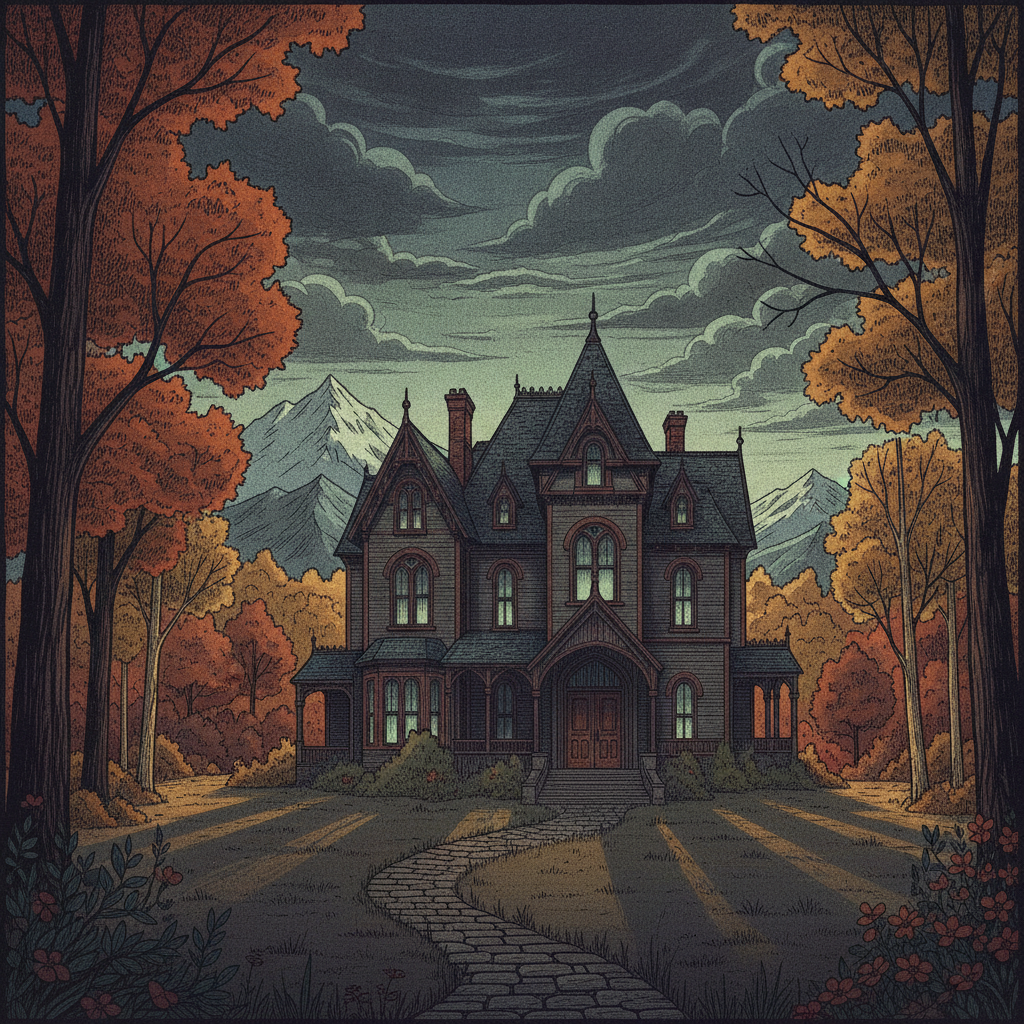
But one Capitol Hill mansion has a stranger legacy than most: it allegedly inspired a Hollywood horror film. According to a Denver Public Library blog post examining the city’s architectural and cultural history, the 1980 film The Changeling—a slow-burn ghost story starring George C. Scott that’s still regarded as one of the finest haunted house movies ever made—traces its origins to claims made by a real man who said he lived through something inexplicable in a Denver mansion.
The Man Behind the Story
The Changeling’s story credit belongs to Russell Hunter, a playwright who, according to the production history surrounding the film, lived in a large, old house in Denver during the late 1960s and early 1970s. Hunter later said that his time in that house was the basis for the screenplay he developed, which eventually became the film directed by Peter Medak.
This is an important distinction to make up front: Hunter wasn’t a paranormal researcher, and the film was never presented as a documentary. It was marketed, and has endured, as a fictional horror film “inspired by” alleged real events—a framing that Hollywood has used for decades, sometimes loosely. What makes the Denver connection worth examining isn’t that The Changeling is a true story in the literal sense. It’s that a specific, real house in a real Denver neighborhood sits at the root of the legend, and the claims Hunter made about his time there have been passed down, researched, and partially corroborated by local historians—including the Denver Public Library, which took up the question of which house, exactly, Hunter was talking about.
What Hunter Actually Claimed
Strip away the film’s elaborate plot—the séances, the psychic medium, the bouncing rubber ball rolling down a staircase on its own, the hidden room with a child’s wheelchair, the drowned boy whose identity was stolen by his own family for a fraudulent inheritance scheme spanning decades—and what’s left is a simpler, if still unsettling, set of claims attributed to Hunter himself.
The core elements, per the Denver Public Library’s account, are these: Hunter said he experienced unexplained sounds in the house—knocking, banging, noises with no apparent source. He said he came to believe the house held a hidden space, a room that had been sealed off and forgotten. And he connected the disturbances to a story about a child’s death in the house decades earlier, a drowning that, in his telling, was tied to the home’s unresolved history.
It’s worth being precise about where documentation ends and dramatization begins. The film version—the secret identity swap, the inheritance fraud, the senate investigation subplot, the climactic fire—is screenwriting, built by Hunter and his co-writers (William Gray and Diana Maddox share screenplay credit) into a three-act structure that bears only a loose resemblance to a man’s account of strange noises and a bricked-up room. Horror films need plot engines, antagonists, and resolutions. Real hauntings, if that’s what Hunter experienced, rarely offer any of those things. They tend to just be: noises. A feeling. A room that shouldn’t be there.
The House Itself
The specific Capitol Hill mansion tied to Hunter’s claims sits within Denver’s dense cluster of late-19th and early-20th century mansions—homes built during the silver and railroad boom years, many of them later subdivided into apartments or boarding houses by the mid-20th century, which is reportedly how Hunter came to be living in one. That pattern of decline-then-rediscovery is common across Capitol Hill: grand single-family homes built for Gilded Age fortunes, carved into rental units during the lean decades of the mid-1900s, and only later restored or recognized for their historic value. It’s exactly the kind of transitional, half-forgotten state a house would be in when a tenant starts hearing things that shouldn’t be there.
That transitional history also means record-keeping about who lived where, and what happened inside any given room, gets murky. The Denver Public Library’s research into the house represents real archival digging—city directories, deed records, local history files—to connect Hunter’s story to an actual physical address. That kind of groundwork is the difference between urban legend and documented local history, even when the haunting claims themselves remain, by their nature, unprovable.
Measuring Legend Against Record
This is where honesty matters most. There is no contemporaneous newspaper account from the 1960s or ’70s of a haunting investigation at this house, no police report, no sworn witness statement beyond Hunter’s own retrospective claims made once he was already a writer shaping them into a marketable screenplay. What exists is: a real man, a real house, a story he told about his time there, and a film that took that seed and grew something much larger and more theatrical from it.
That doesn’t make the underlying claim worthless—plenty of Colorado’s most enduring ghost stories rest on exactly this kind of foundation: a credible-enough witness, a real location, and a gap between what was experienced and what can be verified. It does mean readers should hold the story the way any good paranormal investigator holds a case file: with genuine curiosity, respect for the witness, and a clear line drawn around what’s confirmed versus what’s been embellished for effect.
Capitol Hill’s Haunted Company
Whatever actually happened in that mansion, it sits comfortably within Capitol Hill’s broader reputation as one of Denver’s most haunted neighborhoods—joining the Croke-Patterson-Campbell Mansion and other grand old houses in the district whose histories blend verifiable architecture with unverifiable but persistent local legend. Denver’s appetite for these stories hasn’t faded. Paranormal investigation teams continue to comb through the city’s old buildings—from a former mortuary turned restaurant to downtown music venues like Ophelia’s Electric Soapbox—looking for the same kind of evidence Hunter said he couldn’t explain decades earlier.
The Changeling remains a cult classic specifically because it doesn’t rely on gore or jump scares—it leans on dread, on the sense that an old house remembers things. Whether that feeling originated in genuine paranormal activity inside a Denver mansion or in the imagination of a playwright processing a strange chapter of his life, the house itself remains part of Capitol Hill’s layered, half-documented history—a reminder that in a neighborhood this old, every mansion has at least one story nobody can fully prove, and nobody can quite dismiss either.