
Pueblo's Haunted Asylum: Inside Colorado's Darkest Halloween Tour
A former psychiatric hospital and funeral home now open for Halloween tours reveal Colorado's grim institutional past and its lingering ghost stories.
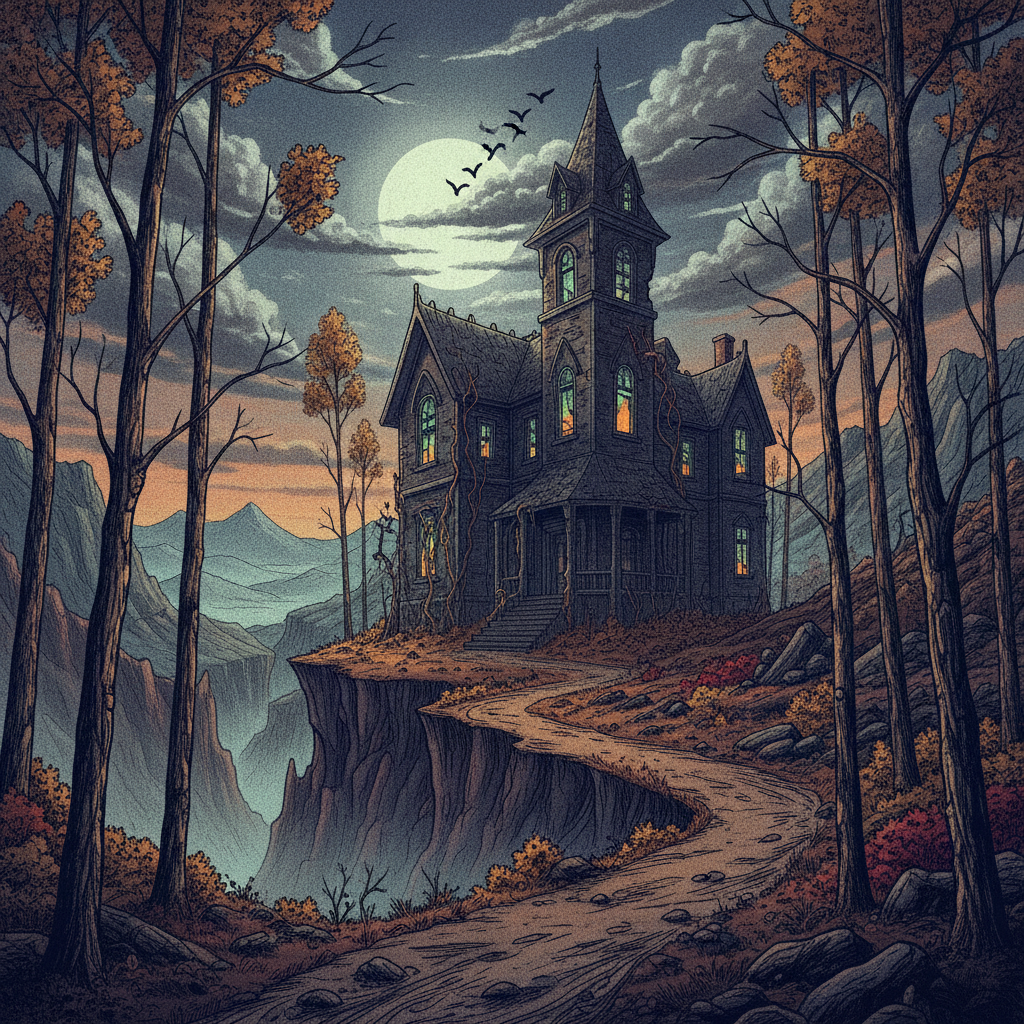
The orange lights are already going up around Pueblo, and once again, tour operators are selling tickets to walk through buildings that once held some of Colorado’s most vulnerable residents. According to an October 2026 report from KDVR, Halloween enthusiasts can now book tours through a former psychiatric hospital and a former funeral home — two kinds of institutions that, by their very nature, accumulate stories. People went in and did not always come out. Bodies were processed, treated, buried, and occasionally forgotten. It’s little wonder these buildings have become a seasonal pilgrimage for ghost hunters and curious tourists alike.
But before any tour guide dims the lights and points toward a “cold spot,” it’s worth separating the folklore from the historical record. Colorado’s institutional past — particularly its treatment of the mentally ill — is grim enough on its own, without embellishment. The real history is the haunting.
Pueblo’s Asylum: A Real and Documented Past
Pueblo is home to one of Colorado’s oldest and most significant psychiatric institutions. The Colorado State Hospital, now operating as the Colorado Mental Health Institute at Pueblo (CMHIP), opened its doors in 1879 — making it one of the oldest continuously operating psychiatric facilities west of the Mississippi. For over 140 years, the sprawling campus has treated patients with everything from what 19th-century doctors called “melancholia” to severe psychiatric illness that would be diagnosed very differently today.
Like most state asylums built in the late 1800s, the Pueblo institution grew far beyond its original design. Colorado’s population boomed through the late 19th and early 20th centuries, and the hospital absorbed patients from across the state, including people committed for reasons that had little to do with mental illness as we understand it now — poverty, epilepsy, alcoholism, and social nonconformity were all historically grounds for institutionalization in asylums across the country, Colorado included.
Overcrowding became a defining feature of the institution for much of its history, a pattern documented at state hospitals nationwide during this era. Wards built for dozens often held hundreds. Staffing shortages were chronic. These are not ghost-tour exaggerations — they are the well-documented growing pains of American psychiatric institutions in the pre-reform era.
The Treatments of a Different Century
Early-to-mid 20th-century psychiatric care in facilities like Pueblo’s reflected the broader, often brutal experimental landscape of American mental health treatment. Hydrotherapy — prolonged immersion in hot or cold water meant to calm agitated patients — was standard practice in asylums of this type. Insulin shock therapy, which induced comas through insulin overdose, and electroconvulsive therapy were both widely used treatments for severe mental illness in the mid-20th century, as they were at psychiatric hospitals across the country. Lobotomies, too, were performed at many American state hospitals during the 1940s and 1950s before the practice was discredited and phased out.
None of this requires embellishment to be unsettling. These were real procedures performed on real patients, under real medical consensus that would later be abandoned as harmful or unethical. The history of American psychiatric care is, by documented fact, dark — which is precisely why buildings like these draw both historians and horror tourists.
The Unmarked Dead
One of the most persistent and documented sorrows connected to large state asylums, including those in Colorado, is the existence of patient cemeteries where graves were marked only by numbers rather than names. This was a common practice at psychiatric institutions across the United States through much of the 20th century — a reflection of the stigma attached to mental illness, where even in death, patients were often stripped of identity. Families sometimes never claimed bodies, either due to distance, poverty, or shame.
This pattern — anonymous burial grounds attached to state hospitals — is well documented in institutional histories across the country, and it’s part of what gives places like Pueblo’s hospital campus their heavy reputation. It’s not folklore that these graves exist; what remains speculative is what, if anything, lingers there. That’s where ghost stories take over from history.
Funeral Homes: Colorado’s Other Haunted Industry
The KDVR report also highlights tours through a former funeral home, and that pairing with a psychiatric hospital isn’t accidental — both institutions dealt constantly with death, dying, and the liminal space between. Small-town Colorado funeral homes historically served entire counties, often operating out of converted Victorian homes that still stand today, their embalming rooms and viewing parlors intact or repurposed.
This isn’t the only Colorado property with mortuary roots drawing paranormal attention. CBS News reported in September 2025 on paranormal investigators exploring a Denver restaurant that was formerly a mortuary, examining the building’s history as part of the broader trend of adaptive reuse properties carrying their previous identities into public awareness. Buildings that once processed the dead rarely shed that association, no matter how many coats of paint or how many new business licenses follow.
Why These Tours Exist Now
Dark tourism isn’t new, but Colorado’s appetite for it appears to be especially strong this season. A study reported by North Forty News in October 2026 found that Colorado leads the nation in online searches for aliens and UFOs — a statistic that speaks to a broader cultural hunger for the unexplained that extends well beyond extraterrestrial phenomena. That same appetite fuels events like Paranormal Cirque, recently announced for Colorado Springs, and renewed paranormal investigations in towns like Windsor, as covered by North Forty News. Colorado Public Radio has even put out a call asking residents to share their own ghost stories and strange tales, suggesting local interest in the paranormal is less a fringe hobby than a shared regional pastime.
Against that backdrop, tours through a former psychiatric hospital and funeral home make sense as more than Halloween novelty. They tap into a genuine curiosity about the state’s institutional past — a past that, in the case of places like the Colorado State Hospital, involves real documented suffering, not manufactured scares.
Fact, Folklore, and the Space Between
It’s important to be clear about what is established and what isn’t. The overcrowding, the outdated treatments, the anonymous graves — these are matters of historical record, found in institutional histories, state archives, and academic studies of American psychiatric care. What isn’t documented, and what tour operators and ghost hunters traffic in instead, are the specific claims of apparitions, disembodied voices, or restless spirits said to wander these halls. Those stories exist because the history practically demands them — but they remain, by their nature, unverifiable.
That tension is exactly what makes places like Pueblo’s old asylum grounds so compelling. You don’t need a ghost to feel the weight of a building where thousands of people lived out some of the hardest years of their lives, many of them forgotten by the time they died. The real history is dark enough to stand on its own. The ghosts are just what people bring with them when they walk through the door.