
The Hope Diamond's Colorado Curse: A Denver Mining Fortune
How a Camp Bird Mine fortune and a Denver mansion became tangled in the legendary curse of the Hope Diamond.
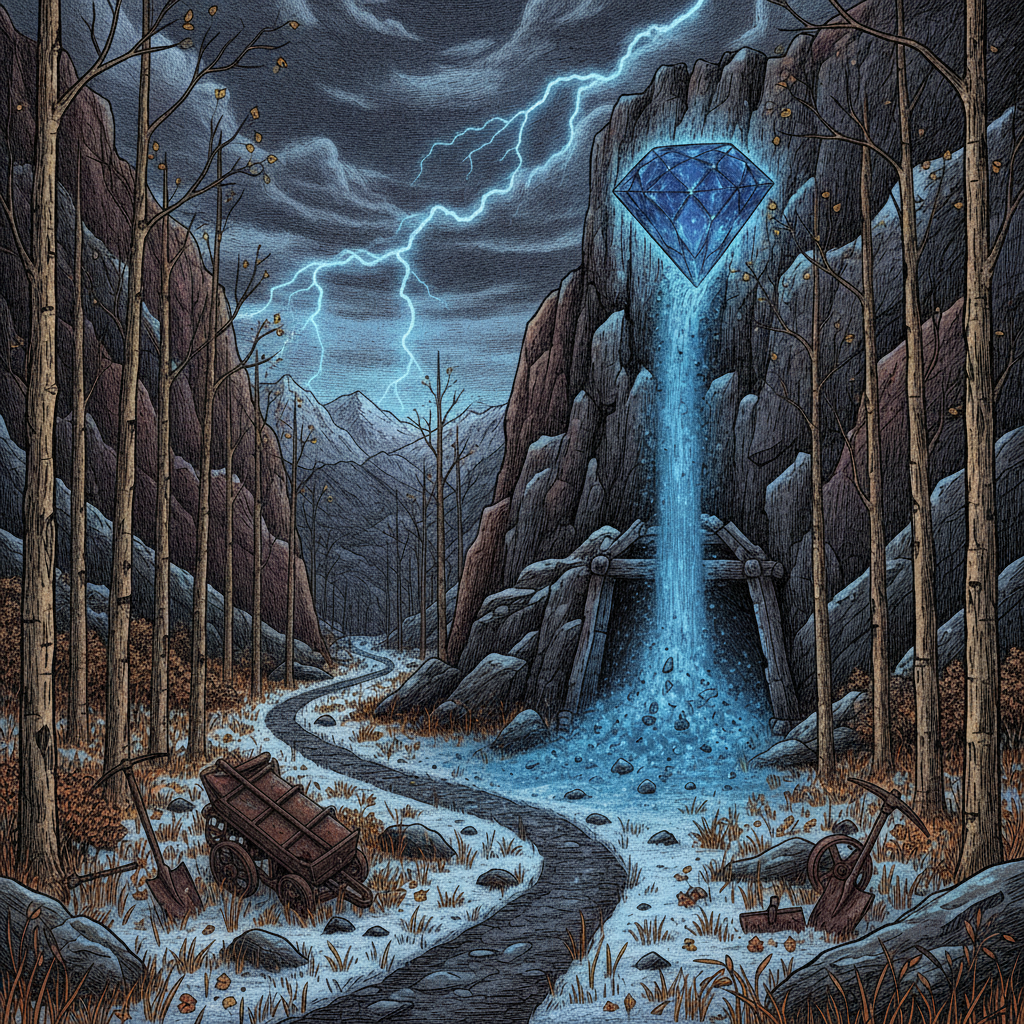
A Fortune Forged in Ouray’s Mountains
High in the San Juan Mountains above Ouray, Colorado, a failed prospector named Thomas Walsh made a discovery in 1896 that would alter the course of his family’s life forever — and eventually tangle their name with one of the most notorious legends in gemstone history. Walsh, an Irish immigrant who had tried his luck across multiple Western mining camps without striking it rich, staked a claim on a mountainside that became the Camp Bird Mine. The ore he pulled from that mountain was extraordinarily rich in gold, and within a few years Walsh had transformed himself from a struggling miner into one of the wealthiest men in the United States.
By 1902, Walsh sold the Camp Bird Mine for a sum widely reported to have been in the millions of dollars — a fortune that, adjusted for the era, placed him among the elite industrial and mining barons of the Gilded Age. He didn’t stay in Ouray to enjoy it. Walsh moved his family to Denver, where he built one of the city’s most extravagant homes: a mansion on Sherman Street in what is now the Capitol Hill neighborhood, reportedly the first private residence in Denver wired for electricity throughout, a literal monument to the kind of overnight wealth that Colorado’s mining boom could produce. The Walsh mansion became a symbol of the state’s mineral riches translated into Gilded Age ambition, and it set the stage for the next chapter of the family’s story — one that would take them far from the Rockies and into one of the world’s most enduring curse legends.
From Denver to Washington: Evalyn Walsh McLean
Thomas Walsh’s daughter, Evalyn Walsh McLean, grew up amid that Denver wealth before marrying Edward Beale “Ned” McLean, heir to the Washington Post publishing fortune. The couple became fixtures of early 20th-century high society in Washington, D.C., known for lavish entertaining and an appetite for extraordinary jewelry. In 1911, Evalyn purchased the Hope Diamond from jeweler Pierre Cartier — a 45.52-carat deep blue diamond with a documented history stretching back centuries, believed to have originated in India’s Golconda mines before passing through European royal collections, including, by long-accepted historical tradition, King Louis XIV of France.
The diamond was already wrapped in legend by the time it reached Evalyn’s hands. Cartier himself reportedly played up stories of misfortune befalling its previous owners as part of the sales pitch — a detail documented in accounts of the diamond’s history held by the Smithsonian Institution, which has owned the Hope Diamond since 1958. Whether Evalyn believed in the curse or simply found it part of the gem’s romantic allure is unclear, but she wore it constantly, even reportedly letting her dogs play with it at parties, according to historical accounts.
Tragedy and the Birth of a Legend
What makes the Hope Diamond curse story endure isn’t fabrication so much as the uncomfortable alignment of real tragedy with a pre-existing myth. The documented facts of Evalyn Walsh McLean’s later life are genuinely sorrowful. Her eldest son, Vinson, was killed in a car accident in 1919 at the age of nine. Her marriage to Ned McLean deteriorated over the following years; he struggled with alcoholism and mental illness, and was eventually declared insane and institutionalized, dying in a psychiatric hospital in 1941. The McLean family’s once-enormous fortune, including control of the Washington Post, collapsed amid financial mismanagement — the newspaper was eventually sold at bankruptcy auction in 1933. And in 1946, Evalyn’s adult daughter, also named Evalyn, died from an overdose of sleeping pills, a death ruled accidental.
Taken together, these were real, documented losses — a string of personal catastrophes that would be considered devastating for any family. It’s easy to see why, layered onto a gemstone already rumored to carry a curse from its association with French royalty and rumored Indian temple origins, the McLean family tragedies became retroactively woven into the Hope Diamond’s mythology by newspapers and later popular writers. The “curse” narrative gained enormous traction in the press throughout the early-to-mid 20th century, with sensational stories attributing earlier misfortunes — the fall of the French monarchy, the deaths of various dealers and owners — to the gem’s supposed malevolent influence.
Separating History from Folklore
It’s worth being clear about where documented history ends and folklore begins. The Smithsonian Institution, which has studied and displayed the Hope Diamond for decades, treats the curse as exactly that: a legend, not a historical fact. There is no verified unbroken chain of owners suffering ruin, and many of the “cursed” incidents attributed to the diamond in popular retellings — deaths, beheadings, bankruptcies allegedly tied to the stone across centuries — are difficult or impossible to verify and were often popularized well after the fact by journalists and showmen looking to sell newspapers or sensational stories.
What is factual is this: a real Colorado mining fortune, built on a real claim near Ouray, financed a Denver mansion and a daughter’s rise into high society; that daughter really did buy the Hope Diamond; and her family really did suffer a series of genuine, well-documented personal tragedies. The curse framework is a story humans told to make sense of — or sensationalize — real grief. Evalyn Walsh McLean herself, according to historical accounts, remained fond of the diamond despite the hardships in her life, and after her death in 1947, the gem was purchased from her estate by jeweler Harry Winston, who donated it to the Smithsonian in 1958, where it remains on display today as one of the most visited objects in the National Museum of Natural History.
Colorado’s Fingerprint on a Global Legend
It’s a strange thought: one of the most famous “cursed” objects in the world, discussed in documentaries and museum placards and ghost-story anthologies worldwide, has a direct thread running back to a mountainside outside Ouray, Colorado, and a mansion on Sherman Street in Denver. The Camp Bird Mine still exists, though not as the operation Thomas Walsh knew. The Walsh mansion in Denver has passed through various uses over the decades. And the Hope Diamond sits behind glass in Washington, D.C., its deep blue color and documented history drawing crowds who may or may not know that a Colorado mining fortune once passed through the hands of the woman who wore it to parties and let her children play with it on the floor.
Whether or not you believe a gemstone can carry misfortune across centuries, the real history here needs no embellishment. It’s a story about the volatility of sudden wealth, the particular cruelty of coincidence, and how Colorado’s mining boom — so often remembered through ghost towns and abandoned shafts — also produced fortunes that rippled outward into the wider world, carrying Colorado’s name into legends far beyond the Rockies.