The Colorado Teacher Who Hunts Ghosts With Science, Not Séances
A Colorado educator is bringing data loggers and the scientific method to ghost hunting—here's what that means for paranormal research.
A New Kind of Ghost Hunter
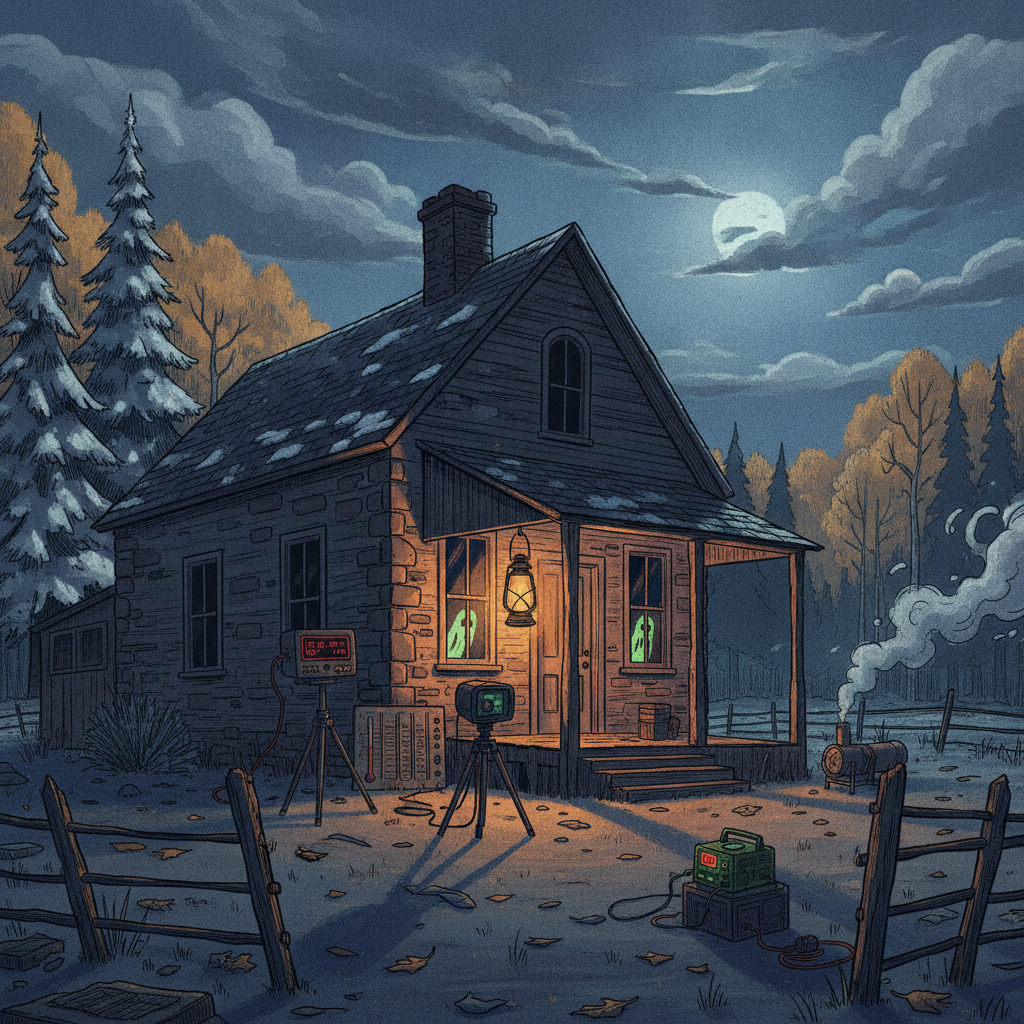
For as long as Colorado has had ghost stories, it has also had people chasing them—with candles, with séances, with gut instinct and grainy photographs. But according to a recent 9News report, “Colorado teacher takes scientific approach in exploring the paranormal,” a new kind of investigator is emerging in the state: one who shows up not with a Ouija board, but with data loggers, calibrated EMF meters, and a working knowledge of the scientific method.
The 9News story, published in late October 2026, profiles a Colorado educator who treats paranormal investigation less like a séance and more like a field experiment—collecting measurable data, documenting conditions, and trying to rule out mundane explanations before entertaining anything stranger. It’s a notable shift for a field that has long been associated with intuition and atmosphere rather than methodology, and it raises a genuinely interesting question for a state as thick with ghost lore as Colorado: what happens when you point a thermometer at a haunting instead of a camera crew?
The Old Way: Folklore, Feeling, and the Stanley Hotel
To understand why a science-first approach stands out, it helps to remember what “ghost hunting” has typically looked like in Colorado.
The Stanley Hotel in Estes Park is probably the state’s most famous haunted address, forever linked to Stephen King’s The Shining after his 1974 stay inspired the novel. For decades, stories out of the Stanley have leaned heavily on personal accounts—guests reporting phantom piano music, child-like laughter in empty halls, or the sensation of being watched in Room 217. These are powerful stories, often retold at the hotel’s own ghost tours, but they are fundamentally testimonial: felt experiences passed down and embellished over time, not measured phenomena.
Cheesman Park in Denver carries a similarly eerie reputation, rooted in genuine, documented history rather than folklore alone. The park sits atop what was once Mount Prospect Cemetery, and in 1893, a botched and rushed grave-relocation contract led to thousands of remains being improperly removed or simply abandoned on-site—a documented civic scandal at the time. The unsettling history is real; the ghost stories that followed, less verifiable. That combination—a true, disturbing historical event layered with generations of oral legend—is the template for much of Colorado’s haunted reputation.
Against that backdrop, an investigator who insists on data logging and repeatable observation represents something different: an attempt to separate the documented history from the embellished folklore, and see what, if anything, remains.
What “Scientific” Actually Means in Ghost Hunting
It’s worth being clear-eyed here: using EMF meters, temperature probes, and audio recorders doesn’t make an investigation scientific in the way a laboratory experiment is scientific. Mainstream physicists and skeptics have long pointed out that devices like EMF meters were designed to detect electrical fields from wiring and appliances, not spirits, and that cold spots or static can often be explained by drafts, old building infrastructure, or equipment malfunction. Fluctuating readings are common in any old structure, haunted reputation or not.
What the approach described in the 9News report represents, instead, is a methodological shift: applying consistency, documentation, and an openness to debunking rather than a presumption of a haunting. That means establishing baseline readings before concluding something is anomalous, controlling for drafts and electrical interference, and treating audio anomalies or temperature drops as data points to be investigated rather than proof to be announced. It’s the difference between confirmation bias and genuine inquiry—looking for what disproves a haunting as readily as what might support one.
This is, notably, also the stated ethos of many self-identified paranormal research groups nationally, even if execution varies widely in practice. The distinction the 9News piece draws out is that this particular investigator comes to the work with an educator’s framework: hypothesis, observation, data, conclusion—rather than narrative first, evidence second.
A Statewide Pattern: Ghost Hunting Goes Mainstream
The scientific approach is landing in Colorado at a moment when paranormal investigation of all stripes has become something of a cultural moment in the state. In recent months, investigators have been documented exploring a Denver restaurant housed in a former mortuary, according to CBS News, and conducting a televised investigation at Ophelia’s Electric Soapbox, a historic downtown Denver music venue, as reported by Denver7 and 98.5 KYGO. These efforts increasingly come with TV cameras attached—part of a broader entertainment pipeline that includes touring spectacles like Paranormal Cirque, recently announced for Colorado Springs.
That contrast matters. Much of what reaches the public as “paranormal investigation” today is produced first and foremost as content—dramatic lighting, reaction shots, a narrative arc toward a scare. A teacher applying classroom rigor to the same subject matter is, by comparison, a much quieter and more methodical animal. It won’t make for the same kind of television, but it may make for more honest research.
Skeptics and Believers Still Don’t Agree—And That’s Okay
Even with better instruments, the fundamental disagreement in paranormal research hasn’t gone away. Skeptics argue that no EMF spike or temperature drop has ever been conclusively linked to a discarnate consciousness, and that “scientific” ghost hunting still operates outside peer-reviewed science because its central premise—that spirits exist and interact measurably with the physical world—remains unproven. Believers and investigators counter that dismissing anomalous readings outright, without investigating them, is its own kind of bias.
What the 9News profile suggests is a middle path: an investigator unwilling to simply assert that a flickering EMF reading or a sudden cold spot proves anything supernatural, but also unwilling to dismiss the experience of people who report something strange. That posture—curious, documented, skeptical of easy answers in both directions—is arguably the most intellectually honest place paranormal research can occupy.
What This Means for Colorado’s Haunted Reputation
Colorado isn’t short on reportedly haunted ground—from the Stanley Hotel to Cheesman Park to the dozens of lesser-known sites cataloged by outlets like Uncover Colorado. It’s also, as recent declassified federal files and Denver Gazette reporting on Colorado Springs-area UAP sightings have shown, a state with a parallel fascination with things in the sky as well as things that go bump in old buildings.
What a data-driven approach to ghost hunting offers isn’t an answer to whether Colorado’s haunted places are truly haunted. It’s a better set of questions—and a reminder that the most compelling mystery isn’t the one dressed up for a camera crew, but the one that survives an honest attempt to explain it away.