
Sand Creek: The Massacre Site Colorado Can't Forget
The true history of the 1864 Sand Creek Massacre and why this solemn Colorado plain is still considered one of the state's most haunted grounds.
A Peaceful Encampment, A Flag of Truce
On the morning of November 29, 1864, Colonel John Chivington led approximately 675 men of the Colorado Territory militia — including the Third Colorado Cavalry, a regiment recruited for a hundred-day term and eager, by multiple historical accounts, to see combat before their enlistments expired — in an attack on a village of Cheyenne and Arapaho people camped along the banks of Sand Creek in what is now Kiowa County, Colorado.
This was not a surprise raid on a hostile war party. According to the National Park Service and History Colorado’s documentation of the event, the encampment was under the leadership of Cheyenne chief Black Kettle, who believed his people were under the protection of the U.S. government. Black Kettle had traveled to Denver months earlier to negotiate peace and had been told that flying an American flag over his camp would signal to soldiers that his band was friendly. On that cold November morning, as Chivington’s forces approached, Black Kettle raised both the American flag and a white flag of truce above his lodge.
It made no difference. The militia opened fire on a camp that, by historical accounts compiled through NPS and congressional investigation records, was composed largely of women, children, and the elderly — many of the camp’s able-bodied men were away hunting at the time. Estimates of the dead vary by source, but historians generally place the number between 150 and 230 Cheyenne and Arapaho people. What followed the initial assault was, according to testimony later gathered by federal investigators, a scene of mutilation — bodies desecrated, and in some documented cases, remains taken back to Denver as trophies and displayed publicly.
The Reckoning That Came Too Late
Word of what happened at Sand Creek did not stay buried on the plains. Soldiers who had refused to participate, along with others present that day, gave testimony that reached Washington. A congressional Joint Committee on the Conduct of the War and a separate military commission both investigated the massacre in 1865, and both concluded that Chivington’s attack had been an atrocity committed against a peaceful, non-combatant population operating under assurances of safety from U.S. military officials.
Chivington himself faced no formal punishment. By the time the investigations concluded, his volunteer commission had expired, placing him beyond the reach of a military court-martial. He resigned his commission and lived out the rest of his life a free man, though condemned in the official record and in history. That record is unambiguous in a way few 19th-century frontier conflicts are: Sand Creek was not a battle. It was, as federal investigators determined at the time, a massacre.
The site itself faded from public memory for more than a century, marked only by local tradition and the oral histories kept by Cheyenne and Arapaho descendants, for whom the location remained a place of profound grief. It wasn’t until extensive archaeological and historical work in the late 1990s and early 2000s — much of it done in partnership with tribal representatives — that the precise location along Big Sandy Creek was confirmed. In 2007, Congress established the Sand Creek Massacre National Historic Site, now jointly interpreted by the National Park Service and the Cheyenne and Arapaho Tribes, preserving the ground as a place of memory rather than a tourist attraction.
A Landscape That Still Feels Wrong
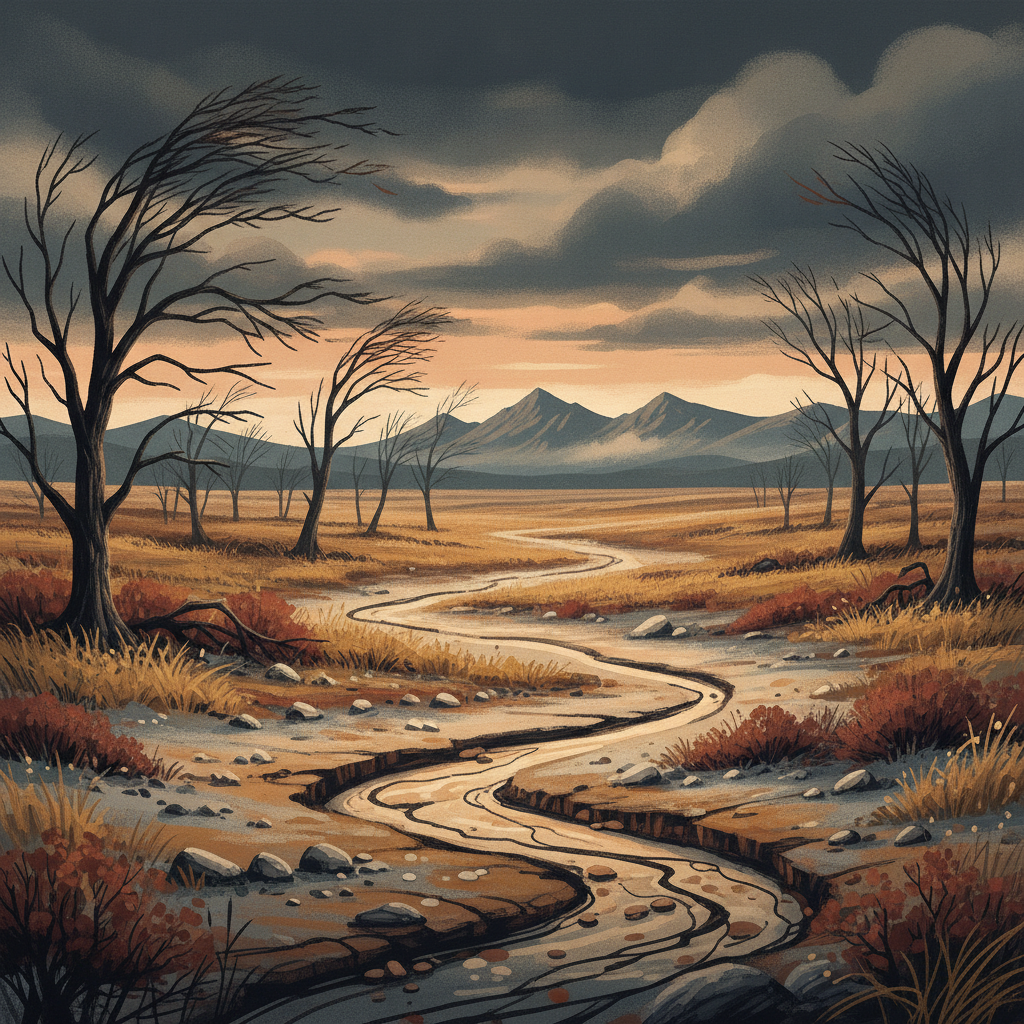
Drive out to Kiowa County today and you’ll find a stretch of southeastern Colorado prairie that looks, at first glance, like countless other patches of shortgrass plains — open sky, scattered cottonwoods along the dry creek bed, wind moving through grass that hasn’t changed much in a century and a half. And yet those who visit the Sand Creek Massacre National Historic Site consistently describe something different about the place: a heaviness in the air, an unnatural stillness, a sense of being watched or simply unwelcome that settles in long before anyone mentions the history.
This is where Sand Creek diverges from Colorado’s more typical haunted-tourism fare. There are no ghost tours here, no paranormal investigation teams setting up EMF meters in the visitor center, no urban-legend embellishments about apparitions in period dress. The National Park Service itself frames the site explicitly as a place for quiet reflection and mourning — not entertainment — out of respect for the Cheyenne and Arapaho descendants for whom this ground remains sacred and sorrowful. Any reports of unease, cold spots, or inexplicable feelings of dread that visitors describe exist almost entirely as informal, secondhand impressions — the kind of folklore that accumulates naturally around a site where something genuinely terrible happened, rather than documented paranormal testimony from named investigators or witnesses.
That distinction matters. Unlike Denver’s reputedly haunted mansions and restaurants, or the mountain peaks where UFO sightings have made recent headlines in declassified government files, Sand Creek’s eerie reputation isn’t built on ghost-hunting lore manufactured for curiosity-seekers. It’s built on the undeniable weight of real, documented atrocity. The unease people report feeling on that plain may say less about restless spirits and more about what happens when a landscape holds the memory of mass violence against innocents — a memory the land, in some sense, seems unwilling to let go of.
Why the Ground Remembers
Colorado has no shortage of reputedly haunted places — gold rush-era hotels, Victorian mansions, old mortuaries turned restaurants where paranormal teams have been invited in to investigate creaking floors and cold drafts. Sand Creek belongs to a different category entirely. Its reputation as unsettling ground isn’t folklore built for entertainment; it’s the natural human response to standing on a site where congressional investigators, writing in the 1860s, used words like “massacre” and “cowardly” to describe what U.S. soldiers did to a village flying a flag of truce.
For the Cheyenne and Arapaho people, Sand Creek is not a mystery to be solved or a ghost story to be told around a campfire — it is an ancestral wound, still tended, still marked each year with commemorative runs and ceremonies that retrace the journey from the massacre site to Denver. For the rest of us, visiting or simply learning the history, the discomfort so many describe feeling on that quiet stretch of prairie might be the most honest paranormal phenomenon Colorado has to offer: not a haunting in the traditional sense, but the undeniable, physical weight of history refusing to be forgotten.