
The Ice Palace of 1896: Leadville's Frozen Fantasy Kingdom
In the depths of a silver bust, Leadville built a five-acre ice castle to save itself. The strange true story of Colorado's forgotten frozen wonder.
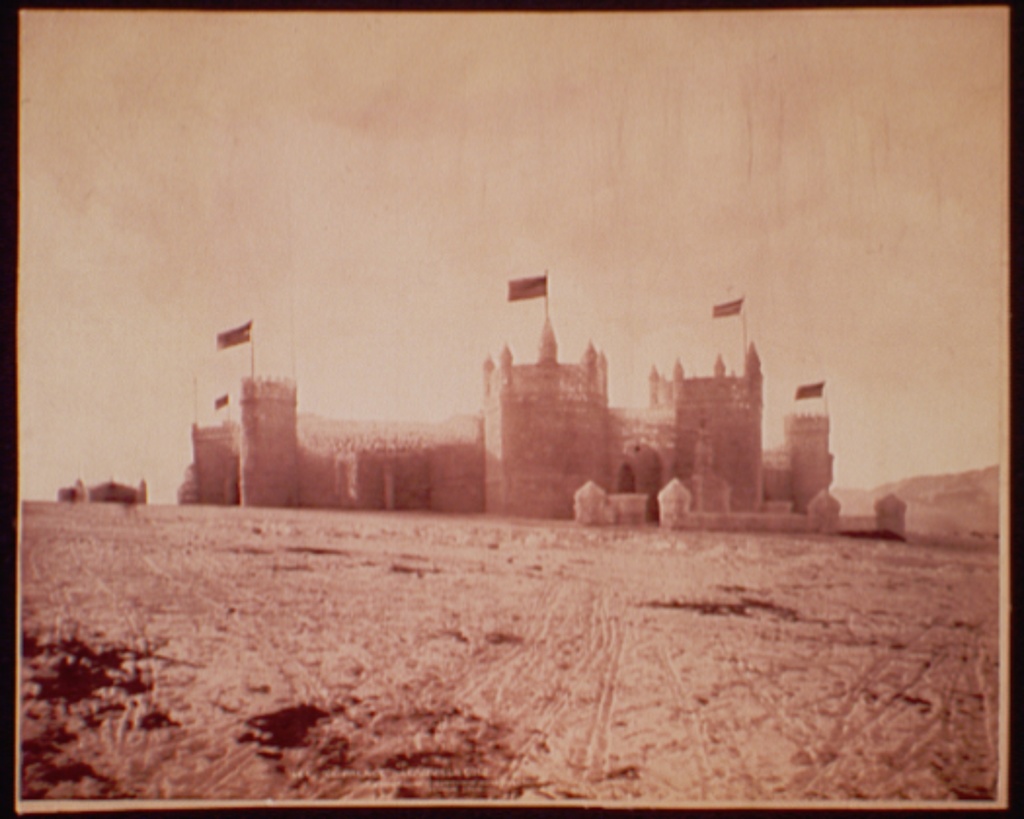
A Kingdom Carved From Winter
By the winter of 1895, Leadville, Colorado had already lived one impossible story. A decade earlier, the town sat atop one of the richest silver strikes in American history, its population swelling past 15,000, its streets lined with saloons, opera houses, and fortunes made overnight at 10,152 feet above sea level. Then came the Panic of 1893. When Congress repealed the Sherman Silver Purchase Act, the bottom fell out of the silver market almost overnight, and Leadville — a town built entirely on the metal — began to collapse along with it. Mines closed. Miners left. The boomtown that had once rivaled Denver for ambition was staring down the possibility of becoming a ghost town in truth, not just in legend.
It was out of this desperation that Leadville’s civic leaders conceived one of the strangest public works projects in Colorado history: a five-acre palace built entirely of ice, perched on a hill above town, meant to save a dying city by turning it into a tourist spectacle.
The Crystal Carnival Association’s Gamble
The project was organized by a group calling itself the Leadville Crystal Carnival Association, formed in late 1895 by local businessmen looking for a way to reverse the town’s fortunes. The idea wasn’t entirely original — Montreal and St. Paul, Minnesota, had both built ice palaces in the 1880s as winter tourism draws, and Leadville’s organizers borrowed the concept wholesale, betting that a frozen castle at the roof of the Rockies could pull in rail travelers and newspaper headlines alike.
What they built on Capitol Hill, just northwest of downtown Leadville, was audacious even by Gilded Age standards. According to local histories preserved by Leadville’s museums and History Colorado, the structure covered roughly five acres and was designed in a Norman castle style, complete with turrets and towers that reportedly rose as high as 90 feet. The walls were built from massive blocks of ice — much of it harvested from nearby lakes and ponds — framed with timber and insulated with sawdust to slow the inevitable melt.
The labor to build it came largely from the very men the silver crash had put out of work. Unemployed miners were hired through the brutal winter months to cut, haul, and stack ice at an elevation where the air itself is thin and the cold is unforgiving. For a town hemorrhaging jobs, the construction of the Ice Palace functioned as a kind of relief project — a strange echo of public works programs that wouldn’t become common in America for another forty years.
A Frozen Fantasy With a Ballroom
The finished palace was not merely a decorative shell. Inside its glittering walls, the Crystal Carnival Association built an actual entertainment complex: a large ice-skating rink, a grand ballroom where dances were held beneath carved ice chandeliers and columns, a restaurant, and a curio hall displaying mining equipment, taxidermy, and regional artifacts meant to showcase Leadville’s identity as a mining capital even as that industry crumbled around it.
Ice sculptures throughout the building depicted eagles, knights, and allegorical figures, carved by hand from the same blocks that formed the walls. Electric lighting — still a genuine novelty in 1896 — illuminated the interior and exterior at night, making the palace glow against the dark Colorado sky, visible for miles across the valley. For a town that had spent two years reading headlines about its own decline, the sight must have been extraordinary: a literal fortress of light and ice, built by miners’ hands, standing against the mountain dark.
The Ice Palace officially opened on New Year’s Day, 1896, drawing crowds via special excursion trains from Denver and other Front Range towns. For a brief season, it worked exactly as intended. Visitors came. Newspapers covered it. Leadville, for a few glittering weeks, was a destination again rather than a cautionary tale.
The Thaw
But a castle made of ice at 10,000 feet is, by definition, a temporary kingdom. Colorado’s high-altitude winters are harsh, but they don’t last forever, and by the time spring warmth began creeping into Lake County, the palace’s fate was sealed. Structural problems emerged as the ice began to soften and shift. According to local historical accounts, the palace closed to the public by late March 1896 — barely three months after its grand opening — and the building was substantially gone, reduced to slush and timber frame, within a matter of weeks after that.
Financially, the venture was a disappointment. The Crystal Carnival Association had sunk significant money into construction, insulation, and promotion, and the brief tourist season wasn’t enough to recoup the investment. The organization dissolved, and the Ice Palace passed quickly from civic triumph to historical footnote — a magnificent, expensive, and ultimately futile gesture against economic collapse.
A Pattern in Colorado’s Gilded Age
Seen in isolation, the Leadville Ice Palace looks like a bizarre anomaly — a town literally freezing its hopes into architecture. But placed alongside Colorado’s broader Gilded Age history, it fits a recognizable pattern. This was an era of grand, often doomed spectacles built to project permanence and prosperity onto boomtowns that were, in reality, one market crash away from vanishing. Denver’s own extravagant hotels, opera houses, and exposition buildings from the same period were frequently built on borrowed confidence as much as borrowed capital. Leadville’s ice castle was simply the most literal expression of that impulse — a monument built from a material guaranteed to disappear, erected by a town whose economic foundation had already proven just as fleeting.
What Remains
Today, nothing physical survives of the 1896 Ice Palace. The hill where it stood is now part of a residential neighborhood, and only photographs — preserved in archives including those maintained by History Colorado and Leadville’s local museums — attest to its brief existence. The town’s connection to the memory persists in smaller ways: a local bed-and-breakfast carries the Ice Palace name, and the story remains a staple of Leadville’s own telling of its mining-era history, taught alongside the exploits of figures like Horace Tabor and the broader saga of the Colorado Silver Boom.
Unlike many entries in Colorado’s catalog of weird history, the Leadville Ice Palace doesn’t come wrapped in ghost stories or unexplained phenomena — there’s no well-documented local lore of hauntings tied to the site, and this piece makes no claim otherwise. Its strangeness needs no embellishment. It is, simply and verifiably, the true story of a mining town that responded to total economic collapse by building a glittering, five-acre fantasy kingdom out of frozen water on top of a mountain — and watched it melt away almost as quickly as the silver fortunes that inspired it.