
The Meeker Massacre: Colorado's Forgotten Frontier Reckoning
The bloody 1879 uprising at the White River Ute Agency still haunts Colorado's western slope—a true story of broken promises and buried ghosts.
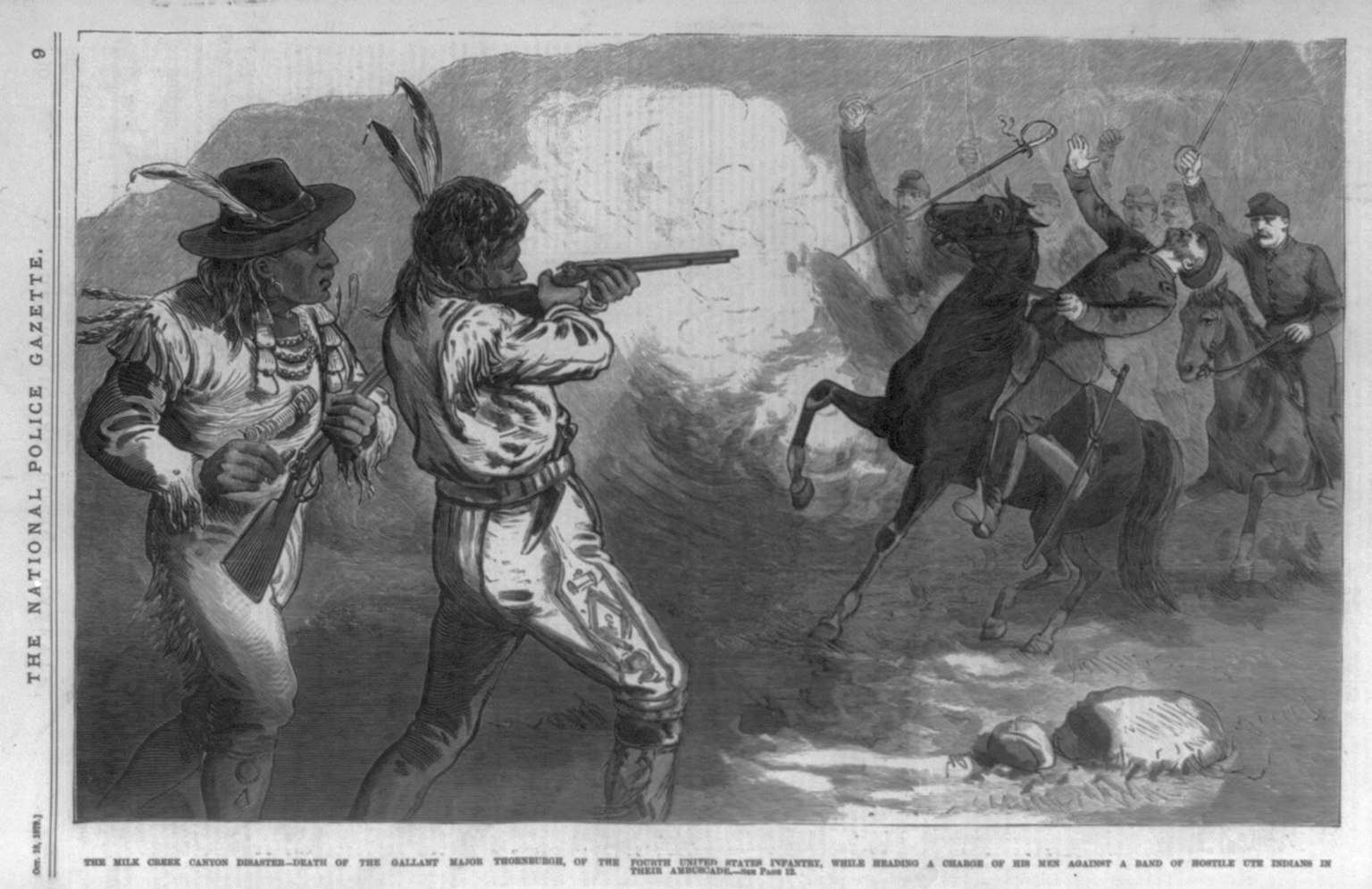
The wind moves differently through the sagebrush near Meeker, Colorado—or so the old-timers say. Ranchers along the White River have passed down stories for generations about this stretch of the Western Slope, where a Gilded Age utopian experiment collided with Ute sovereignty and ended in bloodshed. The town of Meeker still carries the name of the man who died there, but the deeper history of what happened at the White River Indian Agency in September 1879 has largely slipped out of Colorado’s popular memory, overshadowed by gold rush legends and railroad lore. It deserves better than to be forgotten. It was a tragedy born of arrogance, desperation, and broken promises—and it changed the map of Colorado forever.
A Utopian’s Fatal Appointment
Nathan Meeker was not a soldier, a rancher, or a frontiersman. He was a journalist and idealist who had worked for Horace Greeley’s New York Tribune and later founded the Union Colony, the agricultural experiment that became the city of Greeley, Colorado. Meeker believed deeply in the transformative power of settled, Christian, agrarian life—so deeply that in 1878 he accepted an appointment as the federal Indian agent for the White River Ute Agency, tasked with turning a semi-nomadic people into farmers.
The Utes who lived on the White River had built their culture around hunting, horses, and seasonal movement across vast stretches of western Colorado. Meeker, driven by his reformist zeal, pushed hard and fast to force agricultural life on a community that had no interest in abandoning its traditions. According to historical accounts, tensions boiled over when Meeker ordered the plowing of land the Utes used for grazing and horse racing—land that held real cultural and economic value to them. The horse was central to Ute life, and the destruction of that pasture was experienced not as agricultural reform but as a direct assault.
Threats and intimidation followed. Meeker, increasingly alarmed, sent urgent requests to federal authorities for military protection, warning of violence. That request set in motion a chain of events that neither Meeker nor the Utes could control.
Milk Creek and the Agency Killings
In September 1879, Major Thomas T. Thornburgh led a detachment of U.S. troops toward the White River Agency in response to Meeker’s pleas. To the Utes, who had not been consulted and who remembered previous federal military actions against Native nations with justified suspicion, the approaching soldiers looked like an invasion force crossing into reservation land in violation of treaty boundaries.
On September 29, 1879, fighting broke out at Milk Creek, several miles from the agency itself. Thornburgh was killed, and his surviving soldiers were pinned down for days before reinforcements arrived. On that same day, at the agency itself, a group of Ute men—among them leaders identified in historical accounts as Chief Douglas, Chief Jack (also known as Nicaagat), and Johnson (Canalla)—attacked the agency buildings. Nathan Meeker and ten other male employees were killed. The agency buildings were burned.
It is important to be precise here: this was not a random massacre of innocents in the way the word is sometimes used in American frontier mythology. It was an act of retaliatory violence by Ute men who believed, with justification, that an armed force was approaching to subdue or punish them, layered atop months of grievance over Meeker’s heavy-handed policies. Historians generally treat it as the explosive culmination of a slow-building crisis rather than an unprovoked atrocity—though the killings themselves were real, brutal, and well documented in period accounts.
Josephine Meeker’s Captivity
In the chaos at the agency, Nathan Meeker’s wife Arvilla, his daughter Josephine, and another settler woman, Flora Ellen Price, along with Price’s children, were taken captive by the Utes. Their captivity lasted roughly three weeks. Josephine Meeker later gave testimony and published accounts of her experience, which became central to the public narrative of the uprising and fueled outrage across Colorado and the nation.
The captives were eventually released through negotiations, with Chief Ouray of the Uncompahgre Utes—widely respected by federal officials as a diplomat—playing a key role in securing their freedom. Ouray, who had not been involved in the violence, understood that the massacre placed the future of all Ute bands in Colorado in jeopardy, and his intervention is credited with preventing further bloodshed. Josephine Meeker’s subsequent testimony before a government commission investigating the incident shaped how the events were understood by white Coloradans, though modern historians note her account must be read within the context of the era’s deep anti-Native prejudice and the political pressure to justify what came next.
”The Utes Must Go”
What came next was the real catastrophe for the Ute people. The Meeker incident became the pretext for a campaign—summarized at the time by the chilling slogan “The Utes Must Go”—to force the removal of Ute bands from the vast majority of their ancestral territory in Colorado. Through the Ute Agreement of 1880, the White River and Uncompahgre Utes were relocated to reservations in Utah, while the Southern Utes were confined to a much smaller reservation in the southwestern corner of Colorado. Millions of acres of Ute land were opened to white settlement almost immediately. In the span of a single violent incident, a people who had inhabited Colorado’s mountains and valleys for centuries lost nearly all of it.
The Site Today—and the Legends That Grew Around It
The town of Meeker, Colorado, incorporated not long after the massacre, sits near the original agency site along the White River in Rio Blanco County. A monument and museum in town commemorate the events of 1879, and the Milk Creek battlefield site, now largely quiet ranchland, is marked for those who seek it out.
Over the decades, local oral tradition has layered folklore onto the historical record, as it often does at sites of violent death. Residents and visitors in the Meeker area have long traded stories of unexplained unease at the old battlefield, of cold spots and strange silences along Milk Creek, and of shadowy figures reportedly glimpsed near the agency grounds at dusk. These stories exist as oral tradition and local legend only—they are not part of any documented historical record, and no verified paranormal investigation has substantiated them. They belong to the same category as countless other Western ghost stories that spring up wherever history and tragedy intersect: unprovable, unofficial, but persistent.
What is provable—what is sitting in newspaper archives, government commission records, and Colorado historical society files—is grim enough on its own. A reformer’s inflexible vision, a federal government’s broken treaty system, a people fighting to hold onto their land and way of life, and a chain of decisions that ended with men dead on both sides and an entire nation displaced from the only home they’d ever known.
A Reckoning Still Owed
The Meeker Massacre rarely makes it into the highlight reel of Colorado history taught in schools, overshadowed by silver booms and railroad barons. But it remains one of the most consequential events in the state’s 19th-century story—the violent hinge point between Ute sovereignty and the wholesale settlement of western Colorado. Whatever walks the ground near Milk Creek today, real or imagined, the historical wound it marks is entirely real, and Colorado is still living on the land that wound opened up.