
Fairmount Cemetery: Denver's Grandest Ghost-Haunted Garden
Inside Fairmount Cemetery, Denver's historic 1890 burial ground where weeping statues, shifting shadows, and restless spirits have fueled a century of ghost lore.
A Garden Built for the Dead
Drive along Quebec Street on Denver’s east side and you’ll pass through wrought-iron gates into 280 acres of rolling lawn, century-old trees, and marble monuments weathered soft by Colorado wind. Fairmount Cemetery doesn’t announce itself the way a haunted house might. It’s quiet, manicured, almost parklike — which is exactly the point. Fairmount was built in 1890 as a rural garden cemetery, part of a 19th-century movement that treated burial grounds not as grim afterthoughts but as landscaped retreats where the living could stroll among the dead in something like peace.
That peace, as generations of Denver visitors and local ghost-tour lore will tell you, hasn’t always held. Beneath the designed tranquility of Fairmount’s groves and granite is a century-plus of reported strange encounters — shifting shadows between the headstones, statues whose expressions seem to change in the corner of your eye, and a persistent sense, passed down through oral tradition, that not everyone buried here has entirely settled.
The Architect’s Vision
Fairmount’s design is credited to Reinhard Schuetze, a German-trained landscape architect who shaped much of Denver’s green identity. Schuetze is the same designer behind City Park and Cheesman Park, and his fingerprints are all over Fairmount’s winding carriage paths, sweeping lawns, and deliberately varied tree plantings. The cemetery today functions as an accredited arboretum, home to hundreds of species gathered over more than 130 years — a living collection planted, quite literally, among the dead.
This wasn’t accidental. The rural cemetery movement that produced places like Mount Auburn in Massachusetts held that burial grounds should be beautiful, contemplative spaces, places families would want to visit rather than avoid. Fairmount was Denver’s answer to that philosophy, and it remains one of the best-preserved examples of the style in the American West.
Who Rests Here
Fairmount’s grounds hold a cross-section of Denver’s formative history. Among its notable interments is John Evans, the second territorial governor of Colorado and founder of both the University of Denver and Northwestern University — a complicated figure whose legacy is tied both to the state’s early civic development and to the darker chapters of Colorado’s territorial history, including his administration’s role preceding the Sand Creek Massacre.
Beyond individual names, Fairmount’s layout itself tells a social history of Denver. The cemetery includes distinct historic sections reflecting the city’s immigrant and minority communities — including Chinese, Japanese, and Jewish burial grounds — established during eras when segregation extended even into death. Walking these sections today is as much a lesson in Denver’s layered, sometimes uncomfortable past as it is a walk through Victorian landscaping.
The Cheesman Connection
No discussion of Fairmount’s unsettled reputation is complete without mentioning its link to one of Denver’s most notorious bits of real history: the Cheesman Park relocation scandal.
In the early 1890s, the city of Denver decided to convert the old City Cemetery — located where Cheesman Park and the Denver Botanic Gardens now stand — into parkland. A contractor was hired to exhume and relocate the remains, and the job was done cheaply and badly. Caskets were broken apart for salvage, remains were left scattered or improperly reburied, and many bodies were never properly accounted for. Some were transferred to Fairmount and Riverside Cemeteries; others, according to long-documented local history, were simply left behind, paved over by what is now one of Denver’s most popular city parks.
That historical botch job is the real engine behind Cheesman Park’s enduring haunted reputation — and by extension, Fairmount’s. As the final resting place for many of those disturbed remains, Fairmount inherited not just bones but a share of the unease that followed them.
Victorian Mourning Architecture
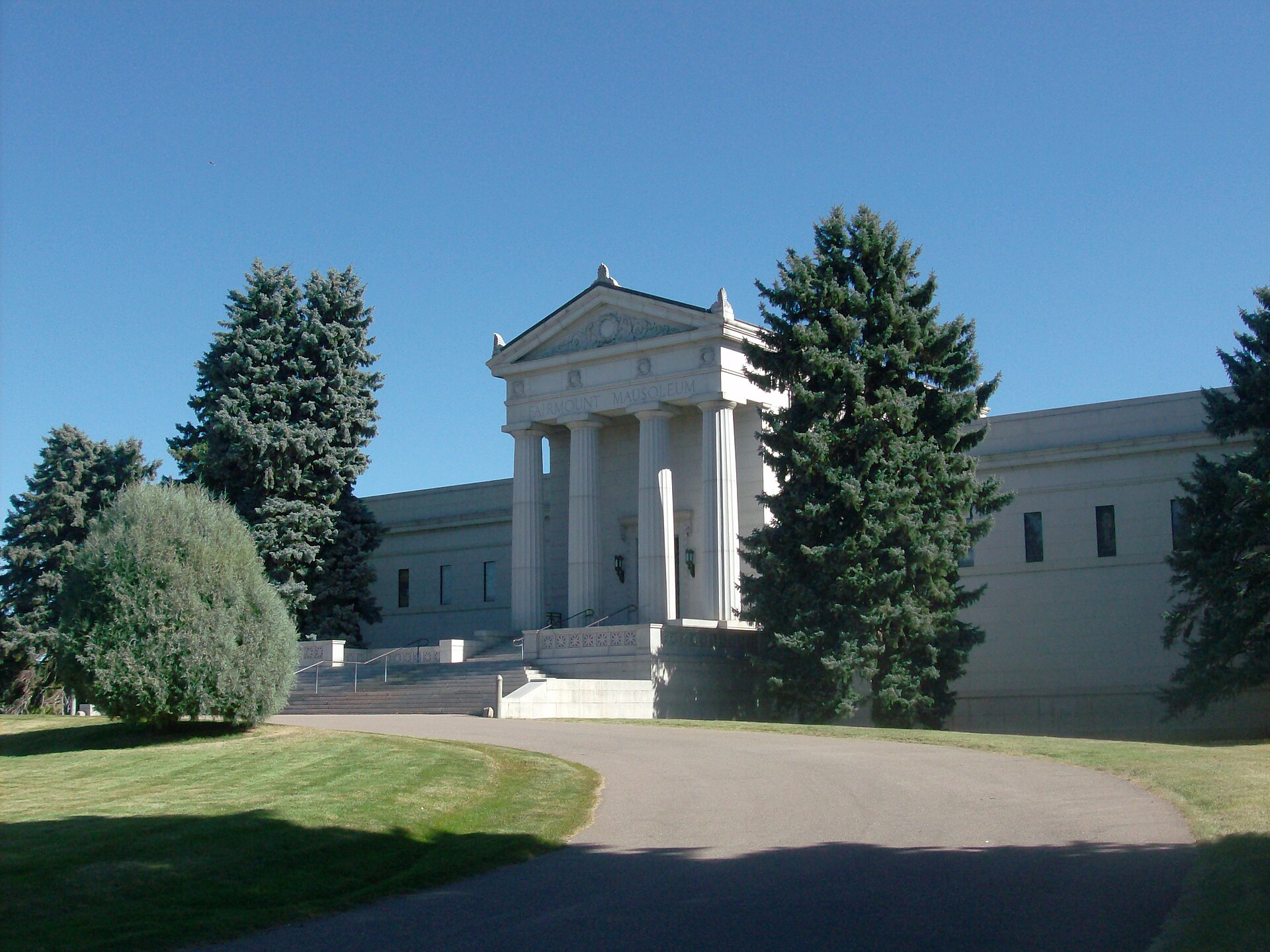
Part of what makes Fairmount so visually arresting — and so central to Denver ghost lore — is its architecture of grief. The cemetery’s Ivy Chapel, a small Gothic Revival structure dating to its founding era, remains one of the oldest buildings of its kind in the region. Fairmount is also home to a large historic community mausoleum, one of the most substantial of its kind built in the area, lined with marble corridors and stained glass meant to soften the finality of entombment.
Scattered throughout the grounds are the hallmarks of Victorian mourning symbolism: weeping angels with downturned faces, broken columns representing lives cut short, draped urns, and obelisks reaching skyward. This kind of statuary was designed to be emotionally evocative by intent — mourning made permanent in stone. It’s not hard to see why, decades later, visitors walking Fairmount at dusk have described these same figures as unsettling rather than comforting, their carved expressions seeming to shift depending on the light and the angle of approach.
The Ghost Lore
Much of what circulates about Fairmount’s hauntings today comes not from documented 19th-century testimony but from a long oral tradition that has built up around the cemetery through local ghost-tour history and word of mouth — the kind of layered folklore common to old cemeteries everywhere, amplified here by Fairmount’s genuine historical weight and its connection to the Cheesman relocation.
Recurring elements in that tradition include reports of shadow figures moving between mausoleums after dark, cold spots near the older sections of the grounds, and claims of unexplained orbs or anomalies appearing in photographs taken near the historic chapel and mausoleum. Visitors over the years have also described a sense of being watched while walking the cemetery’s more secluded paths, particularly in the older 19th-century sections where headstones have worn illegible.
It’s worth being clear-eyed about this material: these are stories passed down through Denver’s paranormal and ghost-tour circles rather than claims documented in contemporaneous newspaper accounts, and no specific named witnesses or formal investigative reports are being cited here. That doesn’t make the atmosphere any less real. Cemeteries like Fairmount accumulate story the way they accumulate lichen — slowly, informally, through generations of visitors trading impressions in the same quiet spaces where the original mourners once stood.
A Living Landmark
What makes Fairmount Cemetery compelling isn’t a single dramatic haunting but the accumulation of history pressing against folklore — a genuine 1890 landscape designed by a serious architect, home to real figures from Colorado’s territorial past, built partly from the disturbed remains of a botched civic project, and dressed in the elaborate symbolic language of Victorian grief. The ghost stories that have grown up around it over the decades are, in a sense, exactly what you’d expect from a place built to make visitors feel something in the presence of the dead.
Whether or not anything truly lingers among Fairmount’s groves and granite, the cemetery remains one of Denver’s most atmospheric historical sites — a garden built for mourning that, more than a century later, still seems to be holding onto a few of its secrets.