
Mesa Verde's Vanishing: Colorado's Oldest Unsolved Mystery
Why did the Ancestral Puebloans abandon Mesa Verde's cliff dwellings? A look at archaeology's most enduring Colorado mystery.
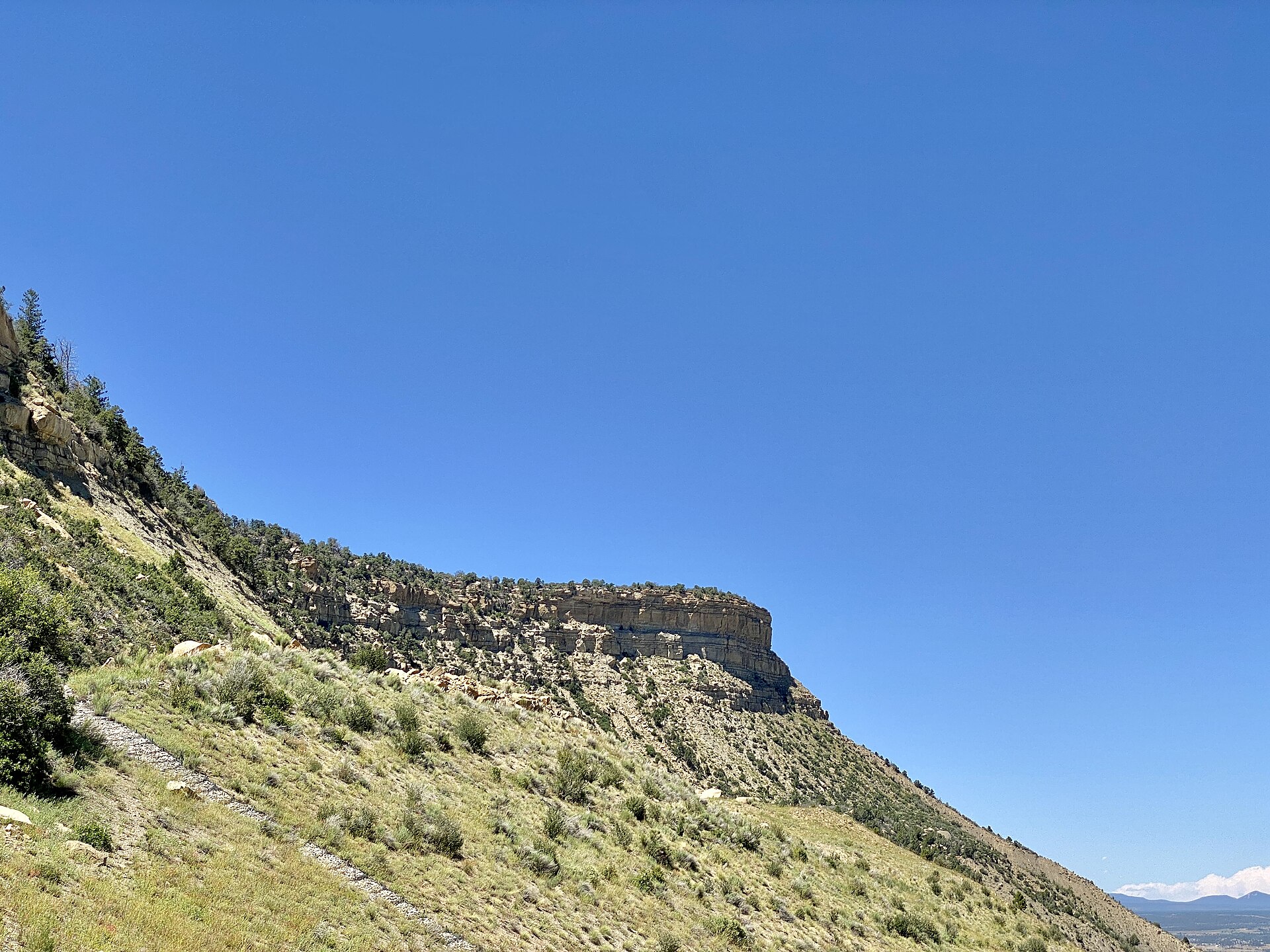
A Silence Written in Stone
High on the mesas of southwestern Colorado, tucked into alcoves carved by wind and water over millions of years, sit some of the most haunting ruins in North America. Cliff Palace. Spruce Tree House. Balcony House. Multi-story sandstone cities, built with astonishing precision, abandoned by the people who built them — and never fully reoccupied again.
Outside Magazine’s recent roundup of the creepiest unsolved mysteries in U.S. national parks reignited public fascination with these kinds of enduring puzzles — the vanished colonists of Roanoke, the ghost towns of Death Valley, the silent fate of expeditions swallowed by wilderness. But Colorado has an entry of its own that belongs in that same company, and it’s been sitting in plain sight for over a century: Mesa Verde National Park, and the question archaeologists still can’t fully answer — why did the Ancestral Puebloans leave?
This isn’t a ghost story. There are no phantom residents reported wandering the kivas at midnight, no campfire legends of cursed dwellings. What makes Mesa Verde genuinely unsettling is something quieter and arguably more unnerving: a real, documented, scientifically studied mystery about an entire civilization that built one of the most sophisticated settlements of its time — and then walked away from it, completely, within the span of a generation.
A City Built to Last, Abandoned in a Hurry
The Ancestral Puebloans occupied the Mesa Verde region for more than 700 years, according to the National Park Service, farming the mesa tops and gradually moving into the cliff alcoves that give the park its iconic silhouette. The large cliff dwellings — Cliff Palace, Long House, Balcony House — were built mostly in the 1190s through the late 1270s, representing the architectural and social peak of their culture in the region.
Then, by around 1285 CE, they were gone.
Not gradually thinned out over centuries, but evacuated in what tree-ring dating and archaeological surveys suggest was a remarkably compressed window — likely a few decades at most. The entire Four Corners region, not just Mesa Verde, was depopulated by Puebloan farmers during this period, part of what archaeologists call the “Great Depopulation” of the northern San Juan region.
The people didn’t disappear. That’s the part that often gets lost in pop-culture retellings. Modern Pueblo peoples — including the Hopi, Zuni, and the Rio Grande Pueblo communities of New Mexico — are their direct descendants, and many maintain cultural and ancestral ties to Mesa Verde today. The mystery isn’t what happened to them as a people. It’s why they left the place they’d built their lives around, and why they left in such a way that suggests urgency rather than a slow, planned relocation.
The Drought That Changed Everything
The most well-supported explanation, and the one with the deepest paper trail, involves climate. Tree-ring data — a specialty of Southwestern archaeology thanks to the region’s dendrochronological record — shows that the area endured a severe and prolonged drought from roughly 1276 to 1299 CE, often referred to as the “Great Drought.” Researchers affiliated with institutions like the Crow Canyon Archaeological Center, based nearby in Cortez, Colorado, have used this tree-ring record extensively to reconstruct the climate conditions the Ancestral Puebloans were farming under in their final decades on the mesa.
A drought of that length would have devastated maize agriculture, the backbone of Ancestral Puebloan subsistence. Combined with decades of intensive farming that likely depleted already-thin mesa-top soils, and increasing pressure on local timber and game resources from a growing population, the picture that emerges is one of a landscape pushed past its limits. Some archaeologists argue the drought was less a sudden crisis than the final blow to a system already straining under resource depletion and overpopulation relative to what the mesa could sustainably support.
Evidence of Violence
What complicates the “simple drought” narrative is something harder to look at directly: skeletal evidence.
Archaeological excavations across the broader Mesa Verde region have uncovered human remains bearing signs of traumatic injury, and in some sites, patterns consistent with violence — a finding that has been the subject of peer-reviewed bioarchaeological research for decades. Some researchers have pointed to this evidence as support for theories of increased warfare, raiding, or social breakdown in the final years of occupation, possibly tied to competition over dwindling resources during the drought years.
This is a genuinely contested area of scholarship. Some archaeologists interpret the trauma evidence as proof of widespread violent conflict in the final Puebloan decades in the region; others caution against overgeneralizing from a limited number of sites, noting that evidence of violence doesn’t necessarily mean it was the primary driver of the migration, rather than a symptom of the broader stress drought and scarcity were placing on communities. There’s no scholarly consensus on how central warfare was to the abandonment story — only agreement that it was, at minimum, part of the picture in some locations.
Where Did Everyone Go?
The most grounded answer to “where did they go” is also the least mysterious, in a sense: south. Archaeological and oral-tradition evidence connects the migrating Mesa Verde populations to the Rio Grande Valley and the Hopi mesas of present-day New Mexico and Arizona, where Pueblo communities trace their ancestry directly back to groups including those who once lived at Mesa Verde. This isn’t speculation — it’s supported by material culture continuities, migration patterns, and the oral histories of Pueblo peoples themselves.
What remains genuinely unresolved isn’t the destination, but the precise combination of causes and the texture of the experience — how much was environmental necessity, how much was social collapse, how much was religious or cultural transformation drawing people toward kin and ceremonial centers to the south. Likely it was all of these, tangled together in ways the archaeological record can gesture toward but never fully untangle.
Why the Mystery Still Matters
It would be easy for a blog built on ghost stories and strange lights in the sky to reach for supernatural explanations here — and plenty of lesser corners of the internet have. But Mesa Verde doesn’t need an invented haunting. The real mystery is unsettling enough on its own terms: an advanced, resilient society, builders of multi-story stone cities in sheer cliff alcoves, undone by a slow-motion crisis of climate and resources that modern civilization is only now beginning to take seriously as an existential threat.
Walk through Cliff Palace today — ranger-guided tours still move through the park’s major sites — and the silence has weight to it. Not the silence of a haunted house, but the silence of a decision made under pressure we can only partially reconstruct: when to stay, when to leave, and what to carry when you go.
Colorado’s paranormal landscape is full of flickering lights over Pikes Peak and basement hauntings in old Denver buildings. Mesa Verde offers something rarer: a 700-year-old mystery with real stakes, real evidence, and real descendants still carrying the story forward — proof that you don’t need a ghost to make a place feel haunted.