
Fort Garland: Kit Carson's Haunted Frontier Outpost
Inside Fort Garland, the San Luis Valley army post where Kit Carson once commanded — and where visitors still report ghostly soldiers walking its adobe halls.
A Fort Built on the Edge of Empire
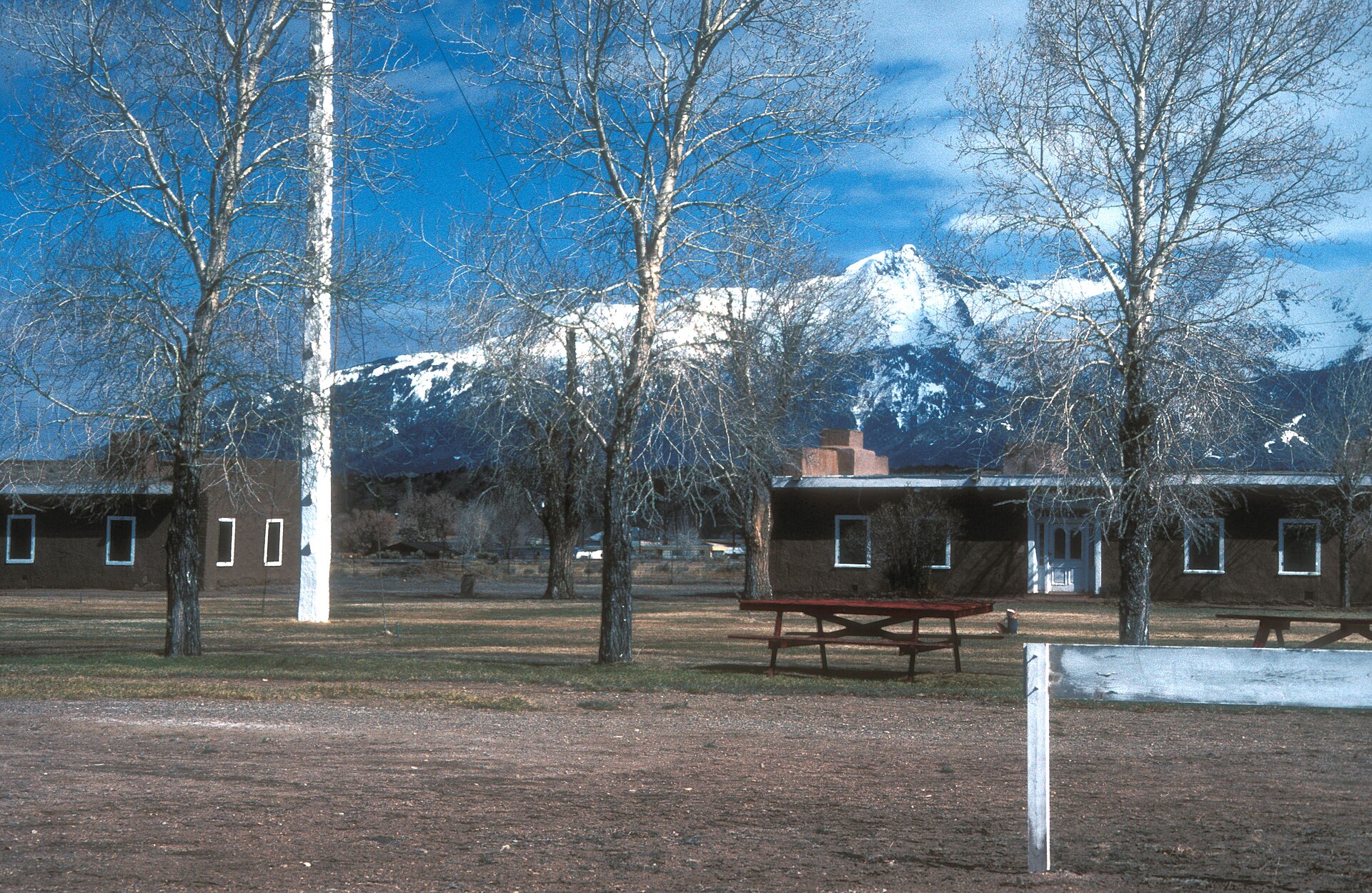
In the high, wind-scoured flatness of the San Luis Valley, where the Sangre de Cristo Mountains rise like a jagged wall against the sky, sits a cluster of low adobe buildings that have watched over this land for more than 160 years. Fort Garland is not a reconstruction or a roadside curiosity dressed up for tourists. It is the real thing — a 19th-century U.S. Army post, built in 1858, that once stood at the edge of a volatile frontier where three cultures collided: the Ute people who had called this valley home for centuries, the Hispano settlers moving up from New Mexico, and the Anglo-American military apparatus pushing west.
Today, Fort Garland operates as a museum under History Colorado, preserving its original adobe structures and offering one of the most historically grounded glimpses into Colorado’s territorial military history. It’s also, according to generations of visitors and staff, one of the most persistently haunted places in the San Luis Valley — a region already steeped in a broader reputation for the unexplained.
The Verified History: Kit Carson’s Command
Fort Garland’s documented history is solid ground, and it’s worth establishing before wading into the ghost stories. The fort was established in 1858 to replace the nearby Fort Massachusetts, which had proven poorly sited for defending settlers and monitoring Ute movements in the valley. Fort Garland took its name from Brevet Brigadier General John Garland, commander of the U.S. Army’s Department of New Mexico at the time.
The post’s most famous chapter came between 1866 and 1867, when legendary frontiersman, trapper, and scout Christopher “Kit” Carson served as commander. By then Carson was already a famous — and controversial — figure in American frontier history, known for his earlier work as a guide for John C. Frémont’s expeditions and for his role in the brutal 1863-64 campaign against the Navajo that led to the Long Walk. At Fort Garland, his duties were different: overseeing relations with the Ute bands in the region and maintaining a military presence meant to keep an uneasy peace in a valley under increasing pressure from settlement.
The fort continued to operate through the 1870s, a period marked by tension surrounding Ute land cessions, including the aftermath of the 1879 Meeker Incident at the White River Agency, which inflamed anti-Ute sentiment across the state. Fort Garland was ultimately abandoned by the Army in 1883, after the Utes had been forcibly relocated to reservations and the military rationale for the post evaporated. Several of the fort’s original adobe buildings survived intact, an unusual feat for frontier military architecture, and the site was listed on the National Register of Historic Places. History Colorado has maintained and interpreted the fort as a museum for decades, with restored rooms, exhibits on Carson, and reconstructed quarters depicting daily life for the soldiers stationed there.
That’s the documented record — the facts that can be traced through official fort records, National Register documentation, and museum archives. What follows is different: decades of oral tradition and visitor testimony that History Colorado itself has acknowledged as part of the fort’s folklore, without claiming it as verified fact.
The Footsteps in Empty Rooms
Local lore surrounding Fort Garland has circulated for generations among San Luis Valley residents, and the stories tend to follow a consistent pattern: the sound of boots on wooden floors in rooms that are empty, sudden drops in temperature in specific corners of the old adobe quarters, and fleeting glimpses of figures in period-appropriate military dress who vanish when approached directly.
Museum staff over the years have informally noted that certain rooms — particularly those tied to the officers’ quarters and the areas associated with the fort’s original command structure — seem to generate more visitor reports than others. Visitors touring the restored barracks and quarters have described a sense of being watched, and some have reported hearing what sounded like marching or drilling outside when no reenactors or staff were present.
None of this rises to the level of documented, verifiable phenomena — there’s no peer-reviewed study of Fort Garland’s hauntings, no official paranormal investigation report filed with History Colorado that this piece can point to. What exists is oral tradition: stories passed between museum docents, local residents, and generations of visitors who have walked the same hallways where soldiers once stood watch against a valley on the brink of violent change. It’s folklore in the truest sense — stories that persist because they feel true to the place, whether or not they can be proven.
It’s worth asking why a fort like this would accumulate this kind of lore in the first place. Fort Garland’s history includes genuine human suffering — soldiers who died of disease and exposure in a brutal climate, the violent displacement of Ute communities who had lived in the valley long before the Army arrived, and the general hardship of frontier military life in one of Colorado’s harshest environments. Whether or not one believes in residual energy or ghosts walking adobe halls, it’s not difficult to understand why a place carrying this much unresolved history would become a magnet for stories about the past refusing to stay buried.
A Valley Already Known for the Unexplained
The San Luis Valley carries a reputation that extends well beyond Fort Garland’s walls. It is, without question, one of the most talked-about regions in the country for strange aerial phenomena and unexplained livestock deaths, a reputation built over decades of local reports and regional media coverage. That broader mythology isn’t the focus here — Fort Garland’s story stands on its own as a haunted-history case, separate from the valley’s skyward mysteries.
What ties the fort’s lore to the valley’s larger reputation is simpler: this is a place where the line between documented history and unexplained experience has always felt thin. The San Luis Valley has long attracted people drawn to the unresolved — whether that’s strange lights on the horizon or the sound of footsteps in a 19th-century barracks room.
Visiting Fort Garland Today
Fort Garland Museum remains open to the public, operated by History Colorado, with exhibits detailing the fort’s military history, its connection to Kit Carson, and the broader story of Ute-settler relations in the valley. For anyone interested in Colorado’s frontier history, it’s a legitimate and worthwhile stop — a rare example of intact 1858 adobe military architecture that most visitors will never find anywhere else in the state.
Whether you walk through its restored quarters as a history enthusiast or a ghost-story seeker, Fort Garland offers something increasingly rare: a place where the documented past and the whispered lore sit side by side, each shaping how visitors experience the silence of those old adobe rooms. The soldiers who served there left behind military records, supply logs, and command histories that historians can verify. What they may have left behind beyond that — footsteps in empty hallways, a presence in the cold corners of the barracks — remains, like so much in the San Luis Valley, unresolved.